Jesse Wright

Do you need a special bike rack for an electric bike?

Electric bicycles (eBikes) are significantly heavier than road and mountain bikes.

  • An average eBike weighs 48-lbs (23kg)

However, many models weigh upwards of 70-lbs or 32kg. Electric bikes are heavier due to the battery, motor, and especially from the more robust frame geometry and longer wheelbase. 

A “classic” bicycle rack generally supports up to 35 lbs (15.8kg) and is not compatible with electric bicycles, since eBikes weigh between 38 to 70 lbs (17 - 32kg). The majority of standard bike racks are NOT sturdy enough to support the extra weight of eBikes, the lone exception is the hitch-mounted platform rack, which is the only viable option for electric bikes.
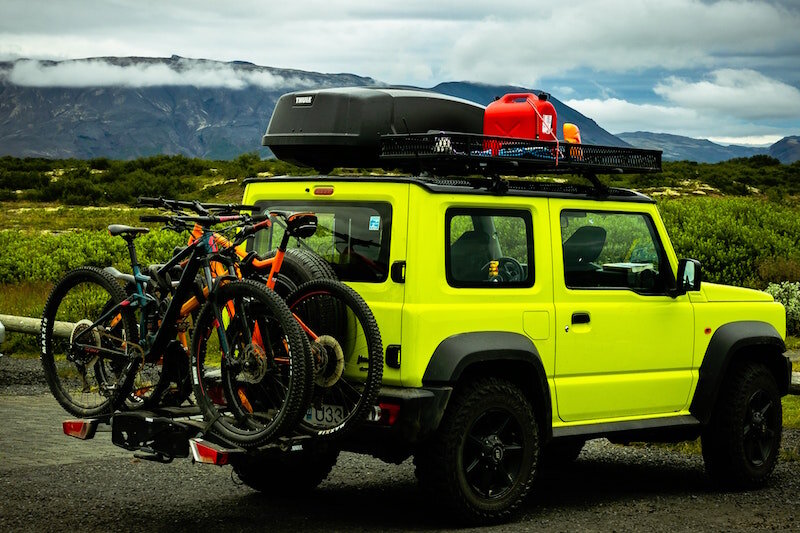
Jeep with bicycles on a hitch-mounted platform bicycle rack

Jeep with bicycles on a hitch-mounted platform bicycle rack


Also, keep in mind that statistically more bicycles are damaged during vehicle transport than while riding them. Busted derailleurs, broken spokes, crimped cables, dents, and scratches commonly occur while packing them for travel or during transit, as opposed to being ridden on trails and roads.

For eBikes, this is even more important, as you have additional components that are very costly, such as the battery, motor, and supplementary electrical cables.


Do you need a special bike rack for eBikes?

Hitch-mounted platform racks are the ONLY practicable option for transporting eBikes, due to 4 main factors:

  • High Weight Capacity: eBikes are double to triple the weight of traditional bicycles and exceed the weight limits of roof and trunk-mounted racks.

    • eBike batteries average 7lbs (3kg), which means even after removing the battery, these bicycles are still significantly heavier than standard bicycles.

  • Low to the Ground: Loading/unloading heavy eBikes becomes a safety hazard when attempting to mount/unmount to a roof rack system.

    • Many models of hitch-mounted racks offer a ramp.

  • Support the Wheels: These systems support the wheels which are important as the center of gravity varies among electric bike models and it’s the most secure system.

  • Larger: This is important as eBikes have longer wheelbases


Roof Racks & E-Bikes???

Roof Racks are NOT good options for e-bikes.

Roof Racks are NOT good options for e-bikes.


E-bikes weigh between 38 - 70 pounds with an average weight of 48-lbs. Trying to hoist one of these up to your roof, even with two people, is a good way to injure yourself or damage the bike. Even after removing the battery, these eBikes still weigh over triple that of road bicycles and twice as much as mountain bikes.

  • The user may struggle to safely and securely load/unload the bike into the rack.

Also, most passenger vehicles have a 150 - 165-pound roof weight limit, regardless of rack system.

  • Two heavy e-bikes, plus the weight of the roof rack, will exceed your roof’s loading capacity.


CAUTION: Roof racks are NOT advised nor recommended for transporting e-bikes, due to over-loading limits and safety concerns for hoisting the e-bike into/out of the roof rack.


Trunk Mounted Racks & E-bikes???

The trunk mounted car rack is not designed to hold the weight of a heavy electronic or pedal assist bicycle.

The trunk mounted car rack is not designed to hold the weight of a heavy electronic or pedal assist bicycle.


The maximum weight limit of most trunk mounted bicycle racks is 35-pounds. Even the lightest of e-bikes weigh about 40-lbs, exceeding the weight limit. Also, these types of racks tend to sway while driving.

The simplicity and low cost of this design make this a great bike rack but it does have issues. The bike rack is mounted to the trunk of the car, making it impossible to gain access to this storage space while the bike rack is being used. The other issue with this design is a lack of security which is problematic with an expensive eBike.


CAUTION: Trunk racks are NOT advised nor recommended for transporting e-bikes as electric bicycles exceed the maximum weight limit of trunk racks.


Hitch-Mounted Racks & E-bikes
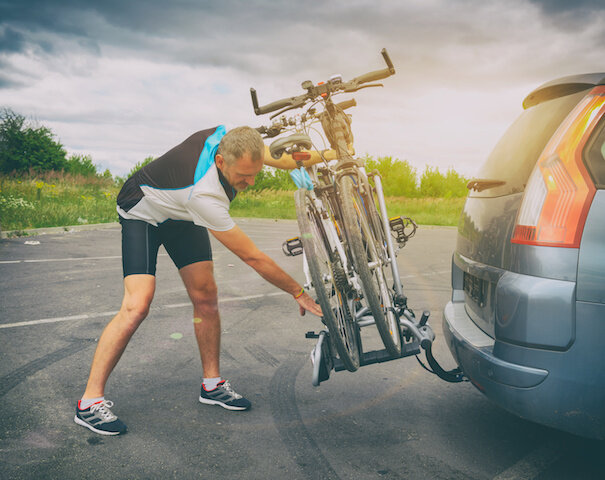
man loading bicycles on platform rack.jpeg

A hitch-mount rack system is the best way to haul eBikes. However, you will need a vehicle that has a tow hitch that can support the weight of the rack system plus the weight of the bikes.

These platform racks are the most expensive, and that is even before any additional costs are incurred if you don’t have a tow hitch already installed. Platform racks haul bikes by securing the tires in wheel cradles and the top of the tire or frame via an adjustable arm. This eliminates potential abrasion to the finish of the bicycle and eliminates wobble, as other rack systems use straps and less secure methods.

For heavy bicycles, such as eBikes, cruisers, and full-suspension mountain bikes, the only real option for hauling bikes around from place to place is with the hitch-mounted platform rack system.

Platform Racks: Easy to load/unload

This type of bicycle rack system is the easiest to load and unload as it’s closest to the ground. Many models come standard with ramps, which makes loading/unloading your heavy electric bikes even easier.


derek cycling fact.png

about jesse.png

Jesse is Director of Pedal Chile and lives in Valdivia, Chile. Jesse has a Master of Science in Health & Human Performance and a Bachelor of Science in Kinesiology. Hobbies: singletrack, snowboarding, reading, taster of craft beers, researcher, bicycle commuting, & eBike rider.


More articles from Pedal Chile

Saddle Too Low Symptoms

cyclist with too low seat.jpg

Improper saddle height is the leading cause of overuse injuries in cycling and mountain biking. Simply adjusting the seat up or down changes the joint angles and ranges of motion while also altering the amount of force you can apply to the pedals.

Some cyclists ride with a seat too high, however, it’s significantly more common, by about 100 to 1, that cyclists ride with a seat too low. Every cyclist has an optimal saddle height - the height with the most muscle activation while balancing the muscle activity evenly.

Low Saddle Symptoms

There are 4 main sign or symptoms that your bicycle seat is too low:

  • Your foot is flat on the ground

  • Knee pops or clicks

  • Knee pain

  • Lack of pedal power

Let's analyze each one of these further.

Foot flat on the ground

cycling foot on ground.jpg

While this isn’t a symptom, it is the most obvious indicator that your saddle is way too low. If your foot is completely flat or close to it while stopped, your saddle is not millimeters too low, but inches.

Being able to touch the ground without getting out of your saddle is certainly convenient, but this position is horrible for pedal power and even worse for your knees.


READ: “Should My Feet Touch The Ground - If you would like a more in-depth explanation, I dedicated an entire article to this.


wadsworth bike fit photo.jpg
  • sS = Saddle Setback

  • CL = Crank Length

  • Hd = Handlebar Drop

  • sH = Saddle Height: Measured in millimeters (mm) from the crank axle to the top of the midpoint of the saddle.


knee popping

Image Source: Wikimedia Commons

Image Source: Wikimedia Commons


If your knee(s) is clicking or popping consistently at the top of your pedal stroke, even without pain, then it’s time to stop and reevaluate your seat height. 

  • If the clicking is caused by your kneecap (patella) and femur not moving properly, you are setting yourself up for knee pain and possibly “Biker’s Knee” or Patellofemoral Pain Syndrome.

Riding with the seat too low or mashing on big gears for too long are both causes of knee clicking while bicycling.


READ: “Why Does My Knee Pop When Cycling” - I wrote an entire article about this, so check it out if you would like more info.


Pain in The front of your knee

cycling with seat way way too low.jpg

A low saddle causes excessive knee flexion and commonly results in patellar tendinitis. This is characterized by pain in the front of the knee and is caused by the high compressive forces on the kneecap and tendons as you pedal. 

  • Pain in the front of your knee (around the kneecap).

You might hear a clicking or popping noise(s) before you experience knee pain, and those clicking/popping sounds are your body’s way of alerting you that something needs to change. 


*NOTE ABOUT THE PICTURE: Even though the lady in the above picture is riding with her seat way too low, just casually cruising around the neighborhood is okay. However, performance and pain issues arise once you combine a poor bike fit with high millage and competitive pedaling effort.


Lack of power

When riding solo and a bicycle commuter passes you in blue jeans and a 30-lb (14kg) backpack or you're out of shape friends are blowing by you, this should be cause for pause.


While cycling, your legs act as levers. When you’re pedaling from a low seat, you’re effectively turning your long legs into short legs or smaller levers.

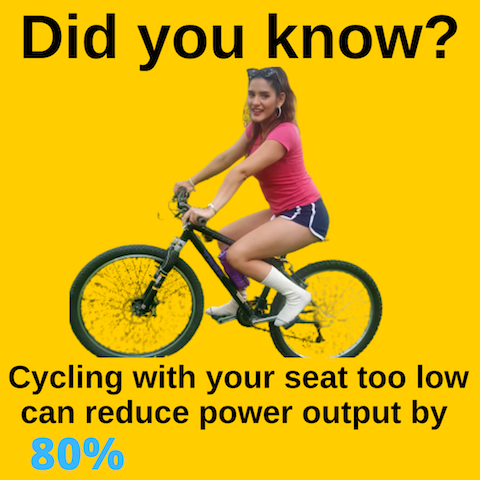
  • In laboratory settings, just riding with a seat a few inches below optimal height, reduces power output by 80%

Optimal Saddle Height

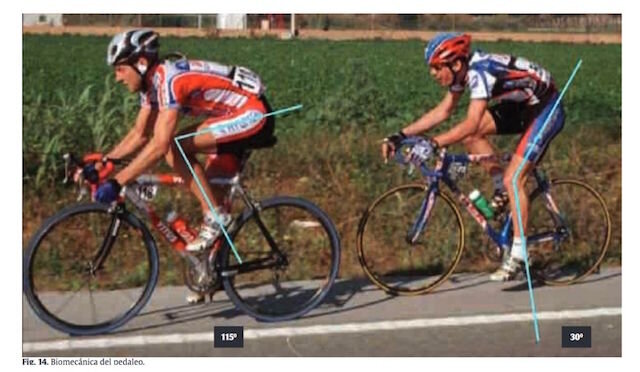
25°-35° flexion at bottom dead center is the optimal range. The cyclist on the right is in the middle of this range at 30 degrees (Image Source: Gómez-Puerto et al. 2008).

25°-35° flexion at bottom dead center is the optimal range. The cyclist on the right is in the middle of this range at 30 degrees (Image Source: Gómez-Puerto et al. 2008).


So what is the optimal saddle height?

  • 25° to 40° flexion at bottom dead center is the optimal saddle height range (see cyclist on the right in the above photo).

How to find optimal saddle height?

There are many different formulas and techniques for finding this important bike-fit setting. The general rule for seat height is that when you’re pedaling while seated, your pushing leg’s knee should be mostly extended at its lowest point. This reduces the compression on the knee and also increases the amount of power you have when pedaling.

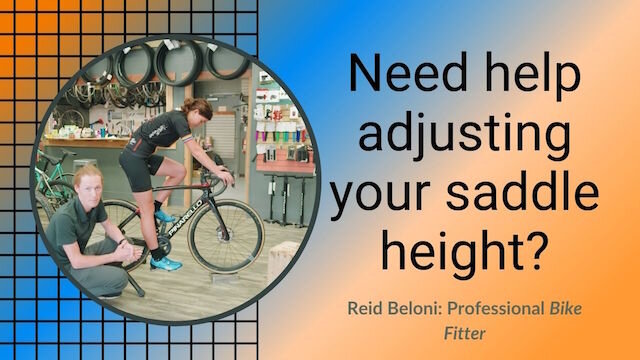
If you would like proper instruction to find your ideal saddle height range, contact a professional Bike Fitter or check out our video.


Final Thought

Many bike fit experts will tell you that riding with a saddle that is a little too low is better than a saddle too high. However, keep in mind “a little” in this case means a smidgen, and anything more than that will cause knee injuries, which is why Patellofemoral Pain Syndrome is known as “Biker’s Knee.”

Also, keep in mind that seat height is just one adjustment. Having your saddle at the correct height but too far forward effectively lowers your seat.


about jesse.png

Jesse is the Director of Pedal Chile and lives in La Patagonia. Jesse has a Master of Science in Health and Human Performance and a Bachelor of Science in Kinesiology. Hobbies: Mountain biking, bicycle commuting, reading, snowboarding, researching, and sampling yummy craft beers.


Sources & References for “Saddle Too Low Symptoms”

  1. Asplund, Chad, and Patrick St Pierre. “Knee Pain and Bicycling.” The Physician and Sportsmedicine, vol. 32, no. 4, Apr. 2004, pp. 23–30, 10.3810/psm.2004.04.201.

  2. Fonda, Borut, and Nejc Sarabon. “Biomechanics of Cycling.” Sport Science Review, vol. 19, no. 1-2, 1 Jan. 2010, 10.2478/v10237-011-0012-0.

  3. Gómez-Puerto, J. R. y Da Silva-Grigoletto, M. Edir y Viana-Montaner, B. Hernán y Vaamonde, D. y Alvero-Cruz, J. R. y (2008), "La importancia de los ajustes de la bicicleta en la prevención de las lesiones en el ciclismo: aplicaciones prácticas." Revista Andaluza de Medicina del Deporte, Vol. 1, núm.2, pp.73-81 [Consultado: 9 de Mayo de 2021]. ISSN: 1888-7546. Disponible en : https://www.redalyc.org/articulo.oa?id=323327655005

  4. Holliday, Wendy, and Jeroen Swart. “Anthropometrics, Flexibility and Training History as Determinants for Bicycle Configuration.” Sports Medicine and Health Science, Mar. 2021, 10.1016/j.smhs.2021.02.007.

  5. Liu, Yung-Sheng, et al. “Muscles Force and Joints Load Simulation of Bicycle Riding Using Multibody Models.” Procedia Engineering, vol. 13, 1 Jan. 2011, pp. 81–87, www.sciencedirect.com/science/article/pii/S1877705811009696, 10.1016/j.proeng.2011.05.055.

  6. Wadsworth, David J.S., and Patrick Weinrauch. “THE ROLE of a BIKE FIT in CYCLISTS with HIP PAIN. A CLINICAL COMMENTARY.” International Journal of Sports Physical Therapy, vol. 14, no. 3, June 2019, pp. 468–486, 10.26603/ijspt20190468.

  7. Wozniak Timmer, Cheryl A. “Cycling Biomechanics: A Literature Review.” Journal of Orthopaedic & Sports Physical Therapy, vol. 14, no. 3, Sept. 1991, pp. 106–113, 10.2519/jospt.1991.14.3.106.

What does single track mean

Singletrack = A narrow path for mountain bikes

Singletrack = A narrow path for mountain bikes


A single track (singletrack) is a type of mountain biking trail, usually 12 to 24 inches wide (30 to 60 cm), or approximately the width of the bicycle.

  • Singletracks are narrow MTB trails that are ridden single file and can be as narrow as 6 inches (15 cm)

  • These trails can be smooth, technical, steep, flat, rocky, straight, curvy, uphill, downhill, rooted, or any combination

  • One-way travel or unidirectional singletrack is common

  • The tread of singletrack sections can increase up to 36+ inches (91+ cm) when the trail winds around obstacles, such as trees, large rocks, bushes, etc.


Singletrack design

(Image Source: Stavi and Yizhaq)

(Image Source: Stavi and Yizhaq)


The above pictures are from a 2020 study from southern Israel that researched the hydrological and geomorphic principles on singletrack design:

  • Picture A:

    • ‘Cemented’ singletrack section

  • Picture B:

    • ‘Fortified’ singletrack section. The fortification is a mixture of clay soil and water and using a compacting machine

  • Picture C:

    • Chain-woven woodblocktrail section (this helps to negate shearing and rutting of the trail in unstable hill sections

  • Picture D:

    • Chain-woven woodblock trail section (this helps to prevent tire trenching in streambeds

Extreme Singletrack

(Image Source: Schymik et al.)

(Image Source: Schymik et al.)


While most mountain bikers start on relatively smooth, flowy singletracks, some riders will progress to more advanced singletrails and a few will be skilled enough to ride extreme terrain.

Advanced & extreme singletracks include:

  • Exposed terrain (think narrow trail with exposed cliffs on both sides)

  • Stairs or steps

  • Rocky terrain with counter-climbs

  • Tight loop-like switchbacks

  • Large and unavoidable obstacles (natural or artificial)

  • Moving both the front and back wheel simultaneous is impossible and requires advanced riding techniques

  • Extremely steep

    • Especially in combination with trail obstacles or features

(Image Source: Schymik et al.)

(Image Source: Schymik et al.)


Double Track

A doubletrack is a trail that is typically an overgrown dirt road, with two paths created by ATV or automobile tires.

Examples of double tracks:

  • Fire roads

  • Old mining roads

  • Service roads (such as powerline roads)


about jesse.png

Jesse is Director of Pedal Chile and lives in Valdivia, Chile. Jesse has a Master of Science in Health & Human Performance and a Bachelor of Science in Kinesiology. Hobbies: MTBing singletrack, snowboarding, reading, taster of craft beers, researcher, & bicycle commuting.


Sources & References for “What is a singletrack?”

  1. Felton, Vernon, and International Mountain Bicycling Association. Trail Solutions : IMBA’s Guide to Building Sweet Singletrack. Boulder, Co, International Mountain Bicycling Corp, 2004.

  2. IMBA Canada. “The Importance of Singletrack – IMBA Canada.” IMBA Canada, imbacanada.com/the-importance-of-singletrack/.

  3. Schymik, Carsten, et al. Singletrail-Skala (STS) Version1.4 Einstufung in Technische Schwierigkeitsgrade Www.singletrail-Skala.de. , 2008.

  4. Stavi, Ilan, and Hezi Yizhaq. “Applying Geomorphic Principles in the Design of Mountain Biking Singletracks: Conceptual Analysis and Mathematical Modeling.” Land, vol. 9, no. 11, 11 Nov. 2020, p. 442, 10.3390/land9110442.

Is Puerto Rico Tropical

Puerto Rico is an archipelago, consisting of one large island surrounded by several much smaller islands, that is located in the Caribbean region of the Atlantic Ocean.

Río Grande, Puerto Rico

Río Grande, Puerto Rico


A territory controlled by the United States Government, Puerto Rico is situated around 60 miles (97 km) to the west of the Dominican Republic, and 1,014 miles (1,632 km) to the south-east of Miami, Florida.


Tropical Puerto Rico

Puerto Rico is in Earth’s Tropical Zone which is represented on this map in pink. (Image Source: Adapted from Wikimedia Commons)

Puerto Rico is in Earth’s Tropical Zone which is represented on this map in pink. (Image Source: Adapted from Wikimedia Commons)


With the Caribbean Sea to the south and the Atlantic Ocean to the north, the island is in a prime location to receive a year-round tropical climate.

The landscape of Puerto Rico reflects this, consisting of pockets of rainforest that cover much of the island’s northern side. A forest-covered mountain range also runs from east to west through the island – named the Cordillera Central, much of its peaks exceed 3,000 feet in height, with the tallest topping out at almost 4,400 feet above sea level.


Is Puerto Rico Tropical?

Puerto Rico is located within Earth’s Tropical Zone and has a Tropical Marine climate with an average daily temperature of 80°F (26°C).

  • January, the coldest month, averages a low of 70°F (21°C) and a high of 83°F (28°C)

  • August, the hottest month, the average temperature averages 79°F to 89°F (26.1°C to 31.7°C)

  • San Juan, the capital of Puerto Rico, is the hottest U.S. city and is 5% warmer than Miami, Florida, the second hottest city

Figure 3

Puerto Rico: 100% tropical island

If one were to summarize the climate of Puerto Rico, it would be accurate to say that it is a rather tropical island. As expected with an island located at around an 18°N latitude, the climate is incredibly warm and wet all year round, with relatively high levels of humidity a constant occurrence.

The average temperature in lowland areas is around 78°F (25.6°C), with maxima often reaching (and sometimes exceeding) 88°F ( 31°C).

In upland areas, the temperature maxes out at a relatively cooler (but still warm) 80°F (27°C), with average temperatures a few degrees lower than those in lowland parts of the island.


Manatí, Puerto Rico

Manatí, Puerto Rico


Tropical Rain: High humidity

Rainfall amounts are also high on the island. The northern coast receives the highest rainfall totals, mainly due to north-easterly trade wings bringing in huge amounts of moisture-laden air. For example, the annual rainfall total at the city of San Juan receives around 60 inches (152 cm) of rainfall a year. The Cordillera peaks on the northern side of Puerto Rico receive significantly more rain, sometimes up to 180 (457 cm) inches a year. However, the southern side of the island sits in a rain shadow and receives a relatively lower (but excessive) 36 inches (91 cm) per year.

The incredibly high levels of heat and rainfall, as well as the fact that Puerto Rico is surrounded by warm seas, combines to produce rather intense levels of humidity. This is felt more in the lowland areas than the relatively cooler parts of the island but is essentially a persistent occurrence for the entire island.

El Yunque, Puerto Rico - The El Yunque National Forest is the only tropical rainforest in the National Forest System of the United States of America.

El Yunque, Puerto Rico - The El Yunque National Forest is the only tropical rainforest in the National Forest System of the United States of America.


about jesse.png

Jesse is the Director of Pedal Chile and lives in La Patagonia and Puerto Rico. Jesse has a Master of Science in Health and Human Performance and a Bachelor of Science in Kinesiology. Hobbies: Mountain biking, bicycle commuting, reading, snowboarding, researching, and sampling yummy craft beers.


References & Sources for “Is Puerto Rico Tropical?”

  1. Amandolare, Sarah. “Puerto Rico’s Catastrophic Hurricane Gave Scientists a Rare Chance to Study How Tropical Forests Will Fare in a Stormier Future.” Science | AAAS, 11 Sept. 2018‌.

  2. Daly, Christopher, et al. “Mapping the Climate of Puerto Rico, Vieques and Culebra.” International Journal of Climatology, vol. 23, no. 11, 6 Aug. 2003, pp. 1359–1381, 10.1002/joc.937.

  3. F, Beck, H. E. , Zimmermann, N. E. , McVicar, T. R. , Vergopolan, N. , Berg, A. , & Wood, E. “English: Köppen–Geiger Climate Classification Map for Puerto Rico.” Wikimedia Commons, 6 Nov. 2018, commons.wikimedia.org/wiki/File:Koppen-Geiger_Map_PRI_future.svg. (Adapted for Figure 3)

  4. “Puerto Rico’s Climate and Average Temperatures.” Topuertorico.org, 2019, welcome.topuertorico.org/reference/tempera.shtml.

  5. Wagenheim, Olga. “Puerto Rico | History, Geography, & Points of Interest.” Encyclopedia Britannica, www.britannica.com/place/Puerto-Rico#ref54522. ‌

Coldest Temperature Recorded On Earth

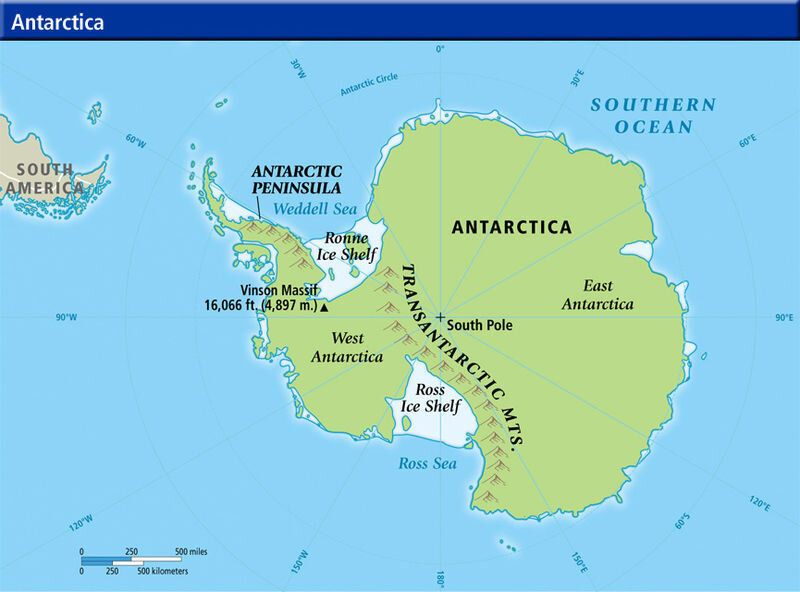
Antarctica .jpg
 
Antarctica is a land of extremes. It is the highest, coldest, driest, and windiest continent on Earth.
— Journal of Climate
 

Minus 145.5°F or -98.6°C is the coldest recorded air temperature on Earth. Located on a high ridge on the East Antarctic plateau, a few hundred miles from the Vostok research station.

  • For comparison, the coldest recorded temperature on Mt. Everest is minus 43 degrees Fahrenheit (-42°C) or 100°F / 56°C warmer.


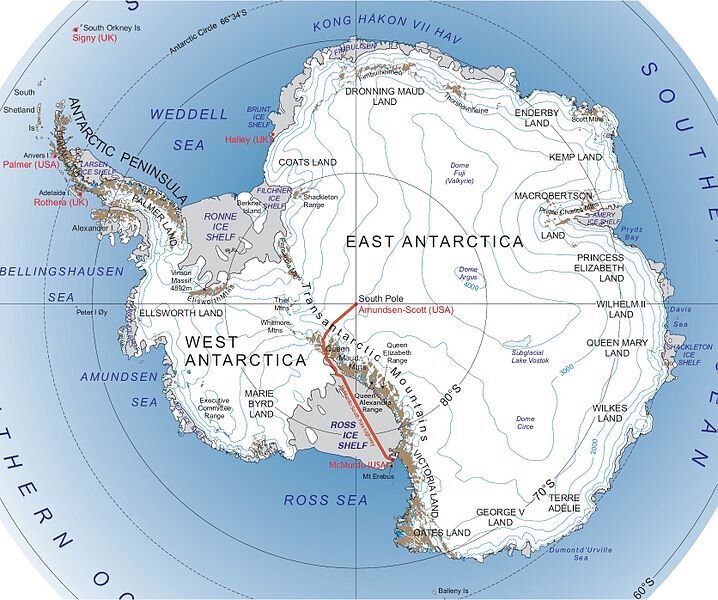
Volsok station, located near Lake Vostok (Image Source)

Volsok station, located near Lake Vostok (Image Source)


Vostok station - Antarctica

The Vostok weather station is located at 11,444 feet (3,488m) above sea level on the East Antarctic plateau.

  • On July 21, 1983, the lowest temperature on Earth was recorded (−129°F or −89.2 °C) at this station.

Since then, weather research has gotten better, especially with the use of satellite technology. A 2019 study, from a research team at the University of Colorado Boulder (CU), analyzed satellite data from 2004 to 2016.


“The East Antarctic Plateau is a windswept desolate expanse the size of Australia with few bases or instruments.” (Image & Quote Source: NSIDC)

“The East Antarctic Plateau is a windswept desolate expanse the size of Australia with few bases or instruments.” (Image & Quote Source: NSIDC)


What the CU research team discovered:

  • Lowest recorded temp

    • -145.5°F (-98.6°C)

  • Coldest average temp ranges

    • Minus 144.4°F to −145.5°F (−98°C to −98.6°C) was recorded at over 100 sites during the 12 years

  • The lowest observed temperatures were found in shallow topographic basins

Coldest natural place on Earth

“Blowing snow conditions at a campsite near Vostok Station in Antarctic summer.” (Image & Quote Source: NSIDC)

“Blowing snow conditions at a campsite near Vostok Station in Antarctic summer.” (Image & Quote Source: NSIDC)


While neither Vostok nor the Sole Pole is the coldest place on Earth, they are not far off. The shallow depressions of the East Antarctica Plateau is the coldest region on Planet Earth with an average winter temperature of -62°F (-52°C).

  • Antarctica is the coldest place on earth, even colder than the Arctic, the South Pole, or the summit of Mount Everest

    • -42°F (-41°C): The coldest temp measured on the summit of Mt. Everest (over 100 degrees Fahrenheit warmer than Antarctica)

  • Of the top 100 coldest places on Earth, all 100 of them reside in Antarctica

Why is Antarctica so cold?

There are 4 main reasons that Antarctica is the coldest place on earth:

  1. Sunlight

    • Sunlight or more accurately, lack of sunlight. Due to its position over the South Pole, Antarctica experiences 6 months of darkness each year.

  2. Altitude

    • Antarctica is the highest continent on Earth with an average altitude of 8,200 feet (2,500 m).

    • The coldest temperatures measured on the south side of the East Antarctic ice divide were between 12,600 to 13,300 feet (3,850 to 4,050 meters) in elevation.

  3. Reflective surfaces

    • Ice and snow are highly reflective. The vast majority of radiating heat and light gets reflected out to space, which keeps the air above them relatively cool.

  4. Clear, calm & dry skies

    • Clear and calm skies create the perfect conditions for dry air. This dry air, drops the temperature even lower, as the water vapors block the loss of heat from the snow surface.

    • Cold, dense air descends and pools above the surface which remains in the depressions or basins. This allows the surface and the air above, to cool even further.


Antarctica - Satellite image (Image Source)

Antarctica - Satellite image (Image Source)


How cold is -145°F

  • On Earth, minus 145.5°F (-98.6°C) is about as cold as it can get.

This temperature is so close to Earth’s lower limit that humans can’t even breathe it without hemorrhaging. Even the previous cold record from 1983, which was over 10% warmer, the Russian scientists had to wear special masks that warmed the air before inhalation.


about jesse.png

Jesse is the Director of Pedal Chile and lives in La Patagonia and Puerto Rico. Jesse has a Master of Science in Health and Human Performance and a Bachelor of Science in Kinesiology. Hobbies: Mountain biking, bicycle commuting, reading, snowboarding, researching, and sampling yummy craft beers.


More articles from Pedal Chile

Sources & References for “World’s Coldest Temperature”

  1. Borunda, Alejandra. “Coldest Known Temperature on Earth Recorded in Antarctica.” Science, 27 June 2018, www.nationalgeographic.com/science/article/coldest-place-earth-measured-temperature-antarctica-science.

  2. Cooperative Institute for Research in Environmental Sciences at the University of Colorado Boulder. “New Study Explains Antarctica’s Coldest Temperatures.” CIRES, 25 June 2018.

  3. Horwood, C., Williams, K. L., Skinner, T., Brown, R., Renouf, T., & Dubrowski, A. (2017). Trauma and Hypothermia in Antarctica: An Emergency Medicine Marine Simulation Scenario. Cureus, 9(6), e1341.

  4. Scambos, T. A., et al. “Ultralow Surface Temperatures in East Antarctica from Satellite Thermal Infrared Mapping: The Coldest Places on Earth.” Geophysical Research Letters, vol. 45, no. 12, 28 June 2018, pp. 6124–6133, 10.1029/2018gl078133.

  5. SVS, NASA’s. “SVS: Coldest Place on Earth.” Svs.gsfc.nasa.gov, 4 Dec. 2013, svs.gsfc.nasa.gov/4126.

  6. ‌Turner, John, et al. “Extreme Temperatures in the Antarctic.” Journal of Climate, vol. 34, no. 7, Apr. 2021, pp. 2653–2668, 10.1175/jcli-d-20-0538.1. Accessed 27 Apr. 2021.

  7. ‌Turner, John, et al. “Record Low Surface Air Temperature at Vostok Station, Antarctica.” Journal of Geophysical Research, vol. 114, no. D24, 16 Dec. 2009, 10.1029/2009jd012104.

Is Puerto Rico Domestic Travel

Puerto Rico as seen from Space - This photo was taken from the International Space Station (Image Source: NASA)

Puerto Rico as seen from Space - This photo was taken from the International Space Station (Image Source: NASA)


Puerto Rico, as a U.S. territory, is governed by the United States Federal Government. The Commonwealth of Puerto Rico is considered domestic travel from the United States, as long as you don’t touch down in a foreign place or port before arriving in Puerto Rico.

  • U.S. citizens and lawful permanent residents don’t need a passport to visit

  • Puerto Ricans, as U.S. citizens, don’t need a passport to go to the rest of the United States

  • When traveling to Puerto Rico, you only need a government-issued ID or Permanent Resident card

In other words, mainland U.S. travelers and Puerto Ricans are all United States citizens. You only need a valid ID, such as a driver’s license, to confirm citizenship for travel to and from Puerto Rico and to the 50 U.S. states or American territory.


Emajagua, Maunabo, Puerto Rico (USA)

Emajagua, Maunabo, Puerto Rico (USA)


U.S. Customs & Puerto Rico

The United States Customs and Border Protection (CBP) agency, states on their website:

“U.S. Citizens and Lawful Permanent Residents (LPR's) who travel directly between parts of the United States, which includes Guam, Puerto Rico, U.S. Virgin Islands, American Samoa, Swains Island and the Commonwealth of the Northern Mariana Islands (CNMI), without touching at a foreign port or place, are not required to present a valid U.S. Passport or U.S. Green Card."

“However, it is recommended that travelers bring a government issued photo ID and copy of birth certificate.”

U.S. Territories & domestic travel

A map of United States of America and territories. The 50 states are colored in blue, inhabited territories are colored green, and uninhabited territories are colored orange (Image Source).


The United States of America controls 14 U.S. territories, 5 of which are inhabited and can be visited without a passport.

  • Puerto Rico

  • U.S. Virgin Islands

  • American Samoa (including Swains Island)

  • Guam

  • Northern Mariana Islands

Domestic travel, as an American citizen, consists of travel to any destination within the continental United States, Alaska, Hawaii, and all the U.S. territories, including the Commonwealth of Puerto Rico.

Paseo del Morro - Puuerto Rico

Paseo del Morro - Puuerto Rico


about jesse.png

Jesse is the Director of Pedal Chile and lives in La Patagonia and Puerto Rico. Jesse has a Master of Science in Health and Human Performance and a Bachelor of Science in Kinesiology. Hobbies: Mountain biking, bicycle commuting, reading, snowboarding, researching, and sampling yummy craft beers.


References & Sources

  1. “CBP Customer Service.” Help.cbp.gov, 27 Sept. 2019, help.cbp.gov/s/article/Article-980?language=en_US.

  2. Continenza, Dara. “Five Exotic Places You Can Go without a U.S. Passport.” USA TODAY, 20 June 2013.

  3. “Domestic Travel - OBFS.” Www.obfs.uillinois.edu, 10 Feb. 2020, www.obfs.uillinois.edu/bfpp/section-15-travel/domestic-travel. ‌

  4. “Identification – Luis Muñoz Marín International Airport.” Aeropuertosju.com, aeropuertosju.com/en/passengers/identification/.

  5. nationsonline.org. “Puerto Rico - Island Profile - Nations Online Project.” Www.nationsonline.org, www.nationsonline.org/oneworld/puerto_rico.htm.

  6. “Where Can U.S. Citizens Travel without a Passport?” U.S. Passport Service Guide, www.us-passport-service-guide.com/where-can-you-travel-without-a-passport.html.

If a Puerto Rican moves to the USA can they vote

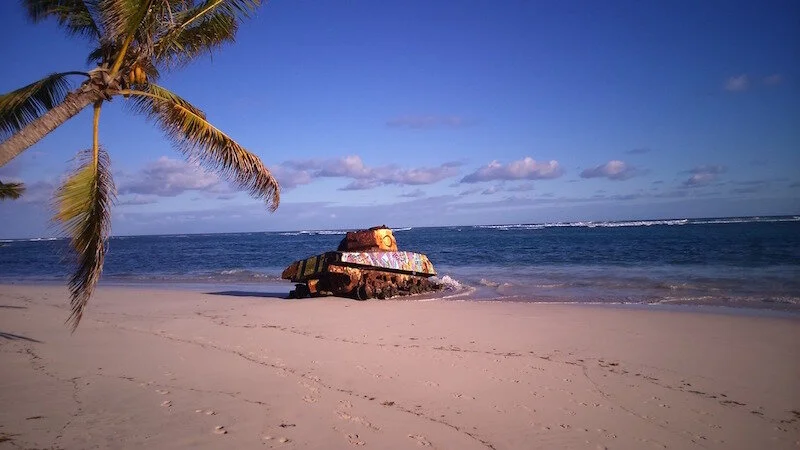
Flamenco Beach or “Tank Beach” on the island of Culebra, Puerto Rico.

Flamenco Beach or “Tank Beach” on the island of Culebra, Puerto Rico.


If a Puerto Rican moves to a U.S. state can they vote?

  • United States citizens can freely reside in any of the 50 states and are automatically conferred the same rights, such as voting, as any other citizen (Puerto Ricans were granted U.S. citizenship by the Jones Act of 1917).

People born in Puerto Rico are U.S. citizens by birth. But because Puerto Rico, like Guam and the U.S. Virgin Islands, is not part of the 50 states or D.C., those who reside in Puerto Rico are not allowed to vote for the President or to elect a voting member of the United States. Those who move from Puerto Rico to live in one of the 50 states or the District of Columbia can vote in federal elections.


Equal citizenship not equal places


This process also works in reverse. Once a mainlander moves to Puerto Rico, and establishes residency, they lose their right to vote in organized Federal Government elections.

During the 2020 presidential election, Brock Peirce, an independent candidate, received nearly 50,000 popular votes. Brock Pierce, originally from Minnesota and a full-time Puerto Rican resident since 2017, was eligible to run for President but is not eligible to vote for the U.S. presidency.


Playa Negra - Vieques (Puerto Rico)


Territory: Voting & Taxes

Voting rights or lack thereof is related to Puerto Rico’s classification as a commonwealth that functions as an unincorporated organized territory. While residents of Puerto Rico are ineligible to vote in federal elections, they also do not pay federal income tax. 

  • This also applies to Guam, U.S. Virgin Islands, and the Northern Mariana Islands.


Puerto Rico, 1,014 miles from Miami, Florida, and 1,557 miles from Washington D.C. (Image Source: Garrett)

Puerto Rico, 1,014 miles from Miami, Florida, and 1,557 miles from Washington D.C. (Image Source: Garrett)


Voting Rights: States

Article 1, Section 2 of the United States Constitution could not be any clearer:

“The House of Representatives shall be composed of Members chosen every second Year by the People of the several States, and the Electors in each State shall have the Qualifications requisite for Electors of the most numerous Branch of the State Legislature.”

Puerto Rico is a commonwealth or territory and is NOT a U.S. state. As such, citizens of the island are not represented in the U.S. House of Representatives.


about jesse.png

Jesse is the Director of Pedal Chile and lives in La Patagonia and Puerto Rico. Jesse has a Master of Science in Health and Human Performance and a Bachelor of Science in Kinesiology. Hobbies: Mountain biking, bicycle commuting, reading, snowboarding, researching, and sampling yummy craft beers.


Sources & References

  1. Cotter, Daniel. “Territories of the United States – Constituting America.” Constitutingamerica.org, constitutingamerica.org/territories-of-the-united-states-guest-essayist-daniel-a-cotter/.

  2. Franqui-Rivera, Harry. “National Mythologies: U.S. Citizenship for the People of Puerto Rico and Military Service.” Memorias: Revista Digital de Historia Y Arqueología Desde El Caribe, no. 21, 2013, pp. 5–21.

  3. Fortier, John C. “The Constitution Is Clear: Only States Vote in Congress.” Www.yalelawjournal.org, 19 May 2007, www.yalelawjournal.org/forum/the-constitution-is-clear-only-states-vote-in-congress.

  4. Garrett, R. Sam. “‘Political Status of Puerto Rico: Brief Background and Recent Developments for Congress.’” UNT Digital Library, 12 June 2017, digital.library.unt.edu/ark:/67531/metadc990757/.

  5. ‌Román, José. “Puerto Rico and a Constitutional Right to Vote.” Academic.udayton.edu, Apr. 2002.

  6. Venator-Santiago, Charles. “Interest Convergence and the Extension of U.S. Citizenship to Puerto Rico.” University of Miami Race & Social Justice Law Review, vol. 9, no. 1, 7 Aug. 2019, p. 111, repository.law.miami.edu/umrsjlr/vol9/iss1/7/.

  7. Vézina, Valérie. “Navigating Citizenship and National Identity in American Territories: Nationalism in American Samoa and Puerto Rico.” Shima: The International Journal of Research into Island Cultures, vol. 14, no. 2, 23 Sept. 2020, 10.21463/shima.14.2.12.


Is Telluride Colorado Worth Visitin

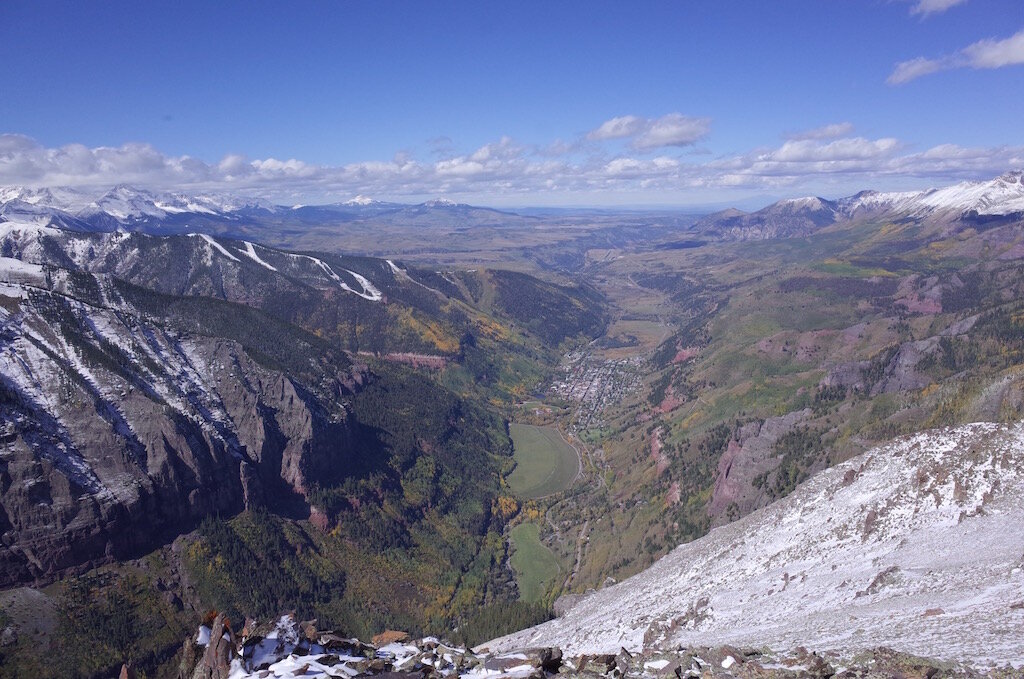
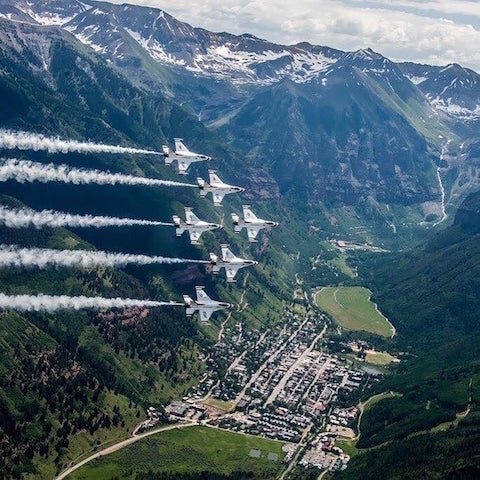
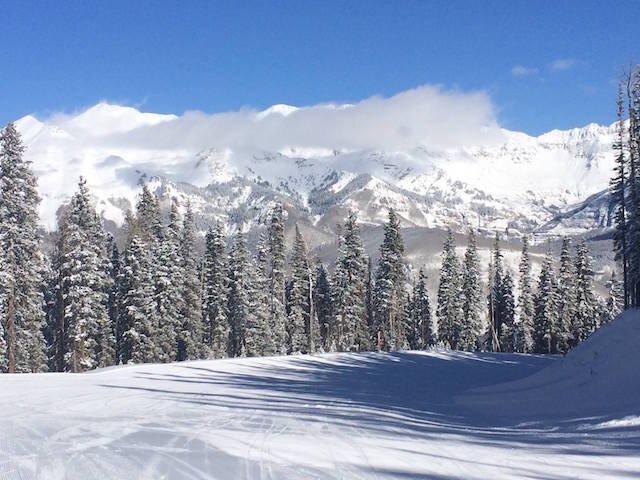
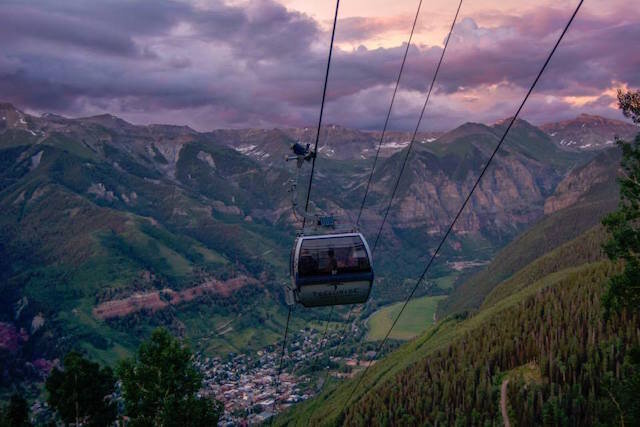
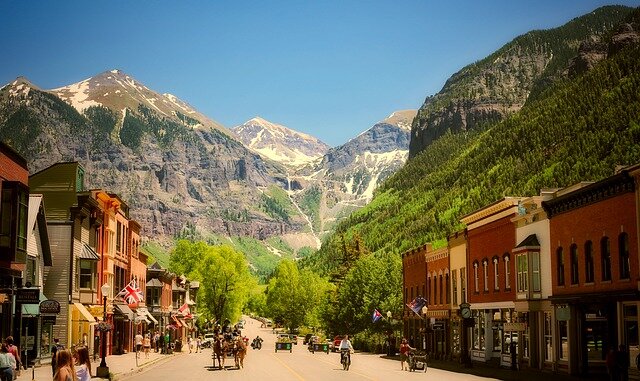
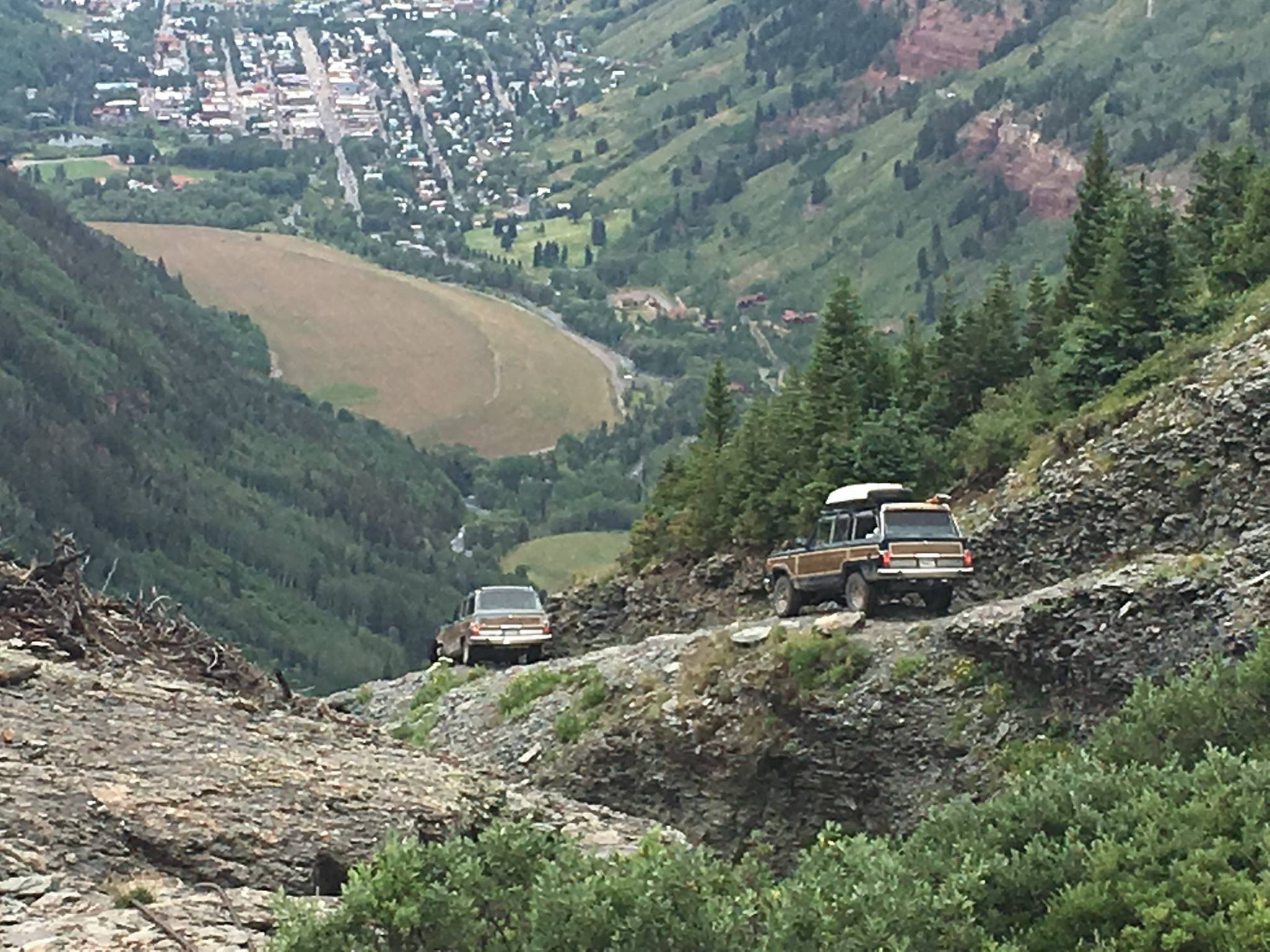
The entire Town of Telluride is located in the center of this picture.

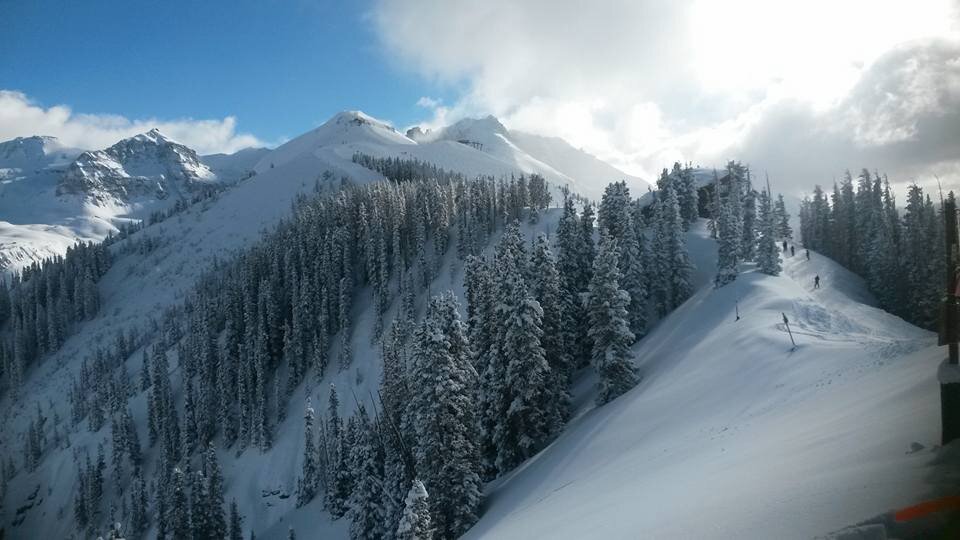
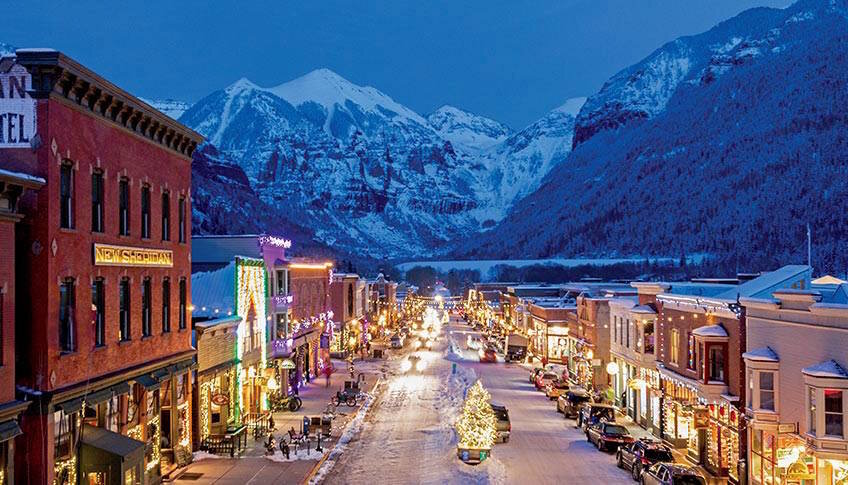
At the end of a box canyon high in the San Juan Mountains lies the historic mining town of Telluride, Colorado. Originally founded as Columbia in 1878 and later renamed (1881) by the Post Office to Telluride. This picturesque town is situated at 8,750 feet at the bottom of a canyon at the headwaters of the San Miguel River.

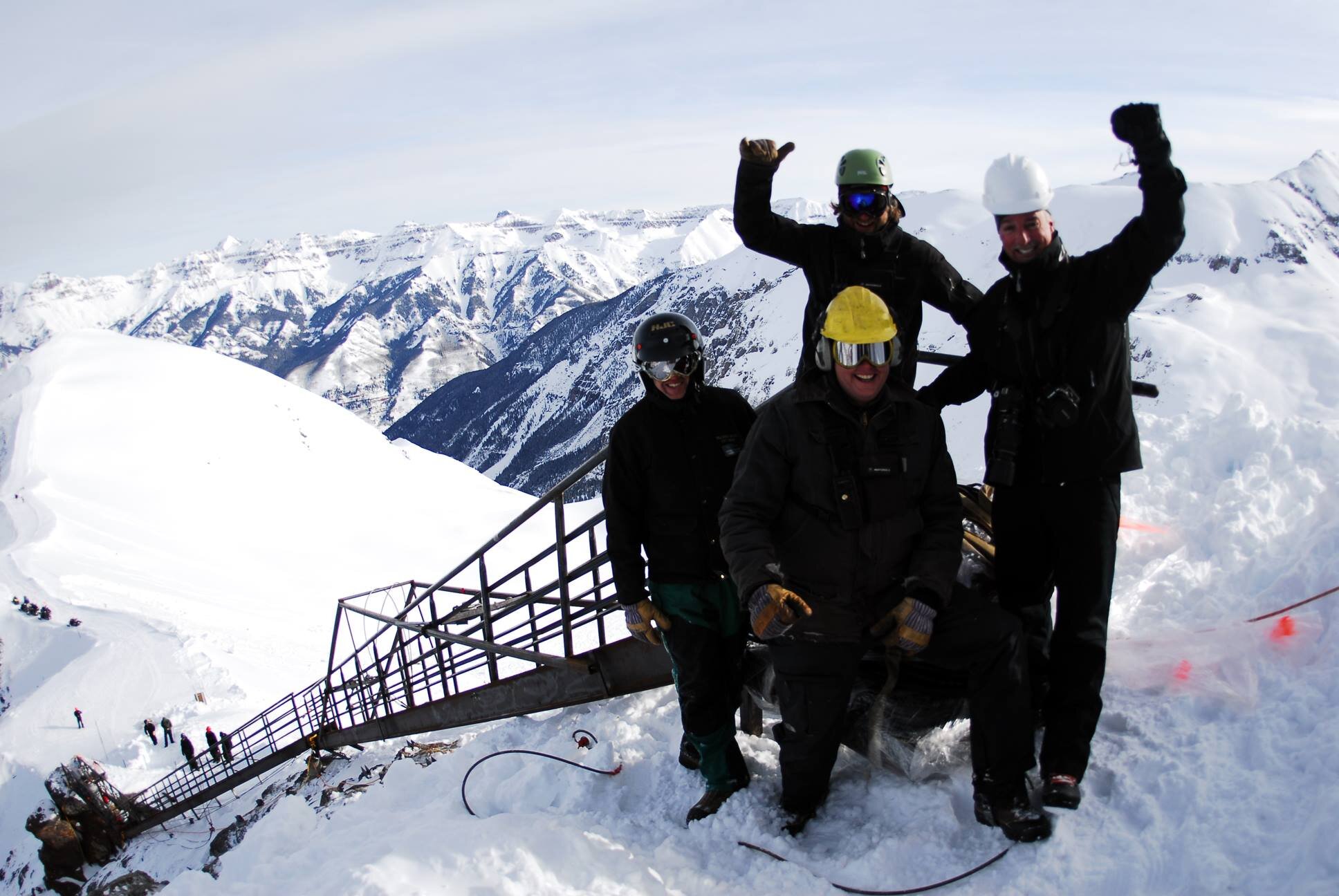
I lived and worked in Telluride, Colorado for over 4-years, and I have compiled a collection of photos and provided local knowledge, so you can maximize your time while visiting this historical mining town.

colorado map.jpg

Denver to Telluride

6 - 7 hours of straight driving from Denver metro to Telluride. With no traffic and weather permitting.

Bridal Veil Falls

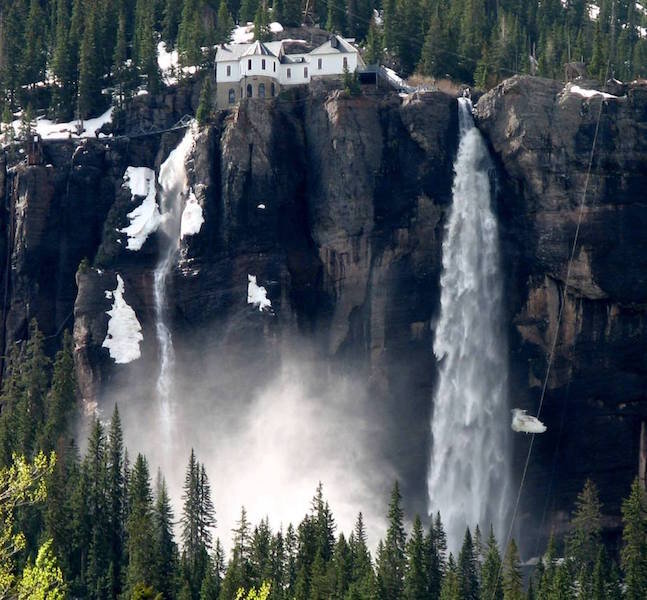
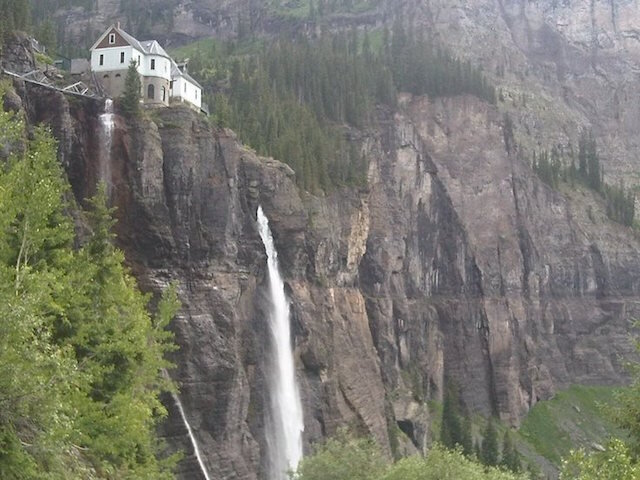
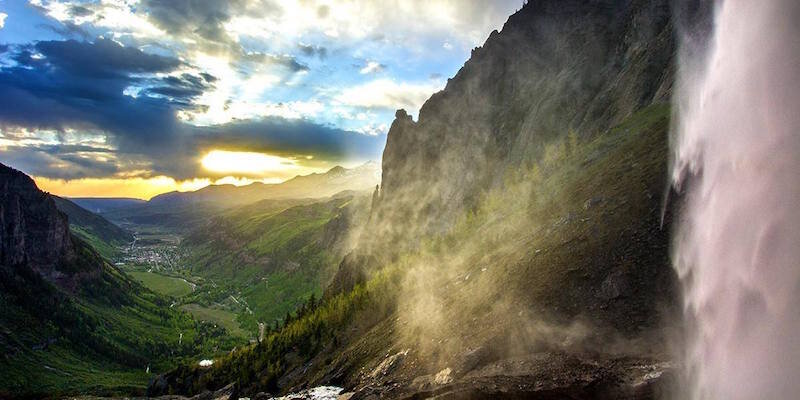
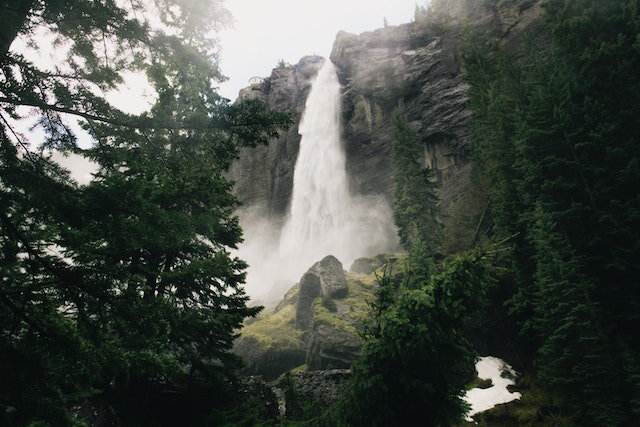
The Bridal Veil Creek falls into the head of the San Miguel valley at 10,300 feet, creating a 365-foot waterfall known as Bridal Veil Falls. The house that sits on top of Bridal Veil is the Smuggler-Union Hydroelectric Powerplant, commonly known as the Bridal Veil Powerhouse. This powerhouse was built in 1907 and today supplies renewable energy for Telluride and the San Miguel Power Association. 

Telluride was the 1st town in America to have a commercial system to produce and transmit alternating current (AC) electricity for industrial application. However, this was not supplied by the Bridal Veil Powerhouse, but instead, the electricity was generated from the Ames Hydroelectric Generating Plant in nearby Ophir, in 1890. You will drive right through the tiny town of Ophir if you take the 4x4 Ophir Pass Road, which connects Telluride/Ophir to Silverton. 

Bridal Veil Falls

Bridal Veil Falls


Telluride Festivals

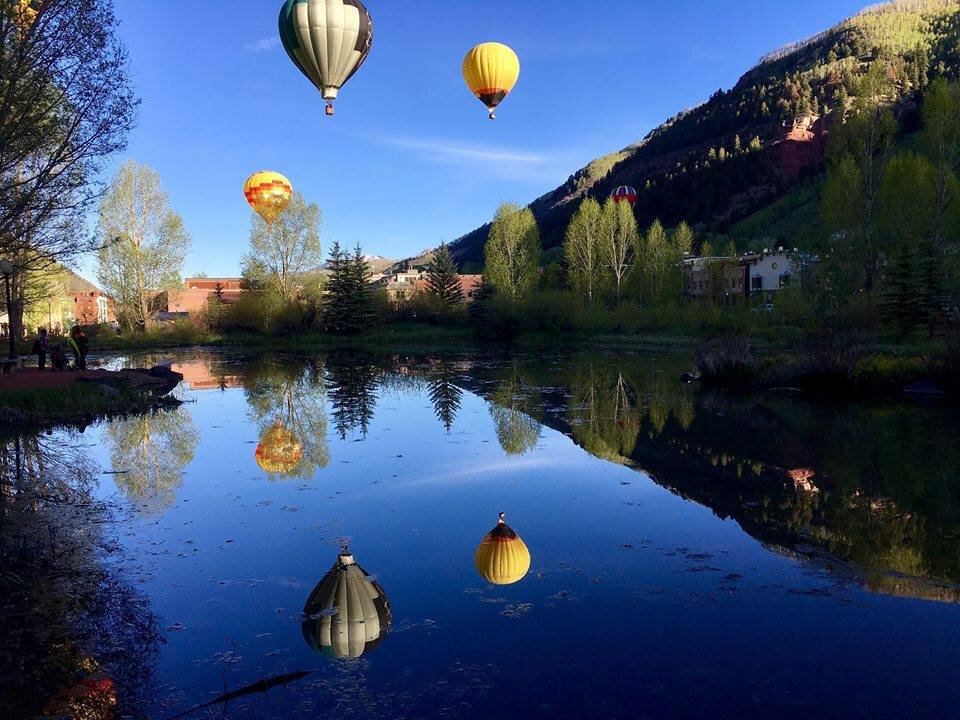
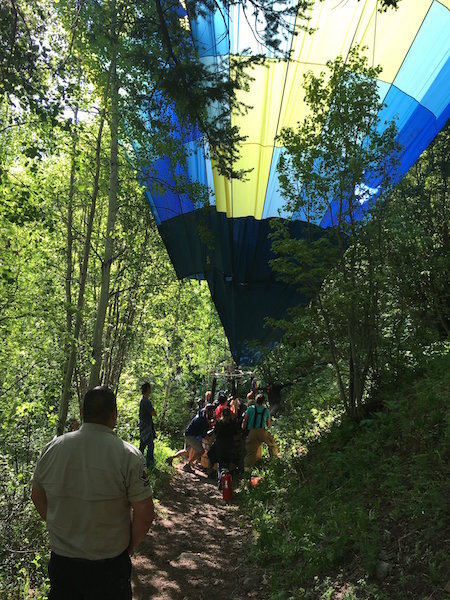
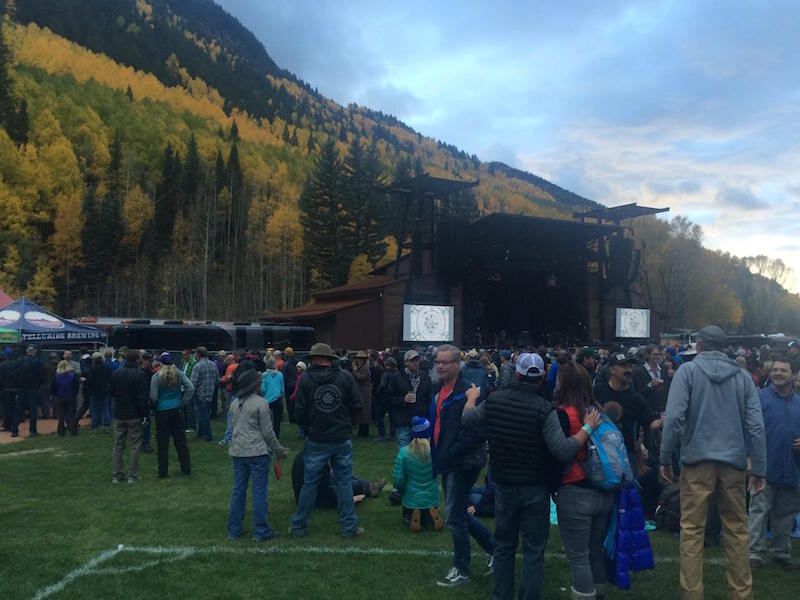
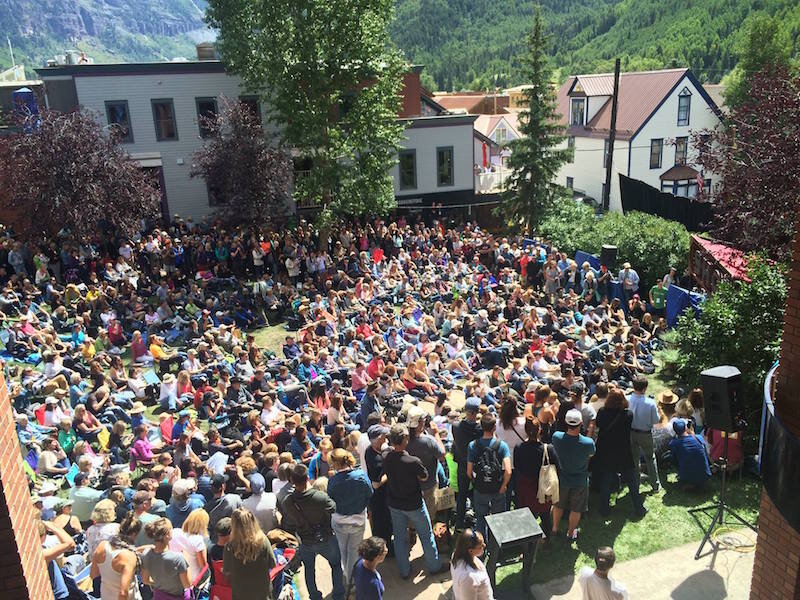
While the 4-day Telluride Bluegrass Festival is the town’s most famous fest, the Telluride festival season features a mini-event or full-scale festival nearly every day, including:

  • Jazz Fest, Film Fest, Balloon Fest, Mountain-Film Fest, Ride Festival, Cars & Colors, Wine Fest, Yoga Fest, Mushroom Fest, Chili Fest, Plein Air Festival, Blues & Brews, Horror Fest, 4th of July, and more.

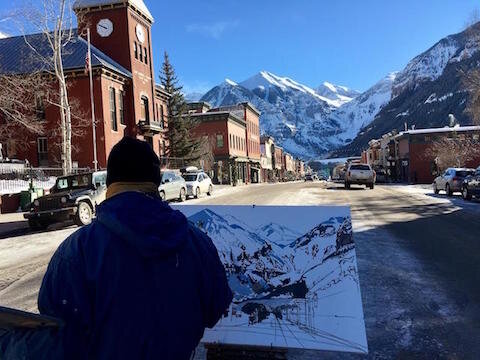
Notes on the above pictures:

  • Independence Day (4th of July) in Telluride is celebrated with the annual flyover of F-16 Falcon supersonic jets, from the 120th Fighter Squadron wing of the Colorado Air National Guard.

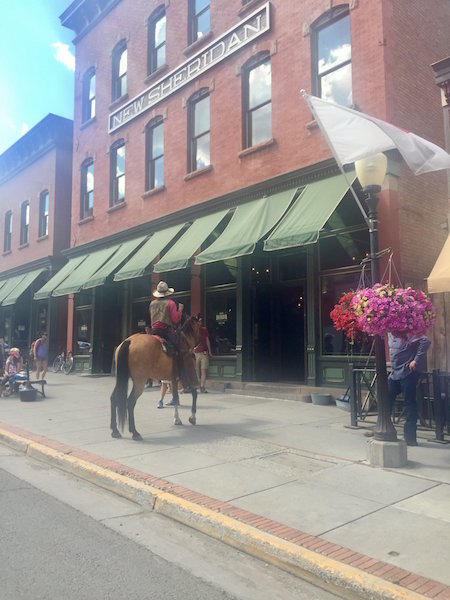
  • The Telluride Plein Air Festival, hosted by the Sheridan Arts Foundation, showcases artists' skills in public spaces.

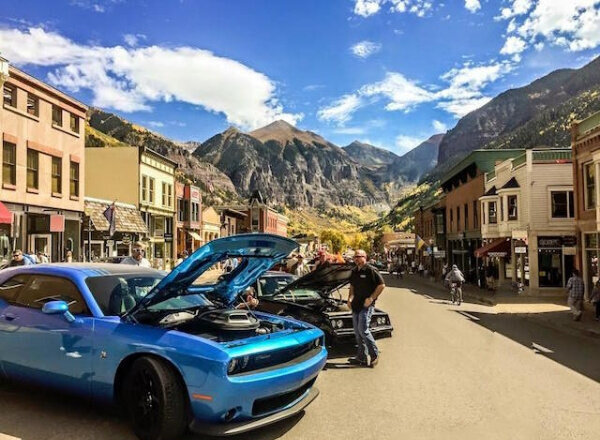
  • The last festival of the season, Cars & Colors, is a great chance to see Telluride with fewer crowds while leaf-peeping in Colorado’s most picturesque region.

Hiking Trails

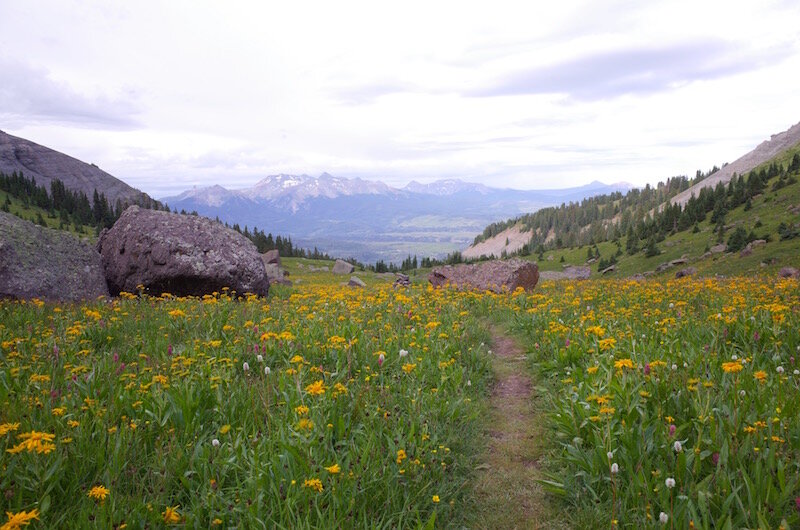
Between all the alternative routes, options, loops, and paths, Telluride has hundreds of hiking trails within the San Juan Mountains of Southwest Colorado.

Popular trails, such as Jud Wiebe, Bear Creek Falls, and Cornet Falls are relativity easy hikes, that are accessible from downtown and are great options if you have limited time, fitness level, or struggling with altitude acclimation.

However, as someone that has hiked most of the local trails, I’d recommend:

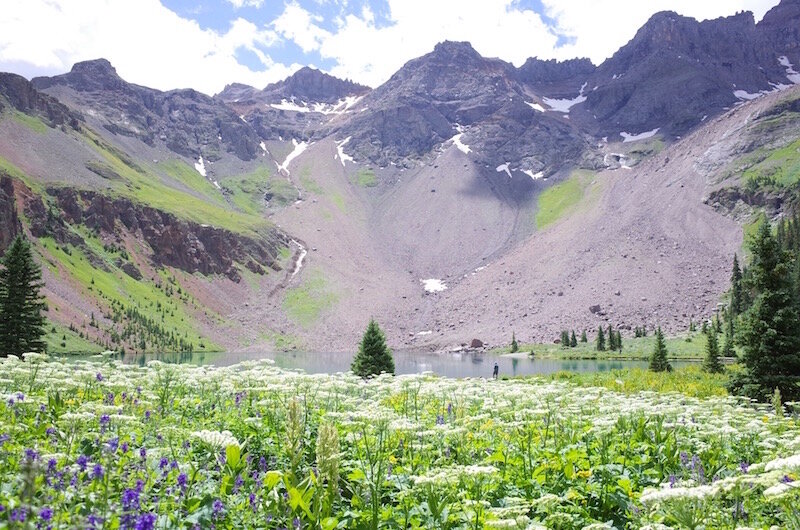
  • Blue Lake

  • Sneffels Highline and Deep Creek Loop

  • Liberty Bell Trail

  • Ajax Peak

  • Ballards Horn (Point 13,145)

  • Lizard Head Trail

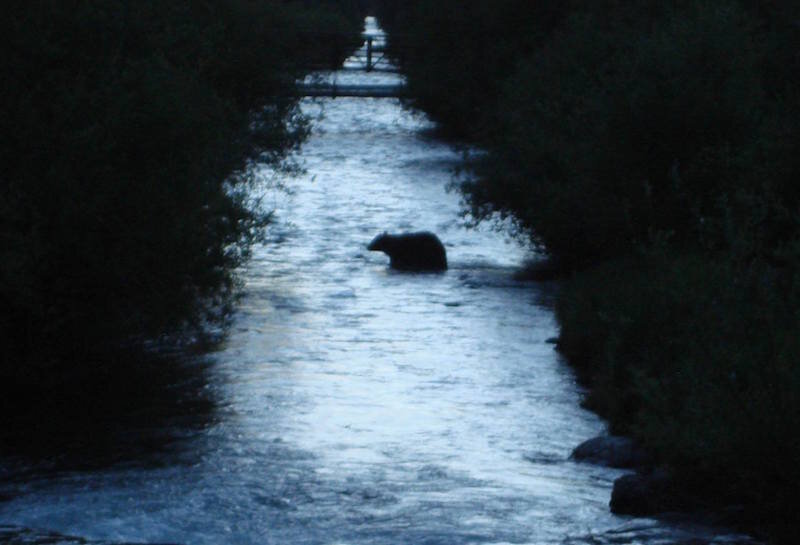
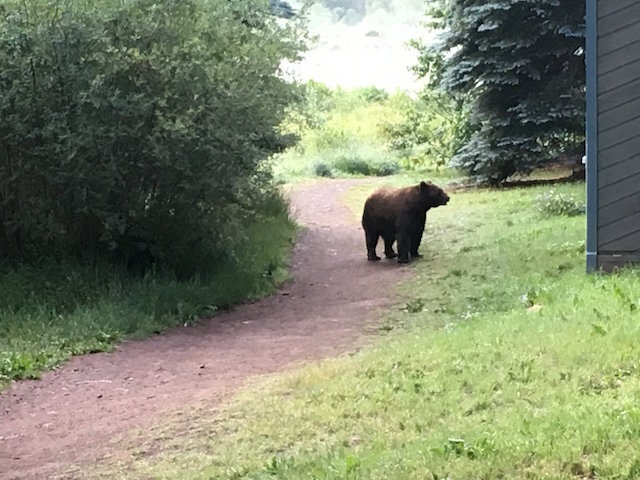
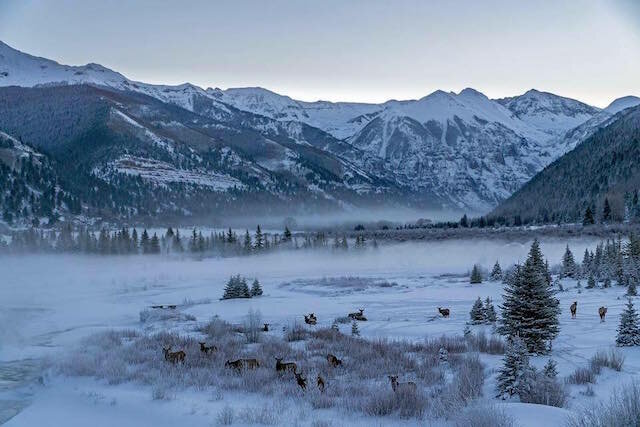
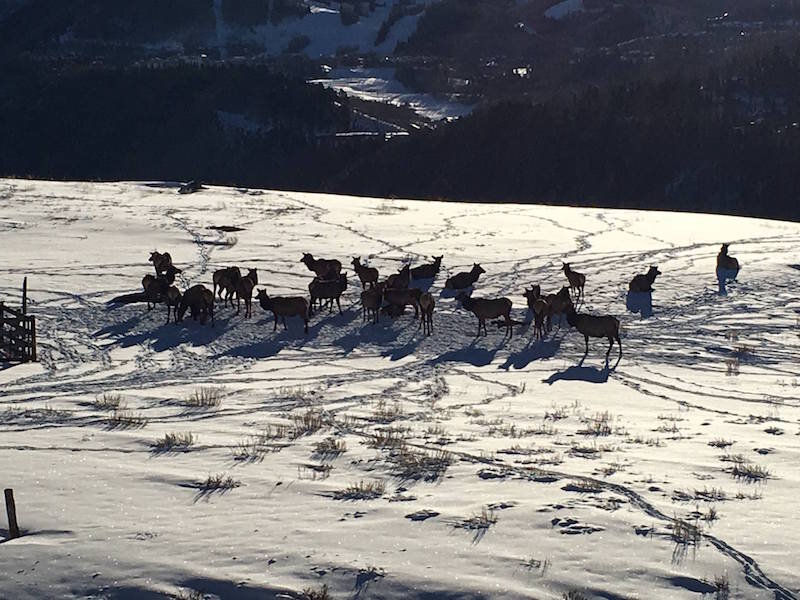
Wildlife: Bears & Elk

People Watching

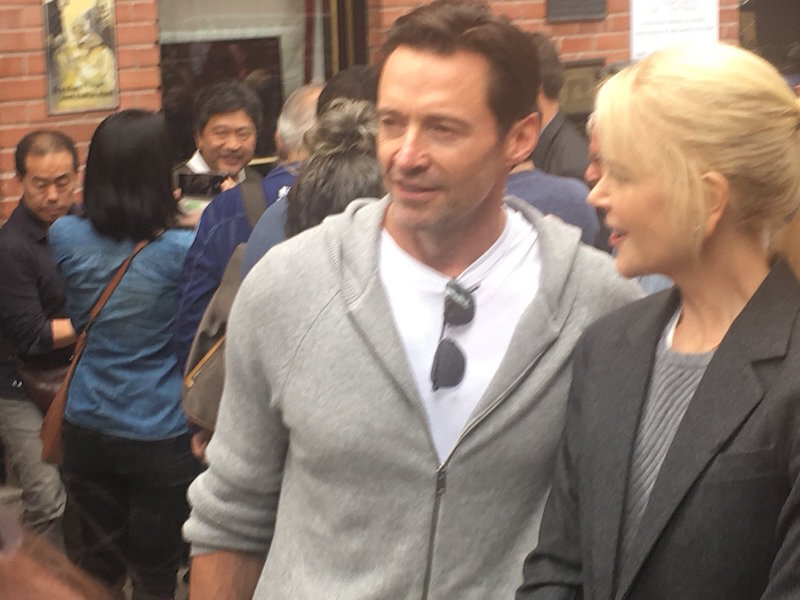
While Telluride Film Festival and Mountain Film Fest bring in numerous famous people, Telluride is a second home to countless celebrities, such as Jerry Seinfeld, Oprah, Tom Cruise, Jewel, Neil Young, and Kelly Ripa.

Skiing/Snowboarding

In 1969, it was announced that a new ski area was being developed:

“Bigger than Vail, as large as Aspen Highlands, Ajax and Buttermilk combined, and twice as big as Mammoth in California."

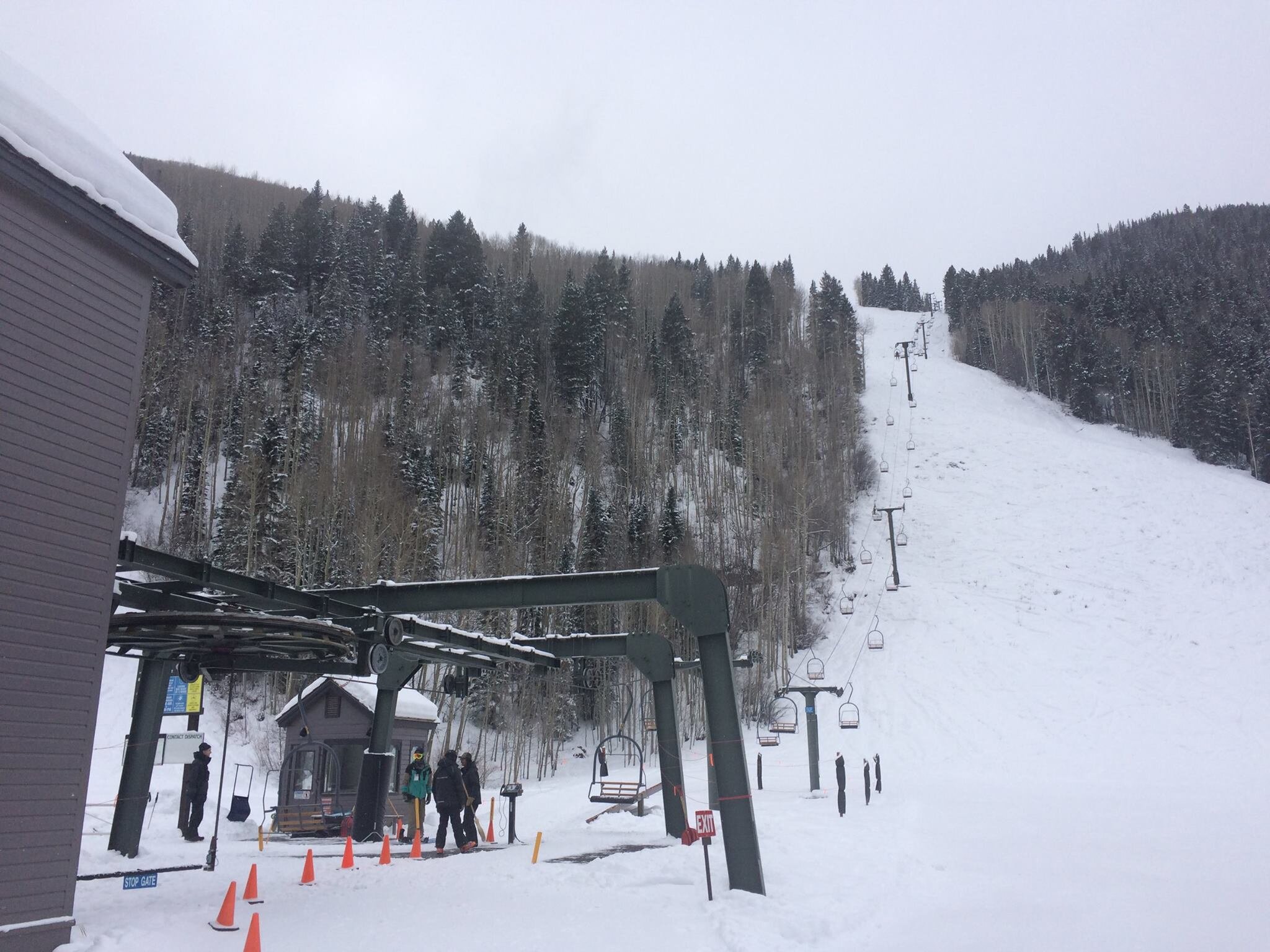
By 1972, the Telluride Ski Resort opened with 5-lifts. While this resort never delivered on its promises, Telluride offers the steepest and most diverse terrain in the state.

As Telluride has become more publicized and popular, the lines and wait times have grown. However, easily accessed and high usage backcountry areas are nearby, such as Bear Creek. Avalanche assessment should always be a high priority as Colorado’s snow is prone to sudden collapse.

Free Public Gondola

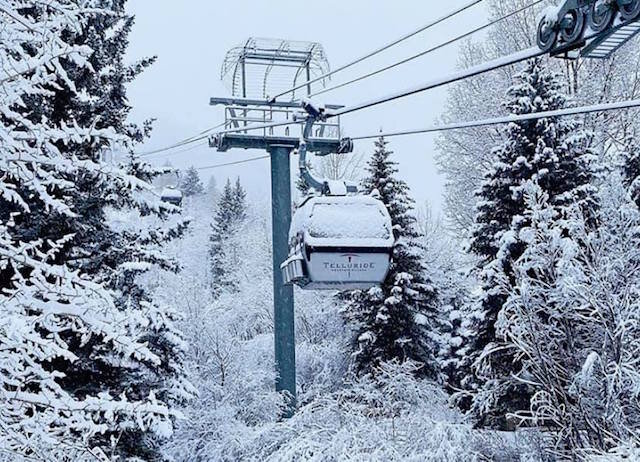
In 1996, the gondola serving Mountain Village from Telluride began operation. The 13-minute ride provides free public transport for the public and saves motorists an 8-mile, 25-min drive between towns. 

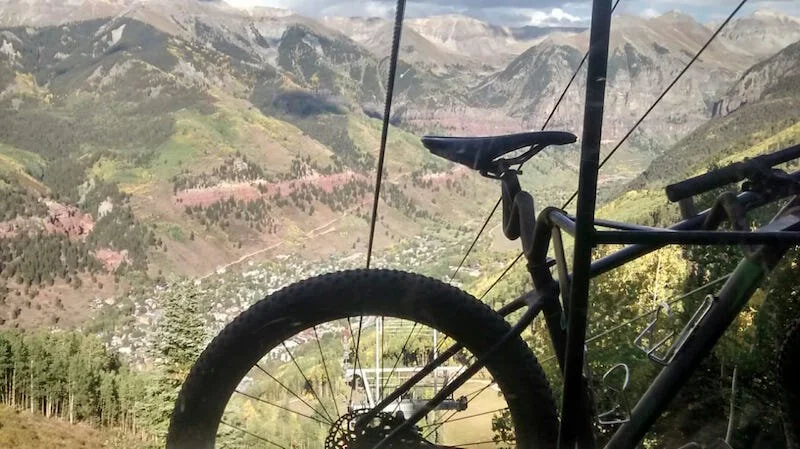
  • * You need a pass to access biking/skiing from the gondola

Allred’s Restaurant: Top of the gondola

At the top of the gondola is Allred’s Restaurant, which is accessed at the mid-station or St. Sophia Station. Allred’s is located at 10,535 feet and offers the best views of any restaurant or bar in Telluride/Mountain Village.

This photo was taken while sitting at Allred’s bar.

This photo was taken while sitting at Allred’s bar.


Bicycling

telluride bicycling.jpg

The best part of mountain biking or cycling in Telluride is you can take the Gondola up, and 75% of the elevation gain is done for you. The ski resort features a bike park along with double and singletrack cross-country trails that meander through aspen groves and lush meadows, while mostly being downhill.


Local Favorite: Prospect Trail

Take the Gondola up to San Sophia Station at 10,540 feet, here, you will find Prospect Trail, a local favorite. 

  • I’d recommend connecting to Jurassic/Meadows Trails, which ends near the Telluride Brewing Company, the area's best brewery, along with Colorado Boy in Ridgway. After T-Brew, you can bike the Valley Floor back to town (see picture below).


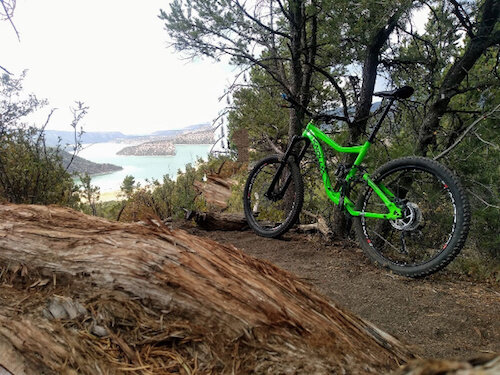
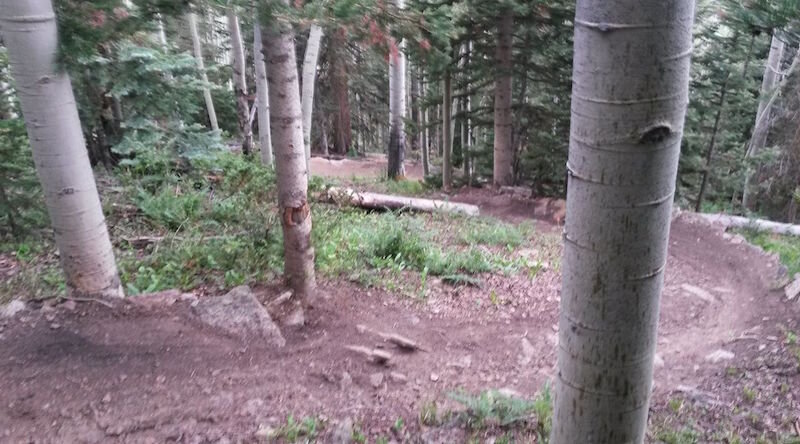
*NOTE: The picture with the green bike is taken at the RAT in Ridgway, 45 minutes from Telluride. The Ridgway Reservoir is seen in the background. The other two pics are taken in Telluride, including one on Prospect Trail.

The Valley Floor is a 560-acre preservation area. There are walking and biking paths in the summer and 12-miles of groomed cross-country skiing trails in the winter.

The Valley Floor is a 560-acre preservation area. There are walking and biking paths in the summer and 12-miles of groomed cross-country skiing trails in the winter.


Telluride Historic  District

In 1963, Telluride was officially designated as a National Historic Landmark District. The downtown core is largely intact from the mining boom era from 1878 to 1913. The Sheridan Opera House was the last major project during this period and was constructed in 1913. In the 1890s, at the height of the mining boom, Telluride was housing over 5,000 residents, and by 1970, following layoffs in the mines, the town’s population dropped to 436.

In 1889, Telluride’s mining wealth became well known and attracted Butch Cassidy, who robbed the San Miguel Valley Bank, which is on the corner of Colorado and Fir Street. Shortly after, the bank burned down but has been rebuilt to look identical.

Via Ferrata

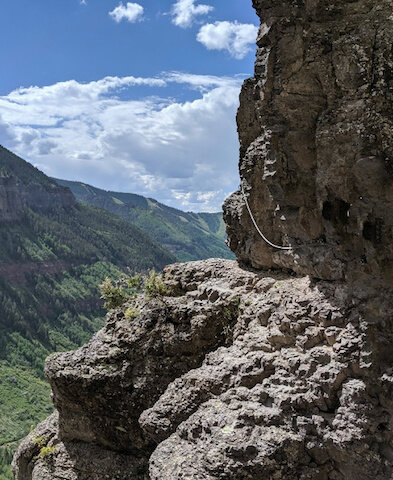
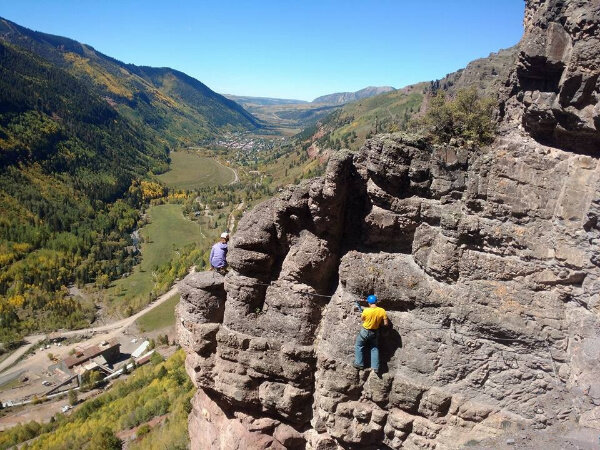
This 3-mile trail, which means “Iron Way” in Italian, is mostly a hike with some sections of exposed rock climbing. While many “locals” will say that the Via Ferrata is only reserved for the “adrenaline junkie,” 97% of this trail is a relatively easy hike. 

  • The Via Ferrata is a must-do for any hiker who doesn’t have a fear of heights and wants insane pictures of Telluride, especially Bridal Veil Falls.

  • Finding the trailhead can be a bit challenging so do your research. I also recommend doing this hike in reverse to what is generally recommended.

14ers

mt sneffels telluride.jpg

Colorado has 58 mountain peaks that exceed 14,000 feet in elevation (4,267 meters).

  • These peaks are called "fourteeners" or "14ers”

The San Juan Mountain Range of southwestern Colorado and northeastern New Mexico have the highest concentration of 14ers of anywhere in the United States, with 14 fourteeners.

  • Mt. Sneffels (top picture), near Telluride, is generally considered to be the prettiest of all the 14ers in Colorado.

  • Coors Beers: Wilson Peak, the 14,023 foot 14er, is the mountain range that is depicted on the Coors Light can.

    • Mt. Wilson, near Lizard Head Pass, is a different summit than Wilson Peak. These summits are approximately 1-mile apart, but their respective trailheads are about 1.5 - 2 hours apart by car.

If you’ve never hiked a 14er before, don’t expect to summit on your first try, especially Wilson Peak, Mt. Wilson, or Sneffels. Also, don’t feel bad, I know many longtime locals that have never “bagged” a 14er before.


Colorado & 14ers

Colorado is the only Rocky Mountain state that houses 14,000-foot peaks. Utah, New Mexico, Arizona, Wyoming, Idaho, and Montana are home to 12ers and 13ers, but zero 14ers. Even the famous Grand Teton, in Grand Teton National Park only reaches 13,776 feet.


Hot Springs

rico hot spring.jpg


Rico Hot Springs, just outside Rico, Colorado, features several natural hot springs, with one main pool, shown in the above photo. 

  • 25-miles from downtown Telluride

  • As of 2021, the Rico Hot Springs have become privatized with limited visitation and a waiver of liability on their website (I provided the link).

Commercial Hot Springs

However, Orvis Hot Springs, in Ridgway, is a clothing-optional, commercialized spring about 45 minutes from Telluride, and is on the way to/from Denver. This is one of the most rustic, and authentic commercial hot springs in the state.   

The vapor cave at Wiesbaden Hot Springs Spa & Lodgings in Ouray is the most underrated hot spring in all of Colorado. Also, if you make it out to Telluride, you must go to Ouray, which is about an hour’s drive. 

4x4 mountain passes

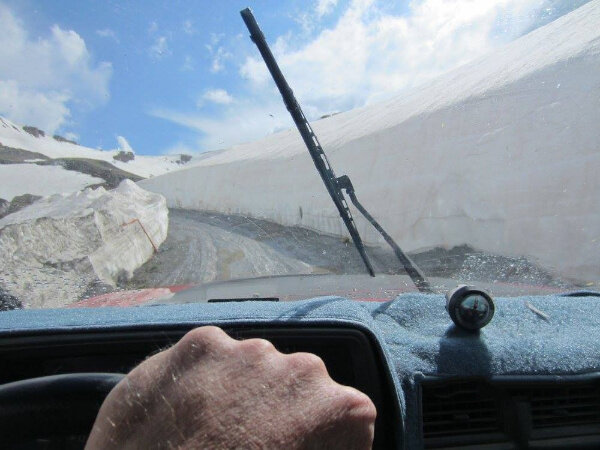
In the summer, once the high-elevation mountain passes are free of snow, Telluride, Silverton, Ouray, Illium, and Ophir are only miles apart.

Imogene Pass, Last Dollar Road, Ophir Pass, Engineer Pass, and Black Bear Pass all connect these towns while traversing old mining “roads” that reach over 13,000 feet.

If hiking/biking/skiing is not for you. Taking one of the mountain passes in a 4x4 vehicle is the way to go. The same stunning views without the work.


4X4 off-road paths are shown in color. Image Source: Ouray Mountain Adventures.

4X4 off-road paths are shown in color. Image Source: Ouray Mountain Adventures.


about jesse.png

Jesse is the Director of Pedal Chile and lives in La Patagonia. Jesse has a Master of Science in Health and Human Performance and a Bachelor of Science in Kinesiology. Telluride was my home for 4-years and writing this article brought back many memories, especially scrolling through all the photographs.


More articles from Pedal Chile

Is Puerto Rico Part of USA

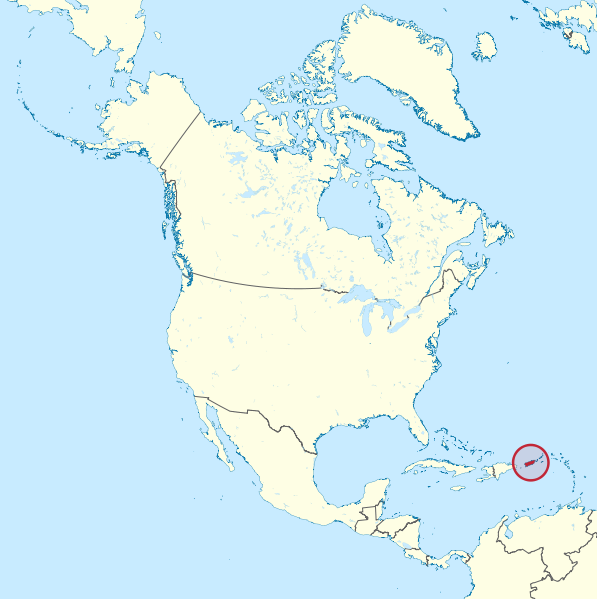
Puerto Rico is a Caribbean archipelago, consisting of one large main island and several much smaller islands. It is located between the Dominican Republic and the Virgin Islands, bordered by the Caribbean Sea to its south, and the Atlantic Ocean to its north. Its closest point to the USA is the southern tip of Florida, which is located around 1,100 miles to the northwest of the island.

puerto rico location.png

Is Puerto Rico part of the United States of America?

Puerto Rico is designated by the U.S. Government as a commonwealth. In terms of real-world application, Puerto Rico is treated as an unincorporated organized territory of the United States with local self-government. 

  • As such, the island of Puerto Rico is neither an independent country nor a U.S. state.

  • However, Puerto Ricans are U.S. citizens and are free to move and work in any of the 50 U.S. states.


Territory VS State

Citizens of Puerto Rico have American citizenship and passports and can freely travel or work in any of the 50 U.S. states.

The major difference between Puerto Rico’s unincorporated organized territory status and statehood is found in federal taxes and voting. Puerto Ricans are exempt from most federal taxes, but it’s also this lack of taxation that results in a lack of voting representation in either the house of the U.S. Congress or the right to vote in presidential elections. Puerto Ricans pay Social Security and Medicare tax but do not pay federal income tax.


Old San Juan - Puerto Rico

Old San Juan - Puerto Rico


1898: Spanish-American War

In 1898, as a result of the Spanish-American War, Spain ceded Cuba, Guam, the Philippines, and Puerto Rico to the United States of America as a consequence of the Treaty of Paris.

Over the following 20 years, acts allowed the US Government to have a more direct role in Puerto Rican affairs – at the same time, a public school system was established, and infrastructure such as sanitation networks and highways were constructed.

The 1917 Jones Act granted US Citizenship to all Puerto Ricans, allowing them to move freely between the island and the mainland. However, even though Puerto Rico is part of the USA, it does not have the same representation in the House of Congress that any one of its 50 states has. As an unincorporated territory of the USA, American citizens in Puerto Rico do not vote for the president or vice president – instead, the island is represented in the House of Congress by only one non-voting member.

Although, since 1952, the territory has elected a governor as its head of state, it has no voting representatives in the House of Congress.


Old San Juan - Puerto Rico

Old San Juan - Puerto Rico


U.S. Territorial status

All U.S. territories are either categorized as:

  1. Organized or unorganized

    • Do they have a territorial constitution?

  2. Incorporated or unincorporated.

    • This means how much of the U.S. Constitution and federal laws are applied in the territory.

The U.S Virgin Islands, Guam, and Puerto Rico are all organized unincorporated territories. American Samoa, by comparison, is an unorganized, unincorporated territory. People born in America Samoa are U.S. nationals and are NOT U.S. Citizens.

Puerto Rico: Commonwealth

Puerto Rico is technically classified as a commonwealth and not a territory. However, in the real world, Puerto Rico’s commonwealth status is treated as an organized unincorporated territory. In theory, commonwealths have more local autonomy than territories, however, the application of such localized authority is mostly theoretical.

Puerto Rico’s Flag

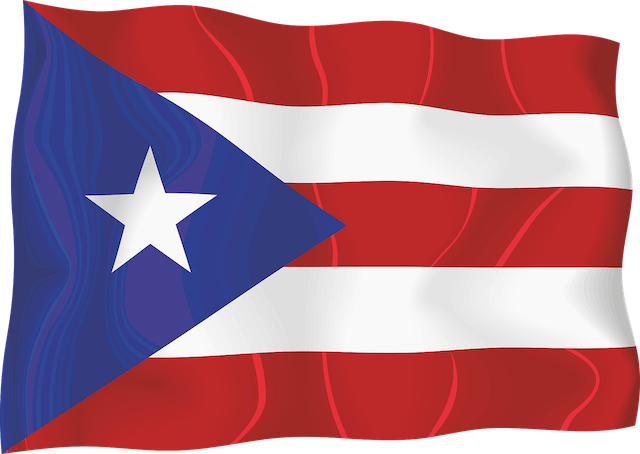
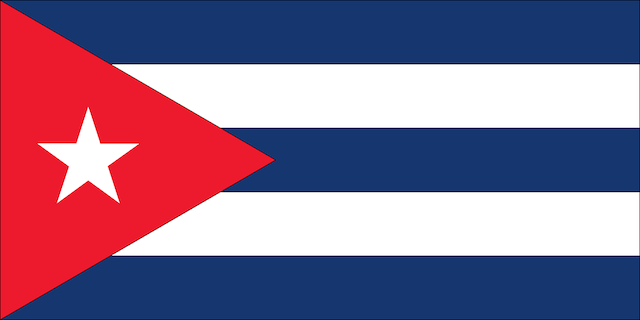
The Puerto Rican flag was designed in 1892 by a group of rebels seeking independence for Puerto Rico during an anti-Spain revolt. The Puerto Rican flag was modeled after the Cuban flag, although both the Cuban and Puerto Rican flags were inspired by the U.S. flag. (Puerto Rico’s flag is the image on the left with the blue triangle).


about jesse.png

Jesse is the Director of Pedal Chile and lives in La Patagonia and Puerto Rico. Jesse has a Master of Science in Health and Human Performance and a Bachelor of Science in Kinesiology. Hobbies: Mountain biking, bicycle commuting, reading, snowboarding, researching, and sampling yummy craft beers.


More articles from Pedal Chile

References & Sources for “Is Puerto Rico Part of the US?”

  1. Blocher, Joseph, and G. Mitu Gulati. “Puerto Rico and the Right of Accession.” SSRN Electronic Journal, 2017, 10.2139/ssrn.2988102. ‌

  2. “How Are U.S. States, Territories, and Commonwealths Designated in the Geographic Names Information System?” Www.usgs.gov.

  3. Hunter, Lawrence. “Leave No State or Territory Behind: Formulating a Pro-Growth Economic Strategy for Puerto Rico.” Www.ipi.org, 7 2003, www.ipi.org/ipi_issues/detail/leave-no-state-or-territory-behind-formulating-a-pro-growth-economic-strategy-for-puerto-rico.

  4. Internal Revenue Service. “Topic No. 901 Is a Person with Income from Puerto Rico Required to File a U.S. Federal Income Tax Return? | Internal Revenue Service.” Www.irs.gov, 13 Mar. 2021, www.irs.gov/taxtopics/tc901.

  5. Mack, Doug. The Not-Quite States of America : Dispatches from the Territories and Other Far-Flung Outposts of the USA. New York, W.W. Norton & Company, 2018.

  6. “Puerto Rico - the World Factbook.” Www.cia.gov, www.cia.gov/the-world-factbook/countries/puerto-rico/.

  7. “Puerto Rico - the Debate over Political Status.” Encyclopedia Britannica, www.britannica.com/place/Puerto-Rico/The-debate-over-political-status.

  8. “Puerto Rican Culture.” Topuertorico.org, 2019, welcome.topuertorico.org/culture/.

  9. “The Meaning of ‘Commonwealth.’” Puerto Rico Report, www.puertoricoreport.com/the-meaning-of-commonwealth/#.YH965B17now.

  10. TUBS. “Deutsch: Lage von Puerto Rico in Nordamerika.” Wikimedia Commons, 26 Mar. 2011. (1st Image of Puerto Rico location)

  11. “Unincorporated Territories of the United States.” Wikipedia, 16 Feb. 2021, en.wikipedia.org/wiki/Unincorporated_territories_of_the_United_States.

Can I Drink the Tap Water in Puerto Rico?

isla verde PR.jpeg

Can I drink the tap water in Puerto Rico? 

  • Puerto Rico’s tap water has elevated amounts of contaminants, organic micro-pollutants, heavy metals, and pesticides, resulting in water quality that is below minimum levels of recommended drinking standards.

  • As a result, we ADVISE drinking BOTTLED WATER, boiling water, or adding chlorine for disinfection, followed by waiting 30 minutes before consuming water. AVOIDING ingesting municipal tap water is strongly suggested.


The more and darker red, the worse the drinking water (Image Source: Mueller & Gasteyer)


NRDC: worst water in USA

The Natural Resources Defense Council in a May 2017 brief, states:

Puerto Rico suffers the worst rate of drinking water violations of any state or territory in the nation.”

In 2015, 99.5 percent of Puerto Rico’s population was served by community water systems in violation of the Safe Drinking Water Act, and 69.4 percent of people on the island were served by water sources that violated SDWA’s health standards.”

Keep in mind that this NRDC brief was issued four months before the 2017 hurricanes that devastated the island and ruined much of the water treatment infrastructure, resulting in drinking water that is even more contaminated and toxic.

CDC & Water Standards

According to the Centers for Disease Control and Prevention (CDC):

Food and water standards in Puerto Rico are similar to those in the United States. Most travelers do not need to take special food or water precautions beyond what they normally do at home. However, travelers visiting rural or remote areas that are served by unregulated water sources such as private wells should take special precautions to ensure the safety of their drinking water.

While the CDC says that the tap water in urban areas is safe to drink, numerous scientific studies and the Natural Resources Defense Council report that Puerto Rico has problematic municipal drinking water.


(“PROTECT» PROTECT Study Shows Increased Levels of Toxic Chemicals in Drinking Water as a Result of Hurricanes Maria & Irma”)

(“PROTECT» PROTECT Study Shows Increased Levels of Toxic Chemicals in Drinking Water as a Result of Hurricanes Maria & Irma”)


Overview: Puerto Rico Drinking water

Due to the island being part of the United States of America, Puerto Rico’s tap water is often said to be just as safe to drink as the municipal water on mainland USA. Various sources, from travel websites to TripAdvisor reviews, claim that health standards in general, in Puerto Rico, are often comparable to that of the United States, unlike most neighboring countries and territories. They often state that the quality of tap water on the island is of a good enough standard to drink, due to it being closely monitored by the United States Environmental Protection Agency (EPA).

However, the amount of scientific data shows conclusively that the water quality is substandard and should be avoided.


Tourists & drinking water

For tourists and visitors to the island, metal contamination is not a major concern – it takes a long period of time to develop side effects from lead and arsenic poisoning, as well as from the levels of chemical toxins seen in Puerto Rican tap water. Instead, with a third of the population being served by tap water containing harmful coliform bacteria, it is probably better to stay clear of the tap water, and instead consume bottled water, even if you are in an urban area.


Tap vs Bottled Water

Bottled water at the SuperMax in Puerto Rico.


Tap water is regulated by the EPA through the Safe Drinking Water Act (SDWA), which was passed by Congress in 1974. Bottled water is regulated by the FDA, which has lower restrictions and inspection regimens compared to the EPA-regulated municipal tap water.  

However, keep in mind that Puerto Rico has the worst drinking water in the United States, making the less stringently regulated bottled water the better choice while on the islands.  


Final Thought

For residents or tourists of Puerto Rico, it’s advisable and recommended to ingest bottled mineral water or treat your water with effective purification methods.


about jesse.png

Jesse is the Director of Pedal Chile and lives in La Patagonia and Puerto Rico. Jesse has a Master of Science in Health and Human Performance and a Bachelor of Science in Kinesiology. Hobbies: Mountain biking, bicycle commuting, reading, snowboarding, researching, and sampling yummy craft beers.


More articles from Pedal Chile

References & Sources

  1. ‌Cohen, Erika, et al. “Quantifying the Role of Forested Lands in Providing Surface Drinking Water Supply for Puerto Rico.” Gen. Tech. Rep. SRS-197-Addendum. Asheville, NC: U.S. Department of Agriculture Forest Service, Southern Research Station., vol. 197Addendum, 2017, pp. 1–20, www.srs.fs.usda.gov/pubs/54732.

  2. ‌Exum, Natalie G., et al. “Correction To: Extreme Precipitation, Public Health Emergencies, and Safe Drinking Water in the USA.” Current Environmental Health Reports, vol. 5, no. 2, 26 May 2018, pp. 316–316, 10.1007/s40572-018-0202-3.

  3. Harris, Amy. “Travel Safety in Puerto Rico.” Travel Tips - USA Today.

  4. “Health Information for Travelers to Puerto Rico (U.S.) - Traveler View | Travelers’ Health | CDC.” Cdc.gov, CDC.gov, 2019, wwwnc.cdc.gov/travel/destinations/traveler/none/puerto-rico.

  5. Hernández, William J., et al. “Quantifying the Effects of Hurricanes Irma and Maria on Coastal Water Quality in Puerto Rico Using Moderate Resolution Satellite Sensors.” Remote Sensing, vol. 12, no. 6, 17 Mar. 2020, p. 964, 10.3390/rs12060964.

  6. Hersher, Rebecca. “Puerto Rico’s Tap Water Often Goes Untested, Raising Fears about Lead Contamination.” NPR.org, 20 Sept. 2018.

  7. ‌Hispania. “English: Orthographic Projection of Puerto Rico.” Wikimedia Commons, 1 Nov. 2009, commons.wikimedia.org/wiki/File:Puerto_Rico_(orthographic_projection).png. (Global image of Puerto Rico)

  8. “Is It Safe to Drink the Water? - Puerto Rico Forum - Tripadvisor.” Www.tripadvisor.com.

  9. “Is It Safe to Travel to Puerto Rico Now? Here’s What to Know - ViaHero.” Www.viahero.com.

  10. ‌Lin, Yishan, et al. “Impact of Hurricane Maria on Drinking Water Quality in Puerto Rico.” Environmental Science & Technology, vol. 54, no. 15, 8 July 2020, pp. 9495–9509.

  11. Mueller, J.T., Gasteyer, S. The widespread and unjust drinking water and clean water crisis in the United States. Nat Commun 12, 3544 (2021).

  12. ‌Nomads, World. “How to Stay Healthy and Safe in Puerto Rico.” Www.worldnomads.com, www.worldnomads.com/travel-safety/caribbean/puerto-rico/travel-health.

  13. Pérez Ortiz, Yasmín, How Blockchain Technology Could Improve the Quality of Drinking Water in Puerto Rico (October 14, 2018). Available at SSRN: https://ssrn.com/abstract=3266166

  14. “PROTECT» PROTECT Study Shows Increased Levels of Toxic Chemicals in Drinking Water as a Result of Hurricanes Maria & Irma.” Northeastern.edu, 2020, web.northeastern.edu/protect/protect-study-shows-increased-levels-of-toxic-chemicals-in-drinking-water-as-a-result-of-hurricanes-maria-irma/.

  15. “Things to Do in Puerto Rico | Frommer’s.” Www.frommers.com, www.frommers.com/destinations/puerto-rico.

  16. ‌“Threats on Tap: Drinking Water Violations in Puerto Rico.” NRDC, 10 May 2017, www.nrdc.org/resources/threats-tap-drinking-water-violations-puerto-rico. ‌

Nitrogen in Bike Tires

tour-de-france-244348_1920.jpg

Few sports inspire more obsession with gear, components, and upgrades than bicycling. Racing cars, large commercial airliners, heavy machinery, performance motorcycles, and some Tour de France cyclists, all put pure nitrogen in their tires.


Should I put nitrogen in my bike tires?

Replacing plain air, which is already 78% nitrogen, with 100% nitrogen, does NOT improve performance, reduce weight, nor provide any additional benefits to cyclists and bicycle riders.


Components: Air vs Nitrogen


Air

PedalChile.com


Regular compressed air, from a bicycle pump or air compressor, is already nearly 80% nitrogen. Unlike racing cars and airliners, which have very advanced and expensive nitrogen filling stations, the typical nitrogen system that we have access to, will only fill your tires with 91 to 95% nitrogen.


Inflation Leakage

MYTH: Nitrogen does not leak as quickly as compressed air, meaning, nitrogen maintains ideal tire pressure for longer.

FACT: All tires naturally lose pressure over time, regardless if they are filled with air or pure nitrogen. While it’s true that nitrogen permeates through rubber slower than standard air, over an entire year, the difference is only 1-PSI.

bicycle-wheel-1574405_640.jpg

Also, if you experience a puncture, or if your tubeless tire is not set properly, both nitrogen and standard air will leak out at the same rate.

Temperature & Altitude Fluctuations

MYTH: Nitrogen-filled bicycle tires are not affected by temperature changes and maintain a constant PSI regardless of climate.

FACT: While it’s true that nitrogen maintains inflation pressure better than compressed air via temperature fluctuations, the environmental conditions need to be quite severe, such as those experienced by airplanes, and is one of the reasons that commercial airliners use pure nitrogen. However, it should be noted that it’s not uncommon for small aircrafts to use regular compressed air, and these airplanes are dealing with significantly more extreme climatic and mechanical conditions than your bicycle tires.

RULE of THUMB: PSI & TEMP

For every 10°F rise or fall in temperature, your tires lose 1-PSI with plain air. When using pure nitrogen, the difference is so small, you can’t even visually detect it on a graph.

Moisture & Wheel Weight

MYTH: Since nitrogen tires lack moisture, they are lighter than tires filled with compressed air.

FACT: Compressed air systems and bicycle pumps have moisture separators, limiting the amount of water vapor that is introduced into your tire. However, even if small amounts of water vapors were introduced into the tire, the effect is so tiny on performance, that even computation models conclude that the difference is negligible.


maria on bike.png
 

Maintenance Cost & Convenience

MYTH: The lack of internal oxygen and moisture reduces tire deterioration, eliminating rust and corrosion on the rim.

FACT: While the above statement is true, the larger issue is what is happening to the outside of the wheel. UV, pollution, road salt, rain, puddles, mud, dust, and grime all contribute exponentially more to the wearing of parts than the internal amount of oxygen.

Cost

Unlike air, which is free, and readily available with a portable pump, you have to pay at least 5 bucks for every fill-up when using nitrogen. While this isn’t hugely expensive, it does add up after punctures, and since nitrogen still escapes from the tire, you still need regular checks and top-offs, plus the added hassles of finding or buying the nitrogen system.

Safety

Passenger airliners weighing over 75,000 pounds and Formula One cars, for example, use pure nitrogen in their tires. Both of these machines create large amounts of heat, and in the case of airplanes, do so at altitudes of 30,000+ feet. In the event of a crash, these 100% nitrogen tires do not have any oxygen to feed a potential fire.

 
formula one.jpg
 

Final Thought

Even though bicycle technology has advanced over the years, your bike has nothing in common with Formula One cars or airliners. Sticking to plain air might be boring, but it’s convenient, free, and predictable.


This is an scientifically validated way to go faster and ONLY Available here

This is an scientifically validated way to go faster and ONLY Available here


about jesse.png

Jesse is the Director of Pedal Chile and lives in La Patagonia. Jesse has a Master of Science in Health and Human Performance and a Bachelor of Science in Kinesiology. Hobbies: Mountain biking, bicycle commuting, reading, snowboarding, researching, and sampling yummy craft beers.


Sources & References

  1. “Air Composition.” Ucar.edu, 2019, www.eo.ucar.edu/basics/wx_1_b_1.html.

  2. ‌Ben. “Is Filling Bicycle Tires with Nitrogen Worth It?” EBike Pursuits, 18 Mar. 2020, ebikepursuits.com/is-filling-bicycle-tires-with-nitrogen-worth-it/.

  3. Bertorelli, Paul. “Nitrogen Tires Unnecessary for Small Aircraft.” Aviation Consumer, 22 Dec. 2015, www.aviationconsumer.com/maintenance/nitrogen-tires-unnecessary-for-small-aircraft/.

  4. Daws, John. “Nitrogen Inflation for Passenger Car and Light Truck Tires.” Tire Science and Technology, vol. 39, no. 2, June 2011, pp. 125–160, 10.2346/1.3593787.

  5. “Top 4 Myths vs Facts about Using Nitrogen to Inflate Car Tires.” Www.aaa.com.

  6. Vangelder, Kirk T. Fundamentals of Automotive Maintenance and Light Repair. Burlington, Ma, Jones & Bartlett Learning, 2020.‌

What Is a Berm: MOUNTAIN BIKING

 
banked+turn.jpg
 

A BERM is a smooth banked outside edge of a curved section of trail, usually man-made. Smooth berms allow riders to “rail” turns without slowing down like the banking turns of NASCAR tracks. 

  • More simply, a BERM is a banked or angled corner

Berm vs Off-camber

  • BERM = positive camber

    • A corner that is higher on the outside than the inside. The trail will slope down from the outer edge to the inner one

  • Off-Camber = negative camber

    • A corner that is higher on the inside than the outside so the trail slopes down from the inner edge to the outer edge


berm vs off camber.png

A corner with positive camber is called a berm and the opposite of a berm is known as off-camber.


What is Camber?

Camber refers to the difference in height between the two edges of a trail which creates a banked riding surface.

  • Positive camber is a banked turn and is easier to ride than an off-camber trail or corner as gravity works with you.


fun bike fact derek.png


Quick Summary

  • A berm is a steeply banked corner which it’s possible to take at speed. A singletrack with many berms can be described as 'bermy'

  • Off-camber is the opposite of a berm. The slope hinders cornering at speed as opposed to berms, which makes turning at speed easier and faster (aka more fun)


about jesse.png

Jesse is the Director of Pedal Chile and lives in La Patagonia. Jesse has a Master of Science in Health and Human Performance and a Bachelor of Science in Kinesiology. Hobbies: Mountain biking, bicycle commuting, reading, snowboarding, researching, and sampling yummy craft beers.


More articles from Pedal Chile

References and Sources

  1. “Camber vs Berm - What’s the Difference?” WikiDiff, 3 Nov. 2016, wikidiff.com/camber/berm.

  2. Hurst, Robert. The Art of Mountain Biking : Singletrack Skills for All Riders. Guilford, Conn., Falconguides, 2012.

  3. ‌Lopes, Brian, et al. Mastering Mountain Bike Skills. Champaign (Il) ; Windsor (On) ; Leeds (Ls), Human Kinetics, 2017.

  4. “Mountain Biking Glossary - Forestry and Land Scotland.” Forestryandland.gov.scot, forestryandland.gov.scot/visit/activities/mountain-biking/glossary.

  5. “MTB Techniques - the Mountain Bike Skills and Technique Resource.” Www.mtbtechniques.co.uk, www.mtbtechniques.co.uk/AdvancedOffCamber.html.

  6. Netting, Dan. “Camber on Race Tracks: How Does It Affect Us as Riders?” Life at Lean, 18 Nov. 2013, lifeatlean.com/camber-how-it-affects-us/.

  7. Trevitt, Andrew. “Riding Skills Series: Camber and Elevation.” Cycle World, 3 Oct. 2011. LINK

Is My Bike Saddle Too Narrow

Your saddle supports your sit bones - the ends of your pelvic bones that protrude when you sit down.


Your two sit bones or the Ischial Tuberosity


If your bicycle saddle is too narrow then your sit bone or ischial tuberosity will extend over the side of the saddle, placing your weight on the soft tissue of your genitals.

  • In the figure below, notice how this seat is too narrow. Only 1 of the 2 ischial tuberosities is resting on the seat. As a result, the cyclist is being supported by his pubic or genital region


Saddle Width & Cycling Position

Riding posture has a huge effect on your saddle width and saddle shape. As you go from riding in an upright, cruiser-like posture to an aerodynamic racing posture, your pelvis tilt changes. This alters the interaction of how your sit bones are positioned on your saddle.


As you can see, the riding posture changes the position of the cyclist's pelvis.

As you can see, the riding posture changes the position of the cyclist's pelvis.


While sitting upright, the majority of your weight is supported by the tip of your sit bones. As your pedaling intensity increases and your riding posture drops, your weights shift from the outside of your sit bones to the inside of these bones and also onto your pubic bone.


In the above image, the majority of your weight while sitting upright is placed near the edges of your sit bones. In a dropped, racing posture, the majority of your weight shift to your pubic bone. 

  • All the postures that fall within these two extremes will place your weight somewhere in-between these two contact points.

  • The more forward-leaning, the narrow the seat needs to be as your inner sit bones or pubic bones support your weight.

 
Wide cruiser saddle compared to a typical road bicycle saddle

Wide cruiser saddle compared to a typical road bicycle saddle


Wide Leisurely Seats

  • The reason cruiser-style bicycles have large, wide seats, is because the upright posture places the weight on the widest parts of the ischial tuberosities or sit bones.

silhouette-3357493_1280.png

Narrow Racing Saddles

  • Narrow racing saddles are narrow, since this aggressive posture places the majority of the rider’s weight on the inside of the sit bones or even further down, onto the pubic bone.

  • Not only does a racing posture change the saddle width, but also the shape and pressure relief areas (cut-outs)

really narrow seat.jpg

Signs Your Saddle Is Too Narrow

  • Pain in the groin region as your delicate areas are supporting your weight as opposed to your ischial tuberosities.

  • If super narrow, then you will actually be falling off the saddle or will try and sit further back where the saddle is at its widest.

Riding styles & final thought

Bicycle saddle width is based upon the width of your sit bones and also your torso angle, which is determined by your riding style. This is all predicated on the idea that your saddle is positioned correctly, meaning your bike settings are optimal for you and your riding style.

A cyclist who rides

  1. Cruiser bike

  2. Mountain bike

  3. Road racing bicycle

All 3 of these bicycles, even though it’s the same rider, will have DIFFERENT saddles since the torso angle all differ.


about jesse.png

Jesse is the Director of Pedal Chile and lives in La Patagonia. Jesse has a Master of Science in Health and Human Performance and a Bachelor of Science in Kinesiology. Hobbies: Mountain biking, bicycle commuting, reading, snowboarding, researching, and sampling yummy craft beers.


Sources & References

  1. Bressel, Eadric, et al. “Influence of Bicycle Seat Pressure on Compression of the Perineum: A MRI Analysis.” Journal of Biomechanics, vol. 40, no. 1, Jan. 2007, pp. 198–202, 10.1016/j.jbiomech.2005.11.017.

  2. Cheung, Stephen S, and Mikel Zabala. Cycling Science. Champaign, Il, Human Kinetics, 2017.

  3. DBCLS, BodyParts3D is made by. “English: Ischial Tuberosity. Shown in Red.” Wikimedia Commons, 16 Feb. 2015, commons.wikimedia.org/wiki/File:Ischial_tuberosity_02-1_posterior_ (Figure 2 - left photo & figure 4).

  4. Lopes, Brian, et al. Mastering Mountain Bike Skills. Champaign (Il) ; Windsor (On) ; Leeds (Ls), Human Kinetics, 2017.

  5. Lukelahood. “English: Outline of Skin and Skeleton of Human Body.” Wikimedia Commons, 28 Dec. 2020, commons.wikimedia.org/wiki/File:Human_body_template.png. (Figure 1).

  6. Moore, Katherine. “How to Choose the Right Bike Saddle for You.” BikeRadar, 3 Sept. 2018, www.bikeradar.com/advice/buyers-guides/how-to-choose-the-best-saddle/.

  7. “Saddle Ergonomics Explained.” SQlab, sqlab-usa.com/pages/saddle-ergonomics-explained.

  8. “Sit Bones Width Measurement and Bike Saddle Selection.” BikeFit, 15 Oct. 2019, blog.bikefit.com/sit-bones-width-measurement-and-bike-saddle-selection/.

Can a bike seat be too soft

Image Source: Bere, P. et al. 2019

Image Source: Bere, P. et al. 2019


It seems counterintuitive, but a good saddle is a hard saddle.
— Charles Haine


Your sit bones, or ischial tuberosities, are designed to bear your weight when seated. Bicycle saddles are designed to provide a contact at these two points which protects the soft and delicate areas in-between your “sit bones.”


it and saddle.jpg

If a bicycle seat/saddle is too soft or squishy, your sit bones will compress into the seat, pushing your seat into delicate areas and compressing into your nerves - possibly causing numbness, pain, and chafing.

  • This is why bicycle seats are firm with minimal to no padding.


Too much padding = “bottoming out”


Cycling on a gel saddle resulted in 37% more loss of penile oxygenation than cycling on an unpadded saddle.
— From the book "Chronic Pelvic Pain and Dysfunction"

 
skull seat.jpg
 

This seat is also too narrow for Skully (image above). But notice how the seat is pushed up into this cyclist’s delicate parts?? With too soft of a seat, the padding pushes up between your sit bones into sensitive body areas and can pinch nerves.


A saddle with too much padding causes your sit bones to sink into the saddle. As you sink into the seat, your delicate areas will press into the padding and compress nerves.

  • A bike seat is designed to support your weight by providing a firm foundation for your sit bones. A saddle with proper width and firmness essentially lifts you up. This “lifting” keeps your delicate areas elevated, instead of pressing into the seat and compressing nerves.


You Don’t want your lady or boy parts smooshed

A female and her sit bones. If these sit bones compress into the seat then her girl parts will get smooshed into the seat, possibly go numb, or be subject to chafing or saddles sores. All are very uncomfortable (Image Source: Adapted from Wikimedia …

A female and her sit bones. If these sit bones compress into the seat then her girl parts will get smooshed into the seat, possibly go numb, or be subject to chafing or saddles sores. All are very uncomfortable (Image Source: Adapted from Wikimedia Commons)


Saddles: Gel, Foam & No-padding


It seems logical and it is tempting to get a saddle with lots of squishy gel, but these saddles are not as comfortable as they look. The gel moves around and can pinch, and cheap gel often breaks down quickly. Saddles that offer firm support where you need it are better in the long run
— From the book "IronFit Triathlon Training"

Generally, saddles come in 3 levels of firmness:

  • Gel

  • Foam padding

  • No Padding


Four different bicycle seats tested in the study; A) narrow, heavily padded seat; B) narrow seat with medium padding and V-shaped groove in the saddle nose; C) wide unpadded leather seat; D) women's special wide seat with medium padding and no s…

Four different bicycle seats tested in the study; A) narrow, heavily padded seat; B) narrow seat with medium padding and V-shaped groove in the saddle nose; C) wide unpadded leather seat; D) women's special wide seat with medium padding and no saddle nose. (Image Source & Text: Schwarzer et al.)


The above image is from a 2002 study published in European Urology, which is the official medical journal of the European Association of Urology. The researchers looked at the 4 saddles types above and it’s effects on penile oxygen.

The results:

1) The nose-less saddle performed the best

Saddle D (nose-less) performed the best with minimal perineal compression

  • The nose of the saddle allows you to control the bike with your legs. Nose-less saddles are hard to maneuver as you lose this ability

2) The non-padded leather saddle = 2nd best

Saddle C, the unpadded leather seat, performed 2nd best, among the 4 saddles.

  • This firm, non-padded leather saddle had less groin compression and better oxygen flow than both saddle A and B


The leather, non-padded saddle outperformed the medium-padded saddle (B) by 13.5% and the heavily-padded saddle (A) by 26%. However the noseless saddled performed 103% better than the leather saddle and 121% better than the heavily padded bike seat.


Final Thought

You have four layers between your saddle and sit bones:

  1. Chamois (cycling shorts)

  2. Skin

  3. Fat

  4. Muscles

The more you ride and get into cycling shape, your muscle tissue gets firmer. This will provide you with more muscle mass between your sit bones and seat.

If you don’t cycle much or are just starting, these “soft” muscles will become uncomfortable. Assuming your saddle is the proper width, the best saddle for riding is a hard and firm platform that supports your ischial tuberosities (sit bones) and keeps your lady/boy parts from being smooshed and compressed.


about jesse.png

Jesse is the Director of Pedal Chile and lives in La Patagonia. Jesse has a Master of Science in Health and Human Performance and a Bachelor of Science in Kinesiology. Hobbies: Mountain biking, bicycle commuting, reading, snowboarding, researching, and sampling yummy craft beers.


Sources & References for “Saddle Too Soft”

  1. Bere, P., Raul Rozsos, C. Dudescu and C. Neamtu. “MANUFACTURING METHOD FOR BICYCLE SADDLE FROM CARBON/EPOXY COMPOSITE MATERIALS.” (2019).

  2. Chaitow, Leon, et al. Chronic Pelvic Pain and Dysfunction : Practical Physical Medicine : Towards an Ecology of Occupation-Based Practices. Edinburgh, Churchill Livingstone, 2012.

  3. Cheung, Stephen S, and Mikel Zabala. Cycling Science. Champaign, Il, Human Kinetics, 2017.‌

  4. Chen, Yi-Lang, and Yi-Nan Liu. “Optimal protruding node length of bicycle seats determined using cycling postures and subjective ratings.” Applied ergonomics vol. 45,4 (2014): 1181-6.

  5. Fink, Melanie, and Don Fink. IronFit Triathlon Training for Women : Training Programs and Secrets for Success in All Triathlon Distances. Guilford, Connecticut, Lyons Press, An Imprint Of Rowman & Littlefield, 2015.

  6. Haine, Charles. The Urban Biking Handbook : The DIY Guide to Building, Rebuilding, Tinkering With, and Repairing Your Bicycle for City Living. Beverly, Mass., Quarry Books, C, 2011.

  7. Jeong, SJ., Park, K., Moon, JD. et al. Bicycle saddle shape affects penile blood flow. Int J Impot Res 14, 513–517 (2002). https://doi.org/10.1038/sj.ijir.3900929

  8. Partin, Sarah N et al. “Les lanternes rouges: the race for information about cycling-related female sexual dysfunction.” The journal of sexual medicine vol. 11,8 (2014): 2039-47. doi:10.1111/jsm.12606

  9. Petersen, Grant, and Retsu Takahashi. Just Ride : A Radically Practical Guide to Riding Your Bike. New York, Workman Pub, 2012.

  10. Schwarzer, Ulrich, et al. “Cycling and Penile Oxygen Pressure: The Type of Saddle Matters.” European Urology, vol. 41, no. 2, Feb. 2002, pp. 139–143, 10.1016/s0302-2838(01)00028-8.

Can a bike seat be too wide


cruiser bike and seat.jpg
 

In practice, a narrowest seat can minimize the interference between the thighs and the seat during cycling.
— From the International Journal of Industrial Ergonomics


A bicycle saddle that is too wide causes chafing due to your thighs rubbing against the sides of the seat and reduces pedal efficiency since the saddle interferes with your pedaling motion. Also, aerodynamics is worsened from the increased contact area between your spread-out legs and the increased air resistance.

  • However, for recreational or leisurely riding, having too wide of a saddle is typically a non-issue and is generally preferred when comfort is prioritized over performance

  • For performance-based cyclists, there is a trade-off between pedaling dynamics and comfort


Optimal Saddle Width for Performance

Your saddle should be wide enough to support both your ischial tuberosities (or sit bones) plus an additional centimeter on each side (see image below).

sit bones and saddle.jpeg
 

Ideal saddle Width & Performance

When performance is your priority, the ideal saddle width is 2 centimeters more than the width of your sit bones:

  • 1 cm of space between your ischial tuberosities and the edge of your saddle for a total of 2 centimeters

  • Women’s sit bones are 1 cm wider on average than men’s, but the difference within genders is greater than the difference between the sexes

  • Saddles wider than this will cause pedal inefficiencies and increase aerodynamic drag

Saddles should be comfortable and allow your legs to pedal without interference, and be narrow enough so you can move around, especially if you’re a mountain biker.


bicycle seats .jpg

Saddle Too Wide

If your saddle is too wide it’s just in the way. This results in a decrement in performance as you will not be able to pedal efficiently and if you ride long enough and hard enough, then you will develop saddle sores and chaffing. Also, when mountain biking, large saddles are more difficult to maneuver around and will become a limiting factor.

Recreational Riding & Saddle Width

If you’re cycling on a cruiser bike with a wide saddle or riding leisurely in a more upright posture, it’s nearly impossible to have a seat that is too wide.

Saddle Width & Contact Area

Keep in mind that the larger the saddle, the more contact area your seat has to spread out your body weight. Your sit bones do NOT have direct contact with the seat surface, because they are covered by muscles and fat tissues. The wider the seat, the more of you that is being supported.


Pressure Distribution of Bicycle Patrol Officers


More Than Just Saddle Width

The above image is from a 2002 study that researched saddle pressure among bicycle cops:

  • Image on the left: Male sitting in a normal chair

  • Middle Image: Bicycle Cop seated in upright position on a bicycle saddle

  • Far right Image: Male is a forward-leaning, aggressive cycling position

Notice how the pressure moves from the buttock area in both the chair and upright seated positions to the perineum as the cyclist leans forward in a “pursuit” position??

  • Saddle width is hugely important, however, saddle shape, cutout, firmness, and dimensions, all affect how your seat interacts with your body and riding style.

Saddle Not Wide Enough

Having a saddle that is too NARROW is more common and significantly more problematic than having a saddle that is too wide. When your saddle isn’t wide enough to support both of your sit bones, then your body weight is primarily supported by your body parts between the sit bones, which is your perineum.

  • The labia for females

  • Penis region for males

Putting pressure on these sensitive areas can cause health problems in the long- term and is uncomfortable in the short-term. Many people that find cycling to be “uncomfortable” need to swap out their saddle as the shape or size is putting pressure on their perineum.

Finding Ideal Saddle Width

The key is finding a saddle that fits your anatomy, matches your riding style, and is comfortable. Your local bike shop has devices that measure your sitting bone and a wide range of saddle widths to accompany your unique body.

(Image Source: Chen 2018)

(Image Source: Chen 2018)


X-ray scanning is the most effective and accurate method for measuring the distance between your ischial tuberosities (sit bones). However, this isn’t realistic unless your an Olympic or Elite cyclist.

You can get fairly accurate measurements by sitting on a piece of corrugated cardboard or having a good friend/partner do a direct measurement.

  1. Measure the distance between your sit bones

  2. Add 2 cm at the very minimum

Final Thought


The first rule of saddle fit is that it’s supposed to support your sit bones, not your whole butt.
— Selene Yeager


A bike saddle is a comprise between comfort, ease of mounting/dismounting, weight, cost, look, feel, comfort, and pedaling dynamics. For 90% of cyclists, it’s nearly impossible to have a seat too wide.


about jesse.png

Jesse is the Director of Pedal Chile and lives in La Patagonia. Jesse has a Master of Science in Health and Human Performance and a Bachelor of Science in Kinesiology. Hobbies: Mountain biking, bicycle commuting, reading, snowboarding, researching, and sampling yummy craft beers.


Sources & References for “Can A Bicycle Seat Be Too Wide”

  1. Arthurs-Brennan, Michelle. “How to Choose the Right Saddle for You.” Cycling Weekly, 12 May 2020.

  2. ‌BikeFit. “Sit Bones Width Measurement and Bike Saddle Selection.” BikeFit, 15 Oct. 2019, blog.bikefit.com/sit-bones-width-measurement-and-bike-saddle-selection/.

  3. Chen, Wei-Long, and Fang-Lin Chao. “Novel Structural Design of a Bicycle Saddle to Fulfill Cyclist Physiological Requirements.” Recent Patents on Engineering, vol. 14, 19 Aug. 2020, 10.2174/1872212114999200819154905. ‌

  4. Chen, Yi-Lang. “Predicting External Ischial Tuberosity Width for Both Sexes to Determine Their Bicycle-Seat Sizes.” International Journal of Industrial Ergonomics, vol. 64, Mar. 2018, pp. 118–121, 10.1016/j.ergon.2018.01.008.

  5. Chen, Yi-Lang, and Ping-Jui Yang. “A preliminary study of the measurement of external ischial tuberosity width and its gender differences.” Journal of physical therapy science vol. 28,3 (2016): 820-3. doi:10.1589/jpts.28.820

  6. Christiaans HH, Bremner A. Comfort on bicycles and the validity of a commercial bicycle fitting system. Appl Ergon. 1998;29(3):201-11. doi: 10.1016/s0003-6870(97)00052-5. PMID: 9676337.

  7. Guess, Marsha K et al. “Women's bike seats: a pressing matter for competitive female cyclists.The journal of sexual medicine vol. 8,11 (2011): 3144-53. doi:10.1111/j.1743-6109.2011.02437.x

  8. Litwinowicz, K., Choroszy, M. & Wróbel, A. Strategies for Reducing the Impact of Cycling on the Perineum in Healthy Males: Systematic Review and Meta-analysis. Sports Med 51, 275–287 (2021). https://doi.org/10.1007/s40279-020-01363-z

  9. Schrader, Steven & Breitenstein, Michael & Clark, John & Lowe, Brian & Turner, Terry. (2002). Nocturnal Penile Tumescence and Rigidity Testing in Bicycling Patrol Officers. Journal of andrology. 23. 927-34. 10.1002/j.1939-4640.2002.tb02352.x.

  10. “The Four and a Half Rules of Road Saddles.” Www.cervelo.com, 15 Sept. 2015, www.cervelo.com/en/the-four-and-a-half-rules-of-road-saddles.

  11. Yeager, Selene. Every Woman’s Guide to Cycling : Everything You Need to Know, from Buying Your First Bike to Winning Your First Race. New York, New American Library, 2008.

Why does the back of my knee hurt when I ride a bike

high bicycle seat.jpg

Seat-to-Pedal Distance, commonly called Saddle Height, is responsible for how efficient your power production is and directly affects your joint angles and the ranges of motion of your muscles. 

  • Pain in the back of the knee commonly results from cycling with your saddle positioned too high. This pain is the result of your legs over-extending during each pedal stroke which results in an overstretch of the tendon that connects the muscles of your hamstring to your tibia.


Seat way too high: An example

seat way to high.jpg

Most likely he is taking his dad’s bike out for a stroll….. but notice how he can barely touch the pedals and is only “toeing” them even before reaching bottom dead center??

  • This is an example of a saddle that is way too high. Frequent cycling with this saddle position will cause pain in the back of the knee and a host of other pain issues.


Anatomy of the Knee


Image Source: Wikimedia Commons


General Bike Fit Rules of Thumb

  • Pain in the BACK of the KNEE = cycling with SEAT TOO HIGH

  • Pain in the FRONT of the KNEE = riding with SADDLE TOO LOW


A) Saddle Too High

pelvic+drop.jpg
 
  • A) Saddle positioned too high which causes the cyclist to reach further to push on the pedal.

  • B) However, eliminating all pelvic motion is not ideal either, because the pelvic motion helps transfer power from the upper torso to your lower limbs (Image Source: Leavitt and Vincent)


Causes of posterior knee pain: Saddle Too High


If the hips rock back and forth when pedaling, the saddle is too high
— From the" PHYSICIAN AND SPORTS MEDICINE"


Saddles that are too high or too far back can over-stress the hamstring muscles. Posterior knee pain (pain behind the knee) develops from cycling with too high of a saddle and manifests as either biceps femoris tendonitis (biceps tendinosis) or popliteus tendinitis.

  • Either way, your hamstring muscles are being over-extended and pulled, which results in pain in the hamstring or where your muscle inserts around your knee.

  • Excessive internal rotation of your cleats (feet pointed toward the bike) will also increase the stress on this tendon and can manifest as posterior knee pain.


READ:Is My Saddle Too Far Back” if you would like more info about your fore/aft position.


Biceps tendonitis is another common over-use injury in cyclists and can be caused by a saddle height that is too high. If the saddle is too high it can cause posterior knee pain by over-extension in the dead spot at the bottom of the stroke, which puts a heavy strain on the biceps femoris. Due to this, it has been recommended that the saddle height be set between a 25-35°
— From the Journal of Exercise Physiology


Fixing posterior knee pain

If you are experiencing pain in the back of your knee(s), your first step is to analyze your saddle height and also check your fore/aft seat position. Having your saddle too far back, effectively raises your saddle height, since this places you further away from the pedals.

  1. Check your saddle height

  2. See if your saddle fore/aft position is correct

cycling graphic.png
 

Self Care & Knee Pain

  • Apply ice to the inflamed area in 15-minute intervals

  • Foam roll surrounding muscles (but not on the area of pain or inflammation)

  • Rest: Don’t go cycling

  • Get a professional BikeFitting to avoid injuries in the future and improve comfort and performance and correct current issues

If rest, foam rolling, and icing fail to alleviate your knee pain, then it’s time to speak to a trained medical professional, such as a physical therapist.

Preventing Knee Pain

Graphic of the relative frequency of injuries in various areas from a 1995 edition of the British Journal of Sports Medicine(Image Source: Callaghan and Jarvis)

Graphic of the relative frequency of injuries in various areas from a 1995 edition of the British Journal of Sports Medicine

(Image Source: Callaghan and Jarvis)


Bicycling is highly repetitive. Just cycling 1,000 miles per year can take over one-million pedal strokes. Any slight misalignment of your bicycle settings, such as improper saddle height, create a cascading effect of issues, such as knee pain.

In the above graphic from a 1995 edition of the British Journal of Sports Medicine, the knee and low back suffer the most injuries. Both lower back and knee injuries are highly influenced by your seat to pedal distance (saddle height).

Even though this graphic is over 25 years old, it’s still reflective of the most common injuries today. If you are uncomfortable or experiencing any pain, these are signs you need to tweak your bike settings.

Preventing hamstring pain and cycling injuries can be as simple as checking your Bike-Fit settings. Proper saddle height, cleat position, and handlebar setup are very important in creating a comfortable and healthy ride.

quick summary

  • Saddle Too High: Posterior knee pain most commonly commonly results from cycling with too high of a saddle position (unless you happen to ride a fixie*)

  • Saddle Too Far Back: Riding with your saddle too far back places you further from the pedals which effectively raises your seat and can result in pain in the back of your knees

  • Solutions: Lower your saddle or move it forward (or both). If you are unsure how to find your correct saddle height, then seek a professional or check out our video.


* A “fixie” or fixed-gear bicycle can cause hamstring injuries since you use your hamstrings to slow/stop the bike.


about jesse.png

Jesse is the Director of Pedal Chile and lives in La Patagonia. Jesse has a Master of Science in Health and Human Performance and a Bachelor of Science in Kinesiology. Hobbies: Mountain biking, bicycle commuting, reading, snowboarding, researching, and sampling yummy craft beers.


More articles from Pedal Chile


Sources and References

  1. Asplund C, St Pierre P. Knee pain and bicycling: fitting concepts for clinicians. Phys Sportsmed. 2004 Apr;32(4):23-30. doi: 10.3810/psm.2004.04.201. PMID: 20086406

  2. “Biceps Femoris Tendinopathy - Knee Tendinopathy - Knee - Conditions - Musculoskeletal - What We Treat - Physio.co.uk.” Www.physio.co.uk, www.physio.co.uk/what-we-treat/musculoskeletal/conditions/knee/knee-tendinopathy/biceps-femoris-tendinopathy.php.

  3. Callaghan, Michael J. “Lower Body Problems and Injury in Cycling.” Journal of Bodywork and Movement Therapies, vol. 9, no. 3, 1 July 2005, pp. 226–236, www.sciencedirect.com/science/article/abs/pii/S1360859205000124, 10.1016/j.jbmt.2005.01.007.

  4. Callaghan, M J, and C Jarvis. “Evaluation of Elite British Cyclists: The Role of the Squad Medical.” British Journal of Sports Medicine, vol. 30, no. 4, 1 Dec. 1996, pp. 349–353, 10.1136/bjsm.30.4.349. ‌

  5. EFFECTS of SADDLE HEIGHT on PERFORMANCE and MUSCULAR ACTIVITY during the WINGATE TEST.” Journal of Physical Education, vol. 28, no. 1, 2017, 10.4025/jphyseduc.v28i1.2838.

  6. Johnston, Therese E et al. “THE INFLUENCE OF EXTRINSIC FACTORS ON KNEE BIOMECHANICS DURING CYCLING: A SYSTEMATIC REVIEW OF THE LITERATURE.” International journal of sports physical therapy vol. 12,7 (2017): 1023-1033. doi:10.26603/ijspt20171023

  7. Korff, Thomas, et al. “Effect of ‘Pose’ Cycling on Efficiency and Pedaling Mechanics.” European Journal of Applied Physiology, vol. 111, no. 6, 3 Dec. 2010, pp. 1177–1186, link.springer.com/article/10.1007%2Fs00421-010-1745-7, 10.1007/s00421-010-1745-7.

  8. Leavitt, Trevor G., and Heather K. Vincent. “Simple Seat Height Adjustment in Bike Fitting Can Reduce Injury Risk.” Current Sports Medicine Reports, vol. 15, no. 3, 2016, p. 130, 10.1249/jsr.0000000000000254.

  9. Peveler, Will W. “The Effect of Saddle Height on Economy in Highly Trained Cyclists.” Medicine & Science in Sports & Exercise, vol. 41, May 2009, p. 10, 10.1249/01.mss.0000353288.18971.8d.

  10. Peveler WW, Green JM. Effects of saddle height on economy and anaerobic power in well-trained cyclists. J Strength Cond Res. 2011 Mar;25(3):629-33. doi: 10.1519/JSC.0b013e3181d09e60. PMID: 20581695.

  11. Pruitt, Andrew L, and Fred Matheny. Andy Pruitt’s Complete Medical Guide for Cyclists. Boulder, Colo., Velopress, 2006.

Why are the seasons reversed in the Southern Hemisphere

Picture taken in South America’s Atacama Desert (Figure 1)

Picture taken in South America’s Atacama Desert (Figure 1)


The Earth rotates about an imaginary line that passes through the north and south poles of the planet.

  • This imaginary line is called the axis of rotation and ALWAYS points in the same direction

    • The North Pole always points toward the star Polaris, commonly called the North Star

Think of the Earth as a spinning top, that is tipped to one side, at an angle of 23.45 degrees. The tilt of the Earth and the Earth’s orbit work together to create the seasons.


The axis of rotation and the North Star (Polaris). The Earth’s tilt on its axis leads to one hemisphere facing the Sun more than the other hemisphere and gives rise to seasons.

The axis of rotation and the North Star (Polaris). The Earth’s tilt on its axis leads to one hemisphere facing the Sun more than the other hemisphere and gives rise to seasons.


The Tilt of The Earth: The Sun & The Seasons

As the Earth travels around the Sun, it remains tipped in the same direction toward the North Star. When the northern half (Northern Hemisphere) of the Earth is pointing towards the Sun (summer), the southern half (Southern Hemisphere) is tilted away from it (winter).

  • Notice that when the Northern Hemisphere is tilted towards the Sun, the Southern Hemisphere is tilted away from it, and explains why the hemispheres have opposite seasons.

Image Source: Wikimedia Commons

Image Source: Wikimedia Commons


Southern Hemisphere Summer

The summer solstice in the Southern Hemisphere happens on December 21st or 22nd. This is the day that the tilt of the Earth’s axis, maximally points toward the Sun in the Southern Hemisphere.

  • When it’s the summer solstice in the Southern Hemisphere, it’s the winter solstice in the Northern Hemisphere

  • The Sun’s rays more directly strike the Tropic of Capricorn in the Southern Hemisphere during summer


Summer Solstice in the Southern Hemisphere

Notice the rays from the Sun striking the Tropic of Capricorn more directly in the Southern Hemisphere summer?? Also, notice the southern hemisphere tilting towards the Sun, leaving the Northern Hemisphere in winter. (Figure 2)

Notice the rays from the Sun striking the Tropic of Capricorn more directly in the Southern Hemisphere summer?? Also, notice the southern hemisphere tilting towards the Sun, leaving the Northern Hemisphere in winter. (Figure 2)


Southern Hemisphere Winter

The winter solstice in the Southern Hemisphere happens on June 21st or 22nd. This is the day the Earth has maximally tilted away from the Sun in the Southern Hemisphere.

  • In the Northern Hemisphere, the North Pole is tilted towards the Sun, with the Sun’s rays striking the northern half more directly in the northern summer.


Winter Solstice in the Southern Hemisphere

Notice how the Earth’s axis is tilted toward the sun in the northern half, which leaves the southern hemisphere in winter? (figure 3)

Notice how the Earth’s axis is tilted toward the sun in the northern half, which leaves the southern hemisphere in winter? (figure 3)


Is there a North Star equivalent in the Southern Hemisphere?

There is no true equivalent. Sigma Octantis, based on position, could be considered the “South Pole Star,” however, unlike Polaris (North Star) it’s too dim to be used as a consistent celestial reference point.

  • Sigma Octantis is also over a degree away from the true south pole


about jesse.png

Jesse is Director of Pedal Chile and lives in La Patagonia (southern hemisphere). Jesse has a Master of Science in Health & Human Performance and a Bachelor of Science in Kinesiology. Hobbies: Mountain biking, snowboarding, reading, taster of craft beers, researcher, & star-gazer.


Sources :

  1. Duro/ESO, A. “English: Science and Art Unite in This Beautiful Photograph, Taken in Chile’s Atacama Desert by ESO Photo Ambassador Adhemar M. Duro Jr. To Create This Visual Masterpiece Adhemar Pointed His Camera at the Sky’s South Pole, the Point at the Centre of All the Bright Arcs and Circles. All the Stars in the Night Sky Revolve around This Point. Over a Period of Several Hours, This Motion Creates Star Trails, with Each Individual Star Tracing out a Circle on the Sky. These Trails Display the Various Brightnesses and Colours of Each Star, Creating a Captivating Scene! Towards the Top Left of the Image, You Can See a Short, Bright Streak of Light Cutting across the Trails — This Is Caused by a Meteor, Burning up in a Flash of Light as It Enters Earth’s Atmosphere. The Desert’s Harsh and Arid Landscape, Illuminated Here by the Light from the Stars….” Wikimedia Commons, 1 Aug. 2016, commons.wikimedia.org/wiki/File:All_In_A_Spin_Star_trail.jpg. (Figure 1)

  2. “File:Earth-Lighting-Summer-Solstice EN.png - Wikimedia Commons.” Commons.wikimedia.org, commons.wikimedia.org/wiki/File:Earth-lighting-summer-solstice_EN.png. (Figure 3).

  3. “File:Earth-Lighting-Winter-Solstice EN.png - Wikimedia Commons.” Commons.wikimedia.org, commons.wikimedia.org/wiki/File:Earth-lighting-winter-solstice_EN.png. (Figure 2).

  4. Shaw, Justin. “Justin Shaw, Beaverton, Oregon. “Is there an equivalent to the North Star in the Southern Hemisphere?” Astronomy.com, 26 May 2009.

  5. “What Causes the Seasons? | NASA Space Place – NASA Science for Kids.” Nasa.gov, 2016, spaceplace.nasa.gov/seasons/en/.

  6. “Why Does Earth Have Seasons? | NOAA SciJinks – All about Weather.” Scijinks.gov, scijinks.gov/earths-seasons/.

What Is the Southernmost City in the World

Ushuaia, Argentina. Formerly the world’s southernmost city

Ushuaia, Argentina. Formerly the world’s southernmost city


What is the southernmost city in the world?

  • Puerto Williams, Chile, is the world’s southernmost city (as of March 29th, 2019).


Puerto Williams

Puerto Williams (Image Source)

Puerto Williams (Image Source)


Town to city: Puerto Williams

On March 29th, 2019, Chile’s governmental agency, the National Institute of Statistics (INE), redefined the definition of city, changing how Puerto Williams was categorized. As a result, Puerto Williams was reclassified from a town/hamlet to a city.

  • The reclassification was done in the hopes of attracting tourists to the new “End of the Earth.”

Puerto Williams is located 6 miles (10km) further south of Ushuaia, Argentina, and is located on the other side of the Beagle Channel.

 
Image Source: (Chile)

Image Source: (Chile)


Ushuaia: Former southernmost city

The Argentine city of Ushuaia is the former title holder of the southernmost city in the world. By some definitions of a city, Ushuaia is still considered to be the true and actual southernmost city.


According to the Merriam-Webster Dictionary, a city is:


“an inhabited place of greater size, population, or importance than a town or village.”


or

According to the Cambridge Dictionary, a city is defined as:


"a large town"


Beagle Channel lighthouse in Tierra del Fuego Archipelago


Ushuaia: The 2nd Southernmost City in the World

  • Ushuaia, Argentina - 74,752 (2019) people

    • Ushuaia is also the world’s most active Antarctic gateway port, receiving over 90% of all tourists that go to Antarctica

  • Puerto Williams, Chile 2,063 (2017) people

However, as there is no actual population requirement, uniformity, or strict definition of city, once Puerto Williams was reclassified by the Chilean government, it became the true southernmost city in the world.


southernmost city of 100,000: Punta Arenas

Punta Arenas in Chile is the southernmost city in the world with over 100,000 people.

  • Population of Punta Arenas = 124,169 (2017) people

Punta Arenas is about 100 miles (160km) north of Ushuaia and Puerto Williams and is over 700 times larger than both “cities” combined in total area.


Punta Arenas vs New Zealand and southerly cities

Punta Arenas is over 500 miles (805 km) further south than Invercargill, the southernmost city in New Zealand.


about jesse.png

Jesse is Director of Pedal Chile and lives in Chile’s Patagonia. Jesse has a Master of Science in Health & Human Performance and a Bachelor of Science in Kinesiology. Hobbies: MTBing, snowboarding, reading, taster of craft beers, researcher, & cartographer.


More articles by Pedal Chile

Sources & Feferences for “southernmost city in the world:”

  1. Chile, Ministerio de Obras Públicas. “Inauguración Caleta de Pescadores de Puerto Williams.” Flickr, 4 Nov. 2017, www.flickr.com/photos/ministeriodeobraspublicas/25766796408/in/photostream/.

  2. “INE Oficializa a Puerto Williams Como ‘Ciudad’ Y Se Convierte En La ‘Ciudad Más Austral Del Mundo.’” Gobernación Provincial de Antártica, www.gobernacionantartica.gov.cl/noticias/ine-oficializa-a-puerto-williams-como-ciudad-y-se-convierte-en-la-ciudad-mas-austral-del-mundo/.

  3. La Nación. “Una Localidad Chilena Le Roba a Ushuaia La Etiqueta de Ciudad Más Austral.” Www.lanacion.com.ar, 29 May 2019, www.lanacion.com.ar/el-mundo/una-localidad-chilena-le-roba-ushuaia-etiqueta-nid2252719. Accessed 2 Feb. 2021.

  4. Staff, Reuters. “Puerto Williams, Chile Now World’s Southernmost City, Not Ushuaia, Argentina.” Reuters, 30 May 2019, www.reuters.com/article/us-chile-patagonia/puerto-williams-chile-now-worlds-southernmost-city-not-ushuaia-argentina-idUSKCN1SZ2BD.

  5. “Ushuaia.” Wikipedia, 31 Dec. 2020, en.wikipedia.org/wiki/Ushuaia.

  6. “T13 | Tele 13.” Www.t13.Cl, 16 Feb. 2019, www.t13.cl/noticia/nacional/el-motivo-puerto-williams-se-convertira-ciudad-mas-austral-del-mundo.

  7. Wikipedia. “Puerto Williams.” Wikipedia, 31 Jan. 2021, es.wikipedia.org/wiki/Puerto_Williams.

Cross Threading

stripped or threaded.jpeg

What is cross-threading?

  • Cross-threading occurs when the first external thread crosses the internal thread in such a way that the thread contacted on one side of the internal thread is not on the same revolution as the thread contacted on the opposite side.


There are two types of external threaded fasteners

  • Screws - intended for use with a pre-formed internal thread or to form its own thread (self-tapping screws)

  • Bolts - intended for use with a nut or threaded hole to create a clamping force

Screws and bolts have external threads that are mated together with the internal threads of nuts and tapped holes.

2 types of cross-threading: Parallel or Angular

Crossing-threading is a very common failure when working with any threaded fasteners. Cross-threading occurs when the threaded fastener (bolt, screw) is received into a threaded nut or hole wherein the threads are not in proper alignment.

There are two main types of cross-threading:

  1. Angular cross-threading

  2. Parallel (axial) cross-threading

Angular Cross Threading

angular cross threading.jpeg

During tread mating, one common failure is called angular cross-threading, often called cross-threading for short.

Angular cross threading occurs when the bolt enters the threaded part misaligned angularly, the threads engage incorrectly and as the bolt is tightened, the threads of the bolt and/or nut fail by shearing.

  • This cross-threading is the result of the threads of the two members trying to engage with at least 1/2 pitch or revolution out of alignment. When this happens, the parts are no longer compatible and the threads wedge up upon rotation. If you continue to rotate (screw) the threads they become angularly misaligned and structurally damaged.

Parallel Cross Threading

Parallel cross threading is a more subtle form of cross threading and occurs when the thread run-up of the two parts is twisted together during initial mating. Unlike angular cross threading, parallel cross-threading can occur even without angular misalignment, as this failure is usually induced by excessive screw rotation speed during insertion.

  • This occurs when the tread patterns don’t match up perfectly.

  • Commonly happens with power tools as the threads get “over-torqued” and the threads no longer align properly

How to avoid cross threading

cross thread example.jpeg

The initial thread mating is the most critical time to avoiding cross threading and jamming. To avoid angular cross-threading, the external thread must not be allowed to cross under the crest of the internal thread so that the screw is aligned with the part that it is joining.


(Image Source: Jia, Zhenzhong, et al 2019)


3 simple steps to avoid cross-threading or stripping screws/bolts:

  1. Check and clean bolt/screw as needed

  2. Insert fastener and screw in opposite direction (like you’re unscrewing it) and keep turning it backwards until you hear a click sound. Once you hear this click (or feel a pop), this means that both the internal and external threads or male and female parts are in proper alignment and ready to be tightened.

  3. After hearing the click, finger tighten until it goes in smoothly, before using tools to torque to speck.

    • It’s easier to cross thread when using tools since you have more power and less accuracy

Fine vs Coarse threads & cross-threading

fine vs course threads.jpeg
  • Coarse threads are more durable and less likely to cross-thread and strip.

  • Fine threads damage easier and are easier to cross-thread. When working with fine threads, be extra careful.


about jesse.png

Jesse is the Director of Pedal Chile and lives in La Patagonia. Jesse has a Master of Science in Health and Human Performance and a Bachelor of Science in Kinesiology. Hobbies: Mountain biking, bicycle commuting, reading, snowboarding, researching, and sampling yummy craft beers.


More articles from Pedal Chile
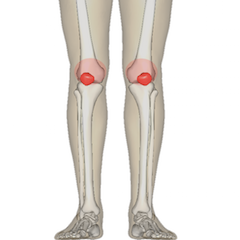
Sources

  • Gallagher, B., Silva, M. J., & Ricci, W. M. (2014). Effect of off-axis screw insertion, insertion torque, and plate contouring on locked screw strength. Journal of orthopaedic trauma, 28(7), 427–432. https://doi.org/10.1097/BOT.0000000000000042

  • Jia, Zhenzhong, et al. “A Survey of Automated Threaded Fastening.” IEEE Transactions on Automation Science and Engineering, vol. 16, no. 1, Jan. 2019, pp. 298–310, 10.1109/tase.2018.2835382. (image source for image right of figure 2)

  • Nicolson, Edward J. and R. Fearing. “Compliant control of threaded fastener insertion.” [1993] Proceedings IEEE International Conference on Robotics and Automation (1993): 484-490 vol.1. (image source for figure 2)

  • Wikipedia. “Screw Thread.” Wikipedia, 30 Apr. 2020, en.wikipedia.org/wiki/Screw_thread.

Does Norway Have the Longest Coastline

canada vs norway.jpg

Does Norway have the longest coastline in the world??

  • The longest coastline is Canada, followed by the United States of America, Russia, Indonesia, and Chile, with Norway having the 6th longest coastline in the world.


Canada, easily has the longest coastline in the world and nearly triples the 6th longest coastline of Norway.


The longest coastlines in the world

1) Canada

canada map.jpg
  • Canada has the longest coastline in the world

    • 202,080 km or 125,567 miles


2) United State of America

United States.jpg
  • The United States of America has the second longest coastline

    • 153,646 km or 95,471 miles

    • The coastline of Alaska alone is 74,996km or 46,600 miles


3) Russia

Russia.jpg
  • Russia has the 3rd longest coastline

    • 110,310 km 68,544 miles


4) Indonesia

Jakarta.jpg
  • Indonesia has the 4th longest coastline in the world

    • 95,181 km or 59,143 miles


5) Chile

chile coast.jpg
  • Chile has the 5th longest coastline

    • 86,294 km or 53,621 miles


6) Norway

norway.jpg
  • Norway has the 6th longest coastline in the world

    • 83,281km or 51,749 miles


how are coastlines measured?

There is no objectively true coastline length measurement, since it’s impossible to precisely measure the length of any coastline. Bays, nooks, inlets, and promontories are nearly impossible to measure accurately, which is why we have a phenomenon known as the “coastline paradox.”


about jesse.png

Jesse is the Director of Pedal Chile and lives in La Patagonia. Jesse has a Master of Science in Health and Human Performance and a Bachelor of Science in Kinesiology. Hobbies: Mountain biking, bicycle commuting, reading, snowboarding, researching, and maps.


More articles from Pedal Chile