bicycle

Does Cycling Reduce Cellulite?

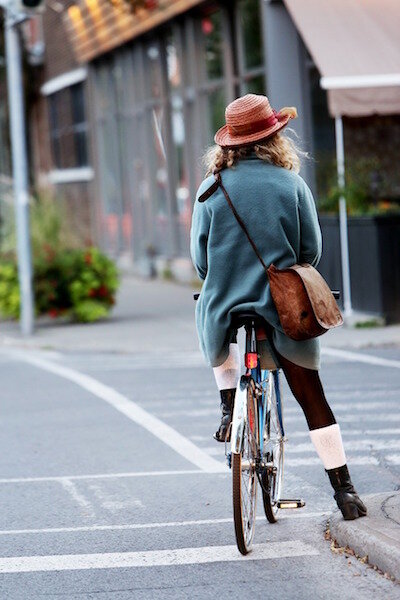
female cyclist.jpg
Despite the nuisance to patients, cellulite is not considered a disease
— Aesthetic Surgery Journal

There are very few topics that are as misunderstood and have as much misinformation as cellulite. Many so-called “experts” promote cellulite as “fat gone wrong” and blame the body for failing to eliminate toxic wastes, water, and excess fat as a way to market some gizmo product or diet regime.

Cellulite is not a disease or a medical condition that can just be eradicated. It’s a natural process that affects most women, even supermodels like Tyra Banks.


Does cycling help reduce cellulite?

If you are physically inactive or overweight, then yes, cycling will help reduce cellulite. Road cycling and mountain biking combine cardio and resistance training. Pedaling, especially uphill, extensively works your thighs, hamstrings, and butt, all areas that are mostly influenced by cellulite.


Anatomy of cellulite

In general, the formation of cellulite is a natural process and not a disease
— Journal of Medicinal Food
 

80 to 98% of women over the age of 20 have cellulite. Contrary to marketers and advertising agencies, cellulite is a natural process that’s related to hormones, particularly estrogen.


During menstruation, estrogen levels fluctuate:

Although rarely observed in males, those men presenting with cellulite are commonly deficient in male hormones
— Len Kravitz, Ph.D
  • When estrogen drops there is a breakdown of collagen fibers (connective tissue or fascia)

  • Each cycle creates further breakdown. After enough breakdown has occurred, the fat will start to protrude between the damaged collagen fibers, and this appearance is called cellulite   

  • Hip, thigh, and buttock fat acts differently. Fat in these areas is under more control of sex hormones because of their necessity for pregnancy and breastfeeding. 

  • One of the major functions of estrogen is to break down collagen, which makes childbirth possible.   


Because natural fluctuations in hormonal levels are the main cause of cellulite, it’s impossible to eliminate and extremely difficult to reduce by any significant amount.


The pathophysiology of cellulite in a picture

Image Source: Journal of Cosmetics, Dermatological Sciences and Applications,


Cellulite & exacerbating the appearance

Between 85% and 98% of post-pubertal females display some degree of cellulite. It is prevalent in women of all races but is more common in Caucasian females than in Asian females.
— Journal of Cosmetic and Laser Therapy

While cellulite is natural in most women, the appearance and degree of cellulite are influenced by 4 main factors.

  • Stress

    • Stresses, such as anxiety, frustration, and depression modify the reproductive hormones circulating through your body and can aggravate the appearance

  • Weight gain

    • Obesity is not the cause of cellulite but weight gain does make cellulite more obvious and visible

  • physical inactive lifestyle

    • If you are not physically active, you will lose muscle mass, strength, and muscle tone over-time. This is not the cause, but like weight gain, it does worsen the appearance

  • Hormonal factors

    • Estrogen plays the main role in cellulite

    • Hormonal Contraceptives - Your body makes or uses more estrogen while taking hormonal contraceptives

cellulite: diet & exercise

Although weight loss, diet and exercise have been cited as means of improving cellulite, there are no studies to date that confirm this speculation.
— Dr. Mathew M Avram (MD)
 

Considering that diet and exercise are ALWAYS recommended for reducing cellulite, there must be thousands of studies to support this??? Not quite. There are only a handful of studies that have researched diet & exercise and their effects on cellulite.

A 2019 study published in the International Journal of Medical Reviews says:


"Only a limited number of scientific studies have been done to investigate the possible effects of exercise training on cellulite improvement." (bolding is mine)


The few available studies show mixed results:


1) Maintaining your ideal body weight

  • Gaining weight aggravates the appearance of cellulite. However, losing weight too quickly also does the same thing.

    • If you are currently overweight, losing extra pounds will generally lessen the appearance.

2) Losing too much weight can make it worse

  • If you’re already at your ideal weight for your size, losing more weight could actually worsen it.

  • It’s more important to change your body composition than losing weight. Best accomplished through HIIT and resistance training.

3) Lack of physical activity worsens the appearance

  • If you’re inactive or don’t exercise, as you age, you will lose muscle tone, strength, and muscle mass. All of which makes cellulite more visible.

  • Start moving or exercising if you’re currently inactive, like by pedaling a road or mountain bike and lifting some weights.

4) You can’t exercise away cellulite

  • Being active or a regular exerciser is great for your health. However, working out longer or harder will not do much to improve the appearance of cellulite.

  • You can’t exercise the cellulite away since cellulite is mostly related to changes in the levels of reproductive hormones.

Cellulite & cycling

 
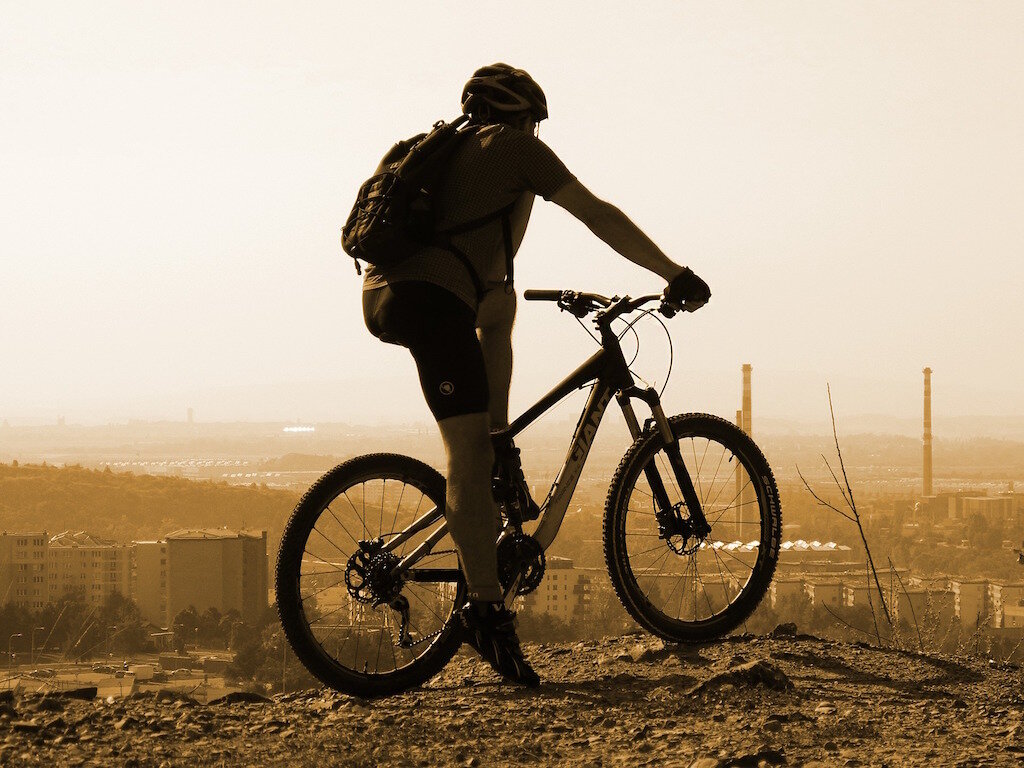
mountain biker and no cellulite.jpg
A ‘dimple’ in the cheek is considered a sign of beauty, whereas a dimple in the thigh is considered unattractive.
— B. Kinney

Road cycling and mountain biking are great exercises if you’re currently inactive or looking to lose weight.

Both mountain biking and road cycling force you into a High-Intensity Interval Training (HIIT) style workout. Natural hills need to be attacked with maximum effort to reach the top. Flat stretches allow you to recover, or you can sprint-cycle for more speed and caloric burn. Cycling is perfect for gaining muscle tone in your legs and butt and losing fat.

Bicycling combines aerobic and resistive type exercises into one fun workout. Also, since your outside, it allows you to get some sun. Having a tan is great for making cellulite less visible, and that natural vitamin D also helps you to lose even more fat.

Riding a bike is super easy on your joints, which allows you to push yourself much further and harder than you would on a jog.


Lu- Pedal Chile staff enjoying some sun after cycling

Lu- Pedal Chile staff enjoying some sun after cycling


Types of Cellulite

Photoshop is the single best way to treat cellulite
— From a female medical doctor
 

There are 3 primary types of cellulite:


1) Hard Cellulite

  • Most prevalent in the slim and physically active teenagers or young women whose skin is firm and tight.

    • Only visible during a change in body position or a pinch test

2) Soft Cellulite

  • Common in mature women older than 40

  • Women who don’t get much exercise

  • Women who lost weight rapidly

3) Mixed

  • Over time, hard cellulite transforms into soft cellulite from gradual losses of muscle mass, strength, and muscle tone, while simultaneously gaining fat. Once you have a majority of soft cellulite, its appearance is more obvious, even though the cellulite was present the entire time.

  • This transformation isn’t uniform. So certain parts of your body can have hard cellulite while others have soft or something in between.

  • Years of estrogen fluctuations are the main reason for the shift in cellulite type, but the appearance can be improved by being fit and healthy.


Final thought

Trying to treat cellulite is much like trying to ignore the normal female physiology that allows for the continuation of the species. Why should women be depressed about something that is a normal part of female anatomy? Why should attention be focused on preventing or eliminating the inevitable?
— Dr. Zoe Diana Draelos (clinical & research dermatologist)

Looking for that much needed boost to reach your athletic and health goals?? Learn more

Looking for that much needed boost to reach your athletic and health goals?? Learn more


about jesse.png

Jesse is the Director of Pedal Chile and lives in Valdivia, Chile. Jesse has a Master of Science in Health & Human Performance and a Bachelor of Science in Kinesiology. Hobbies: Mountain biking, bicycle commuting, snowboarding, reading, weight-lifting, taster of craft beers, & researcher.


More articles from Pedal Chile

Sources & References for “Cycling and Cellulite”

It has nothing to do with water-retention, poor circulation, accumulated lymphatic fluid or the ubiquitous scapegoat—toxins.
— Dr. Peter Pugliese (MD) talking about cellulite
  1. Avram, Mathew M. “Cellulite: A Review of Its Physiology and Treatment.” Journal of Cosmetic and Laser Therapy, vol. 6, no. 4, Dec. 2004, pp. 181–185, 10.1080/14764170410003057.

  2. Bauer, J., Grabarek, M., Migasiewicz, A. et al. Non-contact thermal imaging as potential tool for personalized diagnosis and prevention of cellulite. J Therm Anal Calorim 133, 571–578 (2018). https://doi.org/10.1007/s10973-018-7232-9

  3. Bass, Lawrence S, and Michael S Kaminer. “Insights Into the Pathophysiology of Cellulite: A Review.” Dermatologic surgery : official publication for American Society for Dermatologic Surgery [et al.] vol. 46 Suppl 1,1 (2020): S77-S85. doi:10.1097/DSS.0000000000002388

  4. Cassity, Jessica. “Can I Work Off My Cellulite?” WebMD, www.webmd.com/fitness-exercise/features/are-there-exercises-to-get-rid-of-cellulite.

  5. Draelos, Zoe Diana. “The Disease of Cellulite.” Journal of Cosmetic Dermatology, vol. 4, no. 4, Dec. 2005, pp. 221–222.

  6. Korabiusz Katarzyna, Wawryków Agata. Causes of lipodystrophy. Journal of Education, Health and Sport. 2018;8(9):1765-1770.

  7. Kruglikov, Ilja. “The Pathophysiology of Cellulite: Can the Puzzle Eventually Be Solved?” Journal of Cosmetics, Dermatological Sciences and Applications, vol. 02, no. 01, 2012, pp. 1–7, 10.

  8. Leszko M. (2014). Cellulite in menopause. Przeglad menopauzalny = Menopause review, 13(5), 298–304. https://doi.org/10.5114/pm.2014.46472

  9. Pugliese, Peter. “Cellulite Revisited.” Skin Inc., Nov. 2014.

  10. Rawlings, A. V. “Cellulite and Its Treatment.” International Journal of Cosmetic Science, vol. 28, no. 3, June 2006, pp. 175–190.

  11. Schunck, Michael et al. “Dietary Supplementation with Specific Collagen Peptides Has a Body Mass Index-Dependent Beneficial Effect on Cellulite Morphology.Journal of medicinal food vol. 18,12 (2015): 1340-8.

  12. Smalls, Lola K., et al. “Effect of Weight Loss on Cellulite: Gynoid Lypodystrophy.” Plastic and Reconstructive Surgery, vol. 118, no. 2, Aug. 2006, pp. 510–516.

  13. Taati, Behzad, and Maryam Khoshnoodnasab. “Exercise-Based Approaches to the Treatment of Cellulite.” International Journal of Medical Reviews, vol. 6, no. 1, 15 Mar. 2019, pp. 26–27, 10.29252/ijmr-060105.

  14. Tokarska, K., Tokarski, S., Woźniacka, A., Sysa-Jędrzejowska, A., & Bogaczewicz, J. (2018). Cellulite: a cosmetic or systemic issue? Contemporary views on the etiopathogenesis of cellulite. Postepy dermatologii i alergologii, 35(5), 442–446.

  15. Uebel, MD, PhD, Pedro Salomao Piccinini, MD, Alessandra Martinelli, MD, Daniela Feijó Aguiar, MD, Renato Franz Matta Ramos, MD, Cellulite: A Surgical Treatment Approach, Aesthetic Surgery Journal, Volume 38, Issue 10, October 2018, Pages 1099–1114,

  16. WebMD. “Can You Get Rid of Cellulite?” WebMD, www.webmd.com/beauty/get-rid-of-cellulite#1.

Should I Wear a Cup While Mountain Biking

jockstrap and mtb.jpeg

Men no longer had to worry about flopping around when they were riding a bike or playing a sport.
— Bobby Mercer in the book "Manventions"

The first jockstrap was called the “bike jockey strap” and was designed to be worn by bicycle jockeys in the 1870s.

Many bike terms were adapted from horse riding, especially during the early era of cycling as horses were the primary mode of transit. A person riding a bicycle during this time was known as a bicycle jockey and the “bike jockey strap” was soon shortened to “jockstrap.”

Since the jockstrap was originally designed to be worn by cyclists, it must be perfectly logical to conclude that modern-day riders should be wearing them too???


Should you wear a cup or jockstrap while mountain biking?

Wearing a cup or jockstrap compromises rider comfort and safety while pedaling from a seated position and is NOT recommended for general or downhill mountain biking. Wearing a cup during cycling will increase the pressure on your perineum, which can lead to severe erectile dysfunction issues.  

There are also no known benefits of cups protecting against straddle-type injuries or protection against branches, rocks, and bike components.


jockstrap & supporting the “floppy man”

Image Source: Out Magazine (2004)


Charles F. Bennett, an avid bicyclist created the first jockstrap in 1874, to remedy the problem of what he called “floppy man parts.

  • The 1st jockstrap was designed to support the manly jewels and prevent them from bouncing around while cycling (underwear wouldn’t be invented for another 61 years)

  • It took an additional 31 years and another sport before the cup was added to the jockstrap

Bouncing Cyclists

These first bicycle jockey straps were originally designed to contain “floppy man parts,” as “tighty whities” weren’t even invented yet. In 1935, Coopers Inc. sold their first pair of men’s briefs, which was dubbed the “jockey” as it offered similar support. Coppers Inc. even had one style called the “jock brief.”

The High Wheeler or “penny-farthing”

The High Wheeler or “penny-farthing”

In 1870s America, the standard bicycle was the High Wheeler. Bikes of this era had a wooden seat with no springs, no suspension, and pneumatic (inflatable) tires were yet to be invented.

Cyclists were 5 feet off the ground and getting bounced around from riding on bumpy cobblestone streets without any proper inner garments. The cycling pad or chamois would be developed about 20 years later, making the bike jockey strap obsolete for the sport of cycling.


jockstrap & the cup

The original jockstrap was solely designed to support the jiggling jewels and didn’t offer any protection against impacts.

The cup was not part of the bike jockey strap and was a later addition to impact sports. In 1905, a baseball catcher named Claude Berry put a steel ‘safety cup’ in his jockstrap since catchers had no groin protection.

By the 1920s, the cup became standard gear for baseball, hockey, martial arts, cricket players, and other athletes in contact sports.


It’s believed his qualities behind the plate were enhanced by the piece of molded steel in his pants
— Journal of Urology (talking about Claude Berry)

Mountain biking with a cup

cup and mtb.jpeg

According to the 2018 book, Management of Sports and Physical Education by Maddox Howe:

Protective Equipment - Cycling

  • Jockstrap (optional)
  • Jockstrap with a cup pocket and protective cup for mountain biking
  • Spandex shorts
  • Helmet

(Howe, p. 217 - - bolding is mine)


In theory, maybe, wearing a cup while mountain biking makes sense. However, in the real world, it just doesn’t work.

Wearing a cup and sitting down increases the pressure in your groin area. The whole point of wearing padded cycling shorts is to protect your groin from friction and to alleviate pressure on the saddle. Wearing a cup increases the pressure on your perineum while seated and is dangerous for your genitalia, and is also uncomfortable.

You should be riding with padded bicycling shorts without a jockstrap or cup. If you’re riding with a cup, your trading your long-term genital health for the smallest chance of a possible short-term benefit.


Practical Issues of Wearing a Cup & Pedaling

Sitting in the saddle and pedaling while wearing a cup changes your cycling mechanics. Leaning forward on the seat for climbing with a cup is incredibly uncomfortable and forces you to modify your pedal stroke. The result is excessive rubbing against the cup and increased groin pressure.

Riding over roots and logs while seated is not only uncomfortable but is also painful.

Downhill Riding & Wearing a Cup

If one were to wear a cup while mountain biking, wearing while descending or riding in a bike park would be the most logical. However, in reality, it’s not so practical.

Riding on bumpy trails vibrates the cup, and causes a lot of pressure in your groin area, even while standing. Trying to push down on the seat with your body to activate the dropper post can be painful if the cup gets in the way.

The only possible way to really make it feasible is to hoover over the saddle the ENTIRE ride, which for most people is not very realistic. Also, you use your legs to grip the seat during turns and other maneuvers, and it’s just too easy to make contact with the cup which puts too much pressure on your groin.

Fast Balls

Scrotal rupture during athletic competition is considered a rare occurrence; however, blunt trauma to the scrotum is relatively common.
— Sports Health

While its common to experience testicular injuries in sports and athletic hobbies, most don’t require medical attention. A 2019 study from the Irish Journal of Medical Science noted that:

"A study in the USA involving over 5,400 sports-related injuries arising in the National Paediatric Trauma Registry encountered no testicular injuries at all. When they did occur, as reported in other studies, the majority of testicular injuries (48%) was reported in the sport of lacrosse." - - (bolding from this author)

A 2019 study from Case Reports in Emergency Medicine reports:

"Studies revealed that a 50 kg direct force is required to cause testicular rupture."

While it's possible to suffer a traumatic testicular injury, it takes over 110 pounds of direct force. Getting hit below the belt hurts and is quite common, but for those unlucky few who suffer from serious injury, it takes an imperfectly perfect shot with a lot of power or force.


From a 1904 sporting catalogue

From a 1904 sporting catalogue


mtb bike park & groin injuries

A team of doctors reviewed all the patients admitted to the Whistler Health Clinic for injuries while riding in the Whistler Bike Park during the entire 2009 season. The data was published in the journal of Wilderness & Environmental Medicine in a 2012 publication.

The medical clinic had 898 patients during the season from injuries incurred at the Whistler Blackcomb Mountain Bike Park, of these injuries:

  • 86% were male 

  • The average age was 26

  • Zero groin accidents (0 out of 898 riders with 1,759 total injuries)


Want to go faster ???

 
racing lube.jpg


Whistler Bike Park, Groin Injuries & Follow-up

I contacted Dr. Mary Mckay, who was part of the research team for the Whistler bike park study. I wanted to verify that no groin injuries occurred since it’s possible they got lumped into a different category, such as abdominal or lower extremity.

Dr. Mckay said,

“I don't recall seeing any significant groin injuries - but frankly, we did the work for the paper a really long time ago.”

Dr. Mckay in her response did bring up two valid questions though:

  1. How much protection does a cup provide in mountain biking??

    • It’s a catch 22. The cup can protect against a traumatic blow, but it can also cause possible long term groin damage while being sat on.

  2. Does MTB provide a significant risk of groin injury??

    • Not much risk, as genital injuries are rare.


Final thought


And why would a cyclist want to wear any garment to support the genitals? I can only comment that several Scotsmen can’t be wrong – nothing is worn under the kilt!
— Scotford Lawrence at the National Cycle Museum in Wales in response to my quiry about jockstraps


Wearing anything that comes between your saddle and “junk” is not good. There is a reason you wear biking shorts with a pad or chamois. Compromising riding mechanics, comfort, and long term genitalia health to reduce the freak odds of a traumatic blow is not a good trade.


about jesse.png

Jesse is the Director of Pedal Chile and lives in Valdivia, Chile. Jesse has a Master of Science in Health & Human Performance and a Bachelor of Science in Kinesiology. Hobbies: Mountain biking, bicycle commuting, snowboarding, reading, weight-lifting, taster of craft beers, & non-cup wearer.


More articles from Pedal Chile

Sources & References

  1. Ashwell, Zachary, et al. “The Epidemiology of Mountain Bike Park Injuries at the Whistler Bike Park, British Columbia (BC), Canada.” Wilderness & Environmental Medicine, vol. 23, no. 2, June 2012, pp. 140–145.

  2. Blok, Derek, et al. “Testicular Rupture Following Blunt Scrotal Trauma.” Case Reports in Emergency Medicine, vol. 2019, 19 Dec. 2019, pp. 1–3.

  3. “Briefs.” Wikipedia, 26 Oct. 2020, en.wikipedia.org/wiki/Briefs.

  4. ESPN The Magazine. “ESPNMAG.Com - Why Are They Called Jock Straps?” Www.Espn.Com, www.espn.com/magazine/vol5no11answerguy.html. Accessed 27 Oct. 2020.

  5. Freehill, Michael T et al. “Presumed testicular rupture during a college baseball game: a case report and review of the literature for on-field recognition and management.Sports health vol. 7,2 (2015): 177-80.

  6. Gabay, J. Gabay’s Copywriting Compendium. London, Hodder Education, 2010.

  7. Howe, Maddox. Management of Sports and Physical Education. Waltham Abbey Essex, England, Etp, 2018.

  8. Kimmel, Michael S. Cultural Encyclopedia of the Penis. Lanham, Rowman & Littlefield, 2014.

  9. Lengerke & Antoine. Fishing Tackle and Spring and Summer Sports. 1904 Net Trade Catalogue, No. 19. Chicago, 1904.

  10. Loeb, Charles A., et al. “FR-09 GUARDING THE FAMILY JEWELS: A HISTORY OF THE ATHLETIC CUP.” Journal of Urology, vol. 199, no. 4S, Apr. 2018.

  11. Mercer, Bobby. Manventions : From Cruise Control to Cordless Drills-- Inventions Men Can’t Live Without. Editorial: Avon, Massaschusetts, Adams Media, 2011.‌

  12. Norcliffe, G B. The Ride to Modernity : The Bicycle in Canada, 1869-1900. Toronto, University Of Toronto Press, 2001.

  13. Out MagazineOutGoogle Books, 1st ed., vol. 13, Here Publishing, 1 July 2004, p. 82.

  14. Penn, Rob. It’s All about the Bike : The Pursuit of Happiness on Two Wheels. New York/London, Bloomsbury, 2012.

  15. Rushin, Steve. The 34-Ton Bat : The Story of Baseball as Told through Bobbleheads, Cracker Jacks, Jockstraps, Eye Black, and 375 Other Strange and Unforgettable Objects. New York, Little, Brown And Company, 2013

  16. Tasian, Gregory E et al. “Pediatric genitourinary injuries in the United States from 2002 to 2010.The Journal of urology vol. 189,1 (2013): 288-93.

When sitting on a bike should your feet touch the ground?

Correct seat height; You can only touch the ground with your toes. Many bicycle commuters will stop and use the curb since they can’t reach the ground without a “boost.”

Correct seat height; You can only touch the ground with your toes. Many bicycle commuters will stop and use the curb since they can’t reach the ground without a “boost.”


Usually, you cannot touch the ground with both feet when sitting on the saddle - but you should be able to reach the floor with the ball of one foot
— The Long Distance Cyclist’s Handbook


Proper saddle height is very important.

Too low of a saddle is hard on your knees and is very inefficient. Too high of a saddle and you can’t get any leverage on the pedal cranks and is very uncomfortable.

Either way, a saddle that is too far up or down is bad, uncomfortable, inefficient, and will eventually lead to injuries or pain.


Should my feet touch the ground on a bicycle when I’m sitting in the seat/saddle?


For most styles of bicycles, including road, gravel, and mountain bikes, you’re at the CORRECT saddle height when you can only touch the ground with the TIPS of your toes while your ankles are flexed with your toes pointed downward (see pic below).

If you can sit on your bike seat with your feet flat on the ground, then your saddle is much too low.


Notice this mountain biker can only touch with the tips of his toes while reaching down with his foot. This cyclist is riding with a correct saddle height

Notice this mountain biker can only touch with the tips of his toes while reaching down with his foot. This cyclist is riding with a correct saddle height


The only time your feet should be flat on the ground is when you are straddling a bike while sizing it.


Image Source: Specialized Bicycle Owner's Manual


Above are the instructions from the Specialized Bicycle Owner’s Manual.

Basically, your crotch should be 2 to 6 inches higher than the frame when straddling the bike. Once you go from straddling the frame to straddling the saddle, you should only be able to reach the ground while being on your tippy-toes.


bicycle seat too low

 
This rider is all bunched up with knees going into his chest. This saddle is too low.

This rider is all bunched up with knees going into his chest. This saddle is too low.


It’s very common for beginner and intermediate cyclists to ride with their seat too low since they feel more comfortable being able to reach the ground.

However, riding with a saddle that is too low reduces pedal efficiency and overtime causes knee problems.

“Biker’s Knee” or Patellofemoral Pain Syndrome (PFPS) is the most common knee injury to cyclists and is caused in part, by riding with the saddle too low.

Saddle Too Low & Problems

  • Pain in the front of the knee or on the kneecap (patella)

    • More common in recreational riders than amateur or professional cyclists

    • Caused from riding with too low of a saddle or sitting too far forward in the saddle

    • Saddle Too Low = Knee is more flexed = causes compression of the patella against the underlying surfaces = excessive amount of shear forces pulling the patella = anterior knee pain

  • Limited knee extension = reduced pedal efficiency and power

    • Reduced Efficiency - You will have “smaller” pedal strokes, which means you will need to pedal more to maintain the same speed as your friends

    • Less Power - It’s hard to generate any serious power when you’re essentially turning your long legs (levers) into short legs (levers)


Bicycle saddle too high

 
Seat too high. Zero bend in my knee and can barely reach pedal even when scooting up on the saddle

Seat too high. Zero bend in my knee and can barely reach pedal even when scooting up on the saddle


Riding with a saddle that is too high is just as bad as riding with one that’s too low, but for different reasons.

Saddle Too High & Problems

  • Saddle sores: Hips rock back and forth against the saddle causing sores (and a waste of energy)

  • Causes pain behind the knee from overextending

  • Uncomfortable from over-reaching and excessive rubbing on the seat

  • Not a very powerful position as your trying to spin the pedals from a very weak position


Image Source: (Leavitt and Vincent)

Image Source: (Leavitt and Vincent)


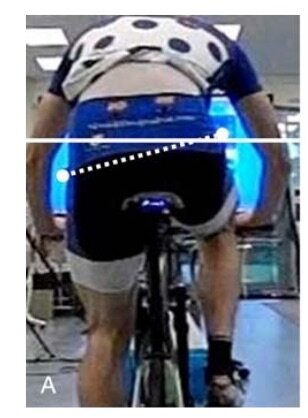
You know the seat is too high when your riding and your hips are rocking back and forth.

In the above picture, this cyclist has a saddle that is too high as he has excessive hip motion or rocking. However, you don’t want to eliminate all hip motion, since the ideal amount of pelvis movement transfers more power to your legs.


Optimal saddle height


There are numerous formulas and techniques for finding your proper saddle height, such as the Hamley, Lemond, Holmes, Pruitt, and heel-toe methods.

Finding your seat height quickly & easily: Heel-toe method

The heel-toe method is the quickest and easiest way to find your approximate ideal saddle height and also requires no specialized equipment.

The heel-toe method:

  1. Sit on the bicycle with both feet on the pedals

  2. Prop yourself up (hang onto a wall, use a trainer, or ask a friend to help)

  3. Pedal backward until:

    • The bottom pedal is in the 6-o’clock position 

    • The top pedal is in the 12-'o’clock spot 

  4. Place your heel on the low pedal and your leg should be fully extended 

  5. Go for a ride. When you spin the pedals your leg should have a slight bend (25 - 40 degree knee angle) while in the bottom position

    • This is just an approximate starting point and you can make adjustments up or down, from this position

Most bicycle owner’s manuals use this method. Below is the heel-toe method, with instructions, from the Specialized Owner's Manual.


Image Source: Specialized Bicycle Owner's Manual


Final Thought

Of all the bike fit adjustments, saddle height is considered the most important.

  • Optimal seat height allows you to maximize every spin of the pedals while keeping your knees healthy. You will make over 7,200 pedal revolutions in just a leisurely 2-hour bike ride. If your seat isn’t set properly, your body will let you know.


about jesse.png

Jesse is the Director of Pedal Chile and lives in Valdivia, Chile. Jesse has a Master of Science in Health & Human Performance and a Bachelor of Science in Kinesiology. Hobbies: Mountain biking, bicycle commuting, snowboarding, reading, weight-lifting, taster of craft beers, & researching.


Sources & References

  1. Cannondale Bicycle Corporation. Bicycle Owner’s Manual.

  2. Doughty, Simon. The Long Distance Cyclist’s Handbook. London, A & C Black, 2002.

  3. Kronisch, Robert L. “How to Fit a Mountain Bike.” The Physician and Sportsmedicine, vol. 26, no. 3, Mar. 1998, pp. 71–72, 10.1080/00913847.1998.11440350.

  4. Leavitt, Trevor G., and Heather K. Vincent. “Simple Seat Height Adjustment in Bike Fitting Can Reduce Injury Risk.” Current Sports Medicine Reports, vol. 15, no. 3, 2016, p. 130.

  5. Specialized Bicycle Components, Inc. OWNER’S MANUAL SPECIALIZED BICYCLE. 2007.

  6. Trek Bikes. “Owners Manual - Fitting Your Bicycle | Trek Bikes.” Trekbikes.Com, 2020.

Is Creatine Good for Mountain Biking

 
creatine and mtnbike.jpeg

Short-term creatine monohydrate supplementation has been widely used to improve performance in high-intensity and short-term efforts in cycling
— Frontiers in Physiology

Muscle creatine or phosphocreatine is the critical power/energy source in activities that involve repeated mini-bouts or maximum all-out-bursts, lasting up to about 15 seconds.

Increasing your creatine reserves is very beneficial for mountain biking, especially during steep climbs or quick accelerations as you attack sections or spin the pedals relentlessly coming out of corners and technical features.


Are there benefits to supplementing with creatine for mountain biking?

Cross-country, trail riders, and endurance-based forms of mountain bikers

  • Can benefit from low-dosing or 4 g/daily of creatine-electrolyte without a loading phase for increased power and resistance against fatigue

Downhill Mountain bikers or gravity-assisted riders

  • Numerous benefits from the standard recommended dosage of creatine and a loading phase
  • Increased power and slower to fatigue, especially while descending long and technical sections

mountain biking: Increased power & creatine

Supplementing with a creatine and electrolyte combination mixture will improve your power output by 3 - 7%

For the average recreational rider, this will mean an increase of ~25 to 50 watts of extra pedal power, meaning sprinting up hills or climbing over roots, just got significantly easier.


Creatine & water weight


Although body mass increased by 2 kg, the relative volume of body-water compartments was not affected, suggesting that the increase in body mass after creatine supplementation cannot be attributed to water retention
— International Journal of Sports Physiology and Performance


What about the extra water weight from the creatine?

Ingesting a creatine-electrolyte supplement will cause you to gain weight because you are increasing your muscle creatine content, body mass, and total body water.

  • Weight gains of 2 - 5 pounds (.8 to 2.2 kg)

  • Average weight gain is around 3 pounds (1.4kg)

The majority of weight gain after 4 weeks of creatine-electrolyte supplementation is in the form of muscle mass with minimal water weight.

However, it should be noted that during the “loading phase” of creatine supplementation, it’s common for people to experience weight gain primarily from water weight.

“Loading Phase” & Weight Gain

Creatine has been called a hyper-hydrating agent because, during the loading phase when 20 grams of creatine is ingested per day, initial fluid retention of 14 - 28 oz (400 to 800 mL) is common.

  • Loading phase = water retention and weight gain in form of “water weight” = 1 - 3 lbs (around 1kg)

  • Maintenance phase after 3 weeks = increase in protein synthesis and an increase in lean muscle with a reduction in water weight

It’s also important to note that taking creatine with carbohydrates, especially during the loading phase will cause you to gain even more water weight. One-gram of carbohydrate is partnered with 2 to 3 grams of water.

The creatine studies that show the highest rates of water retention involve weight lifters. This makes sense because lifters pick heavy things up and set them down to get bigger & stronger, while simultaneously modifying their diet………like eating more carbs, which leads to a bigger ‘pump’ and larger muscles, partially from more water being in the cells.

(Image Source: Clarke et al.)

(Image Source: Clarke et al.)


Creatine, Weight Gain & Uphill Climbing

Your power-to-weight ratio is hugely important when climbing hills. A couple of days of intense riding per week while supplementing with a creatine-electrolyte mixture will lead to slight increases in muscle gain and subsequent weight gain. Water retention weight is generally negligible after the loading phase.

Gaining 3 pounds of body weight will require an extra ~5 watts of power to pedal up a 15% gradient incline. The creatine-electrolyte supplementation provides you with an additional 25-50 watts of power so even gaining a little bit of water weight, you will be able to climb hills better.


Why take creatine with electrolytes?

You NEED electrolytes to get creatine into your muscle cells.

Creatine is shuttled by specialized electrogenic transporter proteins which are dependent on electrolytes, such as sodium, potassium, chloride, calcium, and magnesium.

When you take creatine together with electrolytes, your muscles will absorb more of it. For example, taking creatine in the absence of calcium and magnesium results in a reduction of creatine absorption by 47%.

It should be noted that sodium and chloride are especially important since the cellular uptake of creatine can’t happen without them:

  • 2 sodium ions + 1 chloride ion = transport of 1 creatine molecule

atp.png
 

Creatine & mountain biking in the heat

 
These findings provide strong evidence that creatine supplementation (with or without glycerol) may serve as an effective nutritional hyper-hydration strategy for athletes engaged in intense exercise in hot and humid environments
— Journal of the International Society of Sports Nutrition

In 2017, the International Society of Sports Nutrition published a “position stand” on the safety and efficacy of creatine supplementation and concluded that cycling in the heat:

The researchers reported that creatine supplementation increased intracellular water and reduced thermoregulatory and cardiovascular responses to prolonged exercise (e.g., heart rate, rectal temperature, sweat rate) thereby promoting hyper-hydration and a more efficient thermoregulatory response during prolonged exercise in the heat.

While the “loading phase” is responsible for water retention, this increased intracellular water has benefits during mountain biking in hot weather or high humidity.

20 grams of creatine-electrolyte solution per day for 5 days before mountain biking in the heat/humidity will hyper-hydrate your cells and allow you to ride harder with a lower heart rate while staying cooler and sweating less.


lube fast .jpg

If you want even more pedal power, you can supplement with creatine and use Pedaling Science’s specially formulated chain lubricant to give you 10+ more WATTS…. you just got a whole lot faster!


"Fluid Loading" & Astronauts

Astronauts lose over 5 lbs of weight on short-term flights and over 20 lbs (10kg) during longer missions from a multitude of factors, with losses from dehydration being one of them.


Studies have been conducted where astronauts “fluid load” or “pre-hydrate” with creatine before take-off, to minimize dehydration during flight.


I’m not sure if astronauts actually take creatine supplements before space-missions, yet, it's interesting to note that “space scientists” have studied and determined that creatine has hydration and thermoregulatory effects in terrestrial environments.

creatine mono and mtb.jpg

low dose creatine: Weight & MTB benefits

If you’re looking to avoid ANY weight gain from creatine supplementation, but still want the benefits, you still have one option.


Studies show that low-dose, short-duration creatine supplementation reduces fatigue rates……but doesn’t increase maximum power output. However, it should be noted that these studies didn’t research a creatine-electrolyte mixture, which is about 5 times more absorbent than just ingesting creatine.

The basic premise behind the low dosage short duration phase is to increase or maximize muscle creatine for a single event.

What is the dosage for low-dose, short duration creatine supplementation?

  • 6 g for 5 - 6 days of a creatine-electrolyte mixture (once per day)


Final thought

Creatine monohydrate is the most effective ergogenic nutritional supplement currently available to athletes with the intent of increasing high-intensity exercise capacity
— International Society of Sports Nutrition

Creatine is the most thoroughly studied legal sports supplement and its effectiveness extends way beyond just pumping iron in the gym. If you ride hard at least a couple of times per week, adding some creatine-electrolyte mixture into your diet can do wonders for your power and recovery.


about jesse.png

Jesse is the Director of Pedal Chile and lives in Valdivia, Chile. Jesse has a Master of Science in Health & Human Performance and a Bachelor of Science in Kinesiology. Hobbies: Mountain biking, bicycle commuting, snowboarding, reading, weight-lifting, taster of craft beers, & researching.


More articles from Pedal Chile

Sources & References

 
For example, a pound of uncooked beef and salmon provides about 1–2 g of creatine
— Journal of the International Society of Sports Nutrition
 
  1. BIWER, CRAIG J., et al. “The Effect of Creatine on Treadmill Running With High-Intensity Intervals.” Journal of Strength and Conditioning Research, vol. 17, no. 3, Aug. 2003, pp. 439–445.

  2. Butts, Jessica et al. “Creatine Use in Sports.Sports health vol. 10,1 (2018): 31-34. doi:10.1177/1941738117737248

  3. Clarke, Holly, et al. “The Evolving Applications of Creatine Supplementation: Could Creatine Improve Vascular Health?” Nutrients, vol. 12, no. 9, 16 Sept. 2020, p. 2834.

  4. de Poli, Rodrigo de Araujo Bonetti, et al. “Creatine Supplementation Improves Phosphagen Energy Pathway During Supramaximal Effort, but Does Not Improve Anaerobic Capacity or Performance.” Frontiers in Physiology, vol. 10, 10 Apr. 2019, www.ncbi.nlm.nih.gov/pmc/articles/PMC6468287/, 10.3389/fphys.2019.00352.

  5. DE ANDRADE NEMEZIO, K.M., BERTUZZI, R., CORREIA-OLIVEIRA, C.R., GUALANO, B., BISHOP, D.J. and LIMA-SILVA, A.E. (2015). Effect of Creatine Loading on Oxygen Uptake during a 1-km Cycling Time Trial. Medicine & Science in Sports & Exercise, 47(12), pp.2660–2668.

  6. Deminice, R., et al. “Creatine Supplementation Increases Total Body Water in Soccer Players: A Deuterium Oxide Dilution Study.” International Journal of Sports Medicine, vol. 37, no. 02, 28 Oct. 2015, pp. 149–153, 10.1055/s-0035-1559690.

  7. Francaux, Marc, and Jacques R. Poortmans. “Side Effects of Creatine Supplementation in Athletes.” International Journal of Sports Physiology and Performance, vol. 1, no. 4, Dec. 2006, pp. 311–323.

  8. ‌Graef, J.L., Smith, A.E., Kendall, K.L. et al. The effects of four weeks of creatine supplementation and high-intensity interval training on cardiorespiratory fitness: a randomized controlled trial. J Int Soc Sports Nutr 6, 18 (2009). https://doi.org/10.1186/1550-2783-6-18

  9. Guy, Joshua, and Grace Vincent. “Nutrition and Supplementation Considerations to Limit Endotoxemia When Exercising in the Heat.” Sports, vol. 6, no. 1, 6 Feb. 2018, p. 12.

  10. Hickner, R.C., Dyck, D.J., Sklar, J., Hatley, H. and Byrd, P. (2010). Effect of 28 days of creatine ingestion on muscle metabolism and performance of a simulated cycling road raceJournal of the International Society of Sports Nutrition, 7(1).

  11. Hoffman JR, Stout JR, Falvo MJ, Kang J, Ratamess NA. Effect of low-dose, short-duration creatine supplementation on anaerobic exercise performance. J Strength Cond Res. 2005 May;19(2):260-4. doi: 10.1519/15484.1. PMID: 15903359.

  12. Kreider, R.B., Kalman, D.S., Antonio, J., Ziegenfuss, T.N., Wildman, R., Collins, R., Candow, D.G., Kleiner, S.M., Almada, A.L. and Lopez, H.L. (2017). International Society of Sports Nutrition position stand: safety and efficacy of creatine supplementation in exercise, sport, and medicineJournal of the International Society of Sports Nutrition, 14(1).

  13. Mendel, Ronald W., et al. “Effects of Creatine on Thermoregulatory Responses While Exercising in the Heat.” Nutrition, vol. 21, no. 3, Mar. 2005, pp. 301–307.

  14. Oliver, J.M., Joubert, D.P., Martin, S.E. and Crouse, S.F. (2013). Oral Creatine Supplementation’s Decrease of Blood Lactate During Exhaustive, Incremental Cycling. International Journal of Sport Nutrition and Exercise Metabolism, 23(3), pp.252–258.

  15. Powers, Michael E. et al. “Creatine Supplementation Increases Total Body Water Without Altering Fluid Distribution.Journal of athletic training vol. 38,1 (2003): 44-50.

  16. Rawson, Eric S., et al. “Low-Dose Creatine Supplementation Enhances Fatigue Resistance in the Absence of Weight Gain.” Nutrition, vol. 27, no. 4, Apr. 2011, pp. 451–455, 10.1016/j.nut.2010.04.001.

  17. Walter, Ashley A., et al. “Effects of Creatine Loading on Electromyographic Fatigue Threshold in Cycle Ergometry in College-Age Men.” International Journal of Sport Nutrition and Exercise Metabolism, vol. 18, no. 2, Apr. 2008, pp. 142–151, 10.1123/ijsnem.18.2.142.


Best Saddle Height For IT Band Syndrome


(Image Source: Hadeed and Tapscott)

(Image Source: Hadeed and Tapscott)


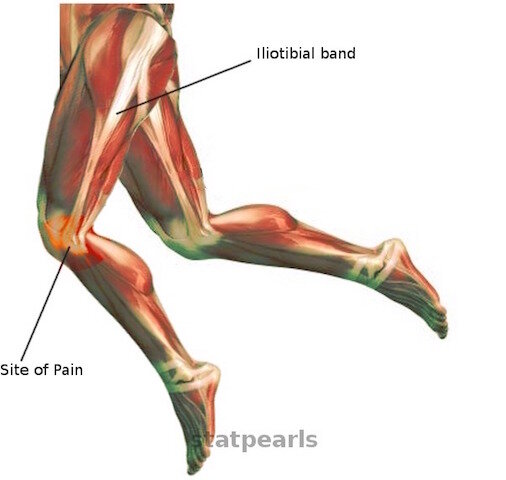
Iliotibial band (ITB) syndrome is the most common cause of lateral knee pain in cyclists
— From the International journal of sports physical therapy


Even though Iliotibial Band Syndrome (ITBS) is more commonly called “Runner’s knee,” don’t let the name trick you, since it’s nearly as common in mountain bikers, triathletes, and cyclists. 

The first detailed case of ITBS was published in 1975 and involved military recruits whose running and training activities increased drastically, leading to lateral knee pain. 

Iliotibial Band Syndrome is an inflammatory, over-use injury, to the outside of the knee which is caused by a multitude of factors. Drastic or sudden increases in riding intensity or distance are usually to blame and are intensified if you pedal with any anatomical or equipment-related misalignments.


Your iliotibial band can inflame when you flex and extend your knee aggressively and repetitively, which is why it’s common in both runners and cyclists.


“Runner’s Knee” actually refers to two separate over-use injuries

  1. Iliotibial Band Syndrome (ITBS)Pain on the SIDE of your knee.

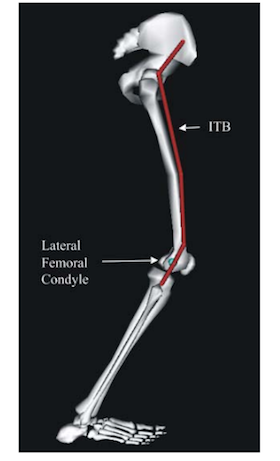
    • ITB = ilio tibial band, which is a band of strong connective tissue or fascia. The ITB runs the entire length of your thigh. ITBS is an inflammation or irritation of this band of fascia

  2. Patellofemoral Pain Syndrome (PFPS) - Pain on the FRONT of your knee or under the kneecap. This is more commonly known as “Biker’s Knee.”


knee pain & IT band syndrome

Image Source: (Meardon et al.)

Image Source: (Meardon et al.)


The main symptom of iliotibial band syndrome is a sharp pain on the lateral side of your knee that can radiate into your outer thigh or calf.

  • The pain is intensified and becomes sharp when your knee is flexed between 20 - 30°

    • 30 degrees of knee flexion is known as the “impingement zone,” and it’s at this knee angle you will experience the most discomfort

IT Band syndrome: Compression or friction

There are two general schools of thought when it comes to Iliotibial Band Syndrome:

  1. That ITBS is a friction syndrome and is sometimes called ITBFS, with the F denoting the word friction.

    • The IT band “rubs” against the lateral femoral condyle

  2. IT Band Syndrome is a compression condition

    • The femoral condyle moves “under” your IT Band, causing compression between the fibers and layers of fat


Regardless of exactly what’s going on inside your leg, flexion of your knee through the “iliotibial band impingement zone” will cause more pain and further irritate your IT Band.

  • Even though the most serious pain in felt at 30 degrees, if your IT Band is irritated, it will become even further inflamed with any pedal motions through a knee angle range of 0 to 30°.

riding with ITB Pain: Optimal Saddle Height


Notice that for “Biker’s Knee,” you raise the seat and for ITBS you lower the saddle- - - (Image source: Bini et al., 2013).


What is the best saddle height to alleviate symptoms from an inflamed Iliotibial Band??

  • You need to lower your saddle to allow for a 35° knee flexion angle
    • The impingement zone is 30° knee flexion so you need to lower the seat below this point
    • Lowering the saddle increases your knee angle
  • Keep in mind that faster pedaling will make your hips rock back and forth, which effectively raises your seat height and will require a further lowering of your saddle

However, this is just a temporary solution. This will allow you to continue to train and ride your bike less intensely, without experiencing severe IT Band pain or discomfort but does nothing to address or fix the cause of it.

What causes IT Band Syndrome & cyclists


A seat that is too high causes excess stretch of the ITB as can improper foot position on the pedal, rigid clipless pedals, and excessively toed in cleats.
— The Knee


Schematic representation of the anatomy of the iliotibial band (ITB) - - - Image source: (Falvey et al.)


Despite thousands of studies, most notably in runners (after all it’s called “Runner’s Knee”), the exact cause of ITBS is still not fully understood, mainly because ITBS is multifactorial. Meaning, it’s not just one thing that causes your iliotibial band to become irritated or inflamed.


Cycling is very repetitive. During 1 hour of cycling at an average cadence of 60 to 100 rpm, you will spin the pedals 3,600 to 6,000 times. Mixed in with even the tiniest amount of anatomical or equipment-related misalignment, combined with hills, headwinds, or “aggressive” riding, and you end up with a formula for possible dysfunction or pain.


Just a moderately-intense 25 mile (40km) road ride, the average cyclist spends over 8 minutes in the “iliotibial band impingement zone.” That number spikes considerably when you're climbing technical singletrack on your MTB.

A 2017 systematic review from the International Journal of Sports Physical Therapy looked at 72 studies related to cycling and knee pain and determined that ITBS is caused by several factors:

"ITB syndrome is likely caused by increased tibial internal rotation, ITB tightness, inward pointing of toes on the pedals, increased hip adduction, a bicycle saddle position that is too high, and rapid increase in mileage."


Knee pain & Cycling intensity


The highest prevalence of knee pain (50.0%) was in road racers, but the lowest was in commuters (16.7%), suggesting that the volume and intensity of training are the important risk factors for knee pain
— Journal of Family & Community Medicine


Cycling intensity and distance are huge factors in the development of Iliotibial Band Syndrome. This makes sense because ITBS is a repetitive stress injury, which is just another way to say overused, overworked, or too much aggressive pedaling.

A study out of Saudi Arabia researched knee problems among cyclists and determined that “high-intensity training was a key factor.”

The research team concluded by saying:

“There was no association with bicycle fitting, coaching, using clip-less pedals, warming up, average years of cycling, average distance ridden in a week, resistance training, strength training, and average rest days in a week."

It is interesting to note that bicycle commuters experience the least amount of knee injuries, while amateur cyclists experience the most. Most commuters ride with flat pedals, regular shoes and clothes, and have their seat set way too low…..so they can put their foot down at stoplights…..basically, they do everything wrong, yet are rarely afflicted with nagging injuries.


optimal saddle height to avoid IT Band syndrome


15 to 25% of all over-use injuries in cycling are related to the IT Band
— Pedal Chile

 
  • Set your saddle height between 33 - 40° of knee flexion. This will keep your IT Band from “moving” through the impingement zone


Image Source: Korean Journal of Sport Biomechanics


Cumulative Sport Action & IT Band Syndrome

Studies show that if you partake in other repetitive activities, such as running, basketball, soccer, hiking, serious walking, jogging, or backpacking, you are more likely to suffer from ITB syndrome.

  • If you participate in other activities that have similar repetitive knee extension and flexion, then it’s best to lower your saddle height.

  • Performing other sports with similar movement patterns strain your IT Band with ITBS developing from the cumulative overload from all these related activities.

straddling the saddle

Just keep in mind that you’re straddling a fine line between a saddle that’s too high or too low.

Let’s not forget that pain in the front of the knee or “Biker’s Knee is from riding with too low of a saddle. Generally, people have about 6% wiggle room between their optimal saddle height and when problems develop. Also, keep in mind that once you combine intensity with long distances, any slight misalignment will be magnified over time.


Performance Coach Jesse - Learn More

Performance Coach Jesse - Learn More


about author jesse.jpg

Jesse is the Director of Pedal Chile and lives in Valdivia, Chile. Jesse has a Master of Science in Health & Human Performance and a Bachelor of Science in Kinesiology. Hobbies: Mountain biking, bicycle commuting, snowboarding, reading, weight-lifting, taster of craft beers, researcher, & compression sock wearer.


More articles from Pedal Chile

Sources:

  1. Althunyan, Abdullatif K et al. “Knee problems and its associated factors among active cyclists in Eastern Province, Saudi Arabia.Journal of family & community medicine vol. 24,1 (2017): 23-29.

  2. Balint, Nela Tatiana. “Specific Particularities in the Rehabilitation of Iliotibial Band Syndrome Patients.” GYMNASIUM, vol. XIX, no. 1, 24 June 2019, p. 15, 10.29081/gsjesh.2018.19.1.02. Accessed 21 Oct. 2020.

  3. Bini, Rodrigo Rico, et al. “Effects of Moving Forward or Backward on the Saddle on Knee Joint Forces during Cycling.” Physical Therapy in Sport, vol. 14, no. 1, Feb. 2013, pp. 23–27, 10.1016/j.ptsp.2012.02.003.

  4. Fairclough, John, et al. “The Functional Anatomy of the Iliotibial Band during Flexion and Extension of the Knee: Implications for Understanding Iliotibial Band Syndrome.” Journal of Anatomy, vol. 208, no. 3, Mar. 2006, pp. 309–316.

  5. Falvey, E. C., et al. “Iliotibial Band Syndrome: An Examination of the Evidence behind a Number of Treatment Options.” Scandinavian Journal of Medicine & Science in Sports, vol. 20, no. 4, 13 July 2010, pp. 580–587.

  6. Farrell, Kevin C., et al. “Force and Repetition in Cycling: Possible Implications for Iliotibial Band Friction Syndrome.” The Knee, vol. 10, no. 1, Mar. 2003, pp. 103–109, 10.1016/s0968-0160(02)00090-x.‌

  7. Flato, Russell, et al. “The Iliotibial Tract: Imaging, Anatomy, Injuries, and Other Pathology.” Skeletal Radiology, vol. 46, no. 5, 25 Feb. 2017, pp. 605–622.

  8. Hadeed, Andrew, and David C. Tapscott. “Iliotibial Band Friction Syndrome.” PubMed, StatPearls Publishing, 2020, www.ncbi.nlm.nih.gov/books/NBK542185/.

  9. Johnston, Therese E et al. “THE INFLUENCE OF EXTRINSIC FACTORS ON KNEE BIOMECHANICS DURING CYCLING: A SYSTEMATIC REVIEW OF THE LITERATURE.” International journal of sports physical therapy vol. 12,7 (2017): 1023-1033. doi:10.26603/ijspt20171023

  10. Meardon, Stacey A., et al. “Step Width Alters Iliotibial Band Strain during Running.” Sports Biomechanics, vol. 11, no. 4, Nov. 2012, pp. 464–472, 10.1080/14763141.2012.699547.

  11. Seo, Jeong-Woo, et al. “Relationship between Lower -Limb Joint Angle and Muscle Activity Due to Saddle Height during Cycle Pedaling.” Korean Journal of Sport Biomechanics, vol. 22, no. 3, 30 Sept. 2012, pp. 357–363.

  12. Walbron, Paul, et al. “Iliotibial Band Friction Syndrome: An Original Technique of Digastric Release of the Iliotibial Band from Gerdy’s Tubercle.” Orthopaedics & Traumatology: Surgery & Research, vol. 104, no. 8, Dec. 2018, pp. 1209–1213, 10.1016/j.otsr.2018.08.013.

Best Saddle Angle For Climbing

bicycle saddle.jpg
 
 
The plane passing through the highest points at the front and rear of the saddle can have a maximum angle of nine degrees from horizontal.
— UCI ARTICLE 1.3.014


If you compete in Union Cycliste Internationale (UCI)-sanctioned or regulated races, as of January 1st, 2016, you are allowed a maximum saddle angle of 9° (±1°). This is quite a lot of wiggle room, especially considering that for years, the saddle couldn’t be tilted more than 3° and was unofficially known as the “flatness rule.”

So why did the UCI change the “flatness rule” in 2016?

According to the Clarification Guide of the UCI Technical Regulations manual:

"It is important to grant the rider sufficient freedom to allow a comfortable position to be adopted, reducing the pressure on the perineum, while avoiding any deviation through an excessively sloping saddle that could improve sporting performance to an unacceptable degree by the addition of a lumbar support."

Or to phrase it more simply, tilting your saddle down is more comfortable and easier on your back and groin in certain riding conditions:

  • Hills

  • Riding low in the drops


The best saddle angle for climbing is 5 - 15 degrees

  • Level Terrain = Level Saddle (or close to it)
  • 5% downward saddle tilt = 15% hill
  • 10 to 15% forward saddle tilt = 30% climb
    • Saddle tilted forward/down

SA = Saddle Angle (Image Source: Caddy, Matthew, and Gordon (2016).

SA = Saddle Angle (Image Source: Caddy, Matthew, and Gordon (2016).

The best saddle angle for climbing is a forward saddle tilt of 5 to 15°


uphill climbing & the “science”

No sport is as thoroughly studied as cycling.

It’s the easiest athletic activity to perform an in-depth analysis of and is also low-risk. Of all the modifications that can be made to a bike, the pedal has received the most attention, since it’s the link between the rider and machine, and how we transfer our energy into motion.

Uphill bicycling, however, remains one of the least examined, mainly because inclines add a bunch of complexities to the research methodology. Then add in saddle angle to the mix, which until recently was a non-factor in elite competition, and what you get is “limited” valid research.

With that said, after combing through the data, I was able to find enough research to come to a few solid conclusions.

So, what does the “science” say about uphill climbing and saddle angle?

This is what a 20º/36% hill looks like (see picture below)

Reference point: This is a 20º/36% hill(Image Source: Stefanucci et al.)

Reference point: This is a 20º/36% hill

(Image Source: Stefanucci et al.)

  • Muscle activation and coordination patterns are altered at around a 5-degree slope (a 5°/9% slope is not really steep…..I’d call it modestly steep)

  • Level or flat saddle angles become uncomfortable at around 5-degree slope and become increasingly more uncomfortable as it gets steeper

  • Changing your saddle angle will improve your climbing ability and comfort when hills become steep, frequent, or are long in distance.

  • Low back pain is common and is worsened from altering your posture during uphill bicycling (cycling uphill with a level saddle places more stress on your lumbar)

Riding posture & uphill cycling

When you are mountain biking or cycling uphill, you naturally change your posture by moving forward on the saddle and leaning forward. There are two main reasons for this:

  1. To avoid lifting the front wheel off the ground

  2. To keep a stable saddle position (not sliding off the seat)

Once you make these two positional modifications, you now changed the length-force ratio of your muscles, thus altering your pedaling mechanics and muscle activation patterns.

Steep hills (12°slope, minimum), modify the timing and duration of muscle activation, especially your quads and hamstrings.

  • Quads become less powerful

  • Hamstrings become more involved and work about 10% harder

  • Calves also are significantly more involved


Mountain biking: Climbing & saddle tilt

Climbing up steep singletrack is even tougher than climbing on the road.

A mountain biker needs to control and balance their MTB while navigating uneven and narrow terrain, all while simultaneously:

  • Keeping enough weight on the back tire for traction

  • Preventing the front wheel from lifting

  • Climbing over roots, rocks, logs, etc.

  • Looking out for fellow riders or hikers (unless it’s a unidirectional trail)

  • Watching for wildlife

This is why mountain bikes usually have a more slack seat tube angle (Pedal Chile article on STA) which places more weight over the rear tire and makes technical sections easier.


Altering Saddle angle & climbing

Image Source: (Salai et al.)

  • Tilted saddle = improved climbing performance

    • Altering the angle of the saddle, to coincide with the steepness of the hill will offset nearly all of your muscular and pedal stroke changes

    • You want to change the angle of your saddle to bring your posture as close to the posture you have during level riding 

  • Tilted saddle = improved comfort

    • The steeper the slope the more you change your posture and lean forward, which decreases the area of the seat you are actually sitting on. This means your saddle loses all of its ergonomic characteristics, causing you to experience discomfort. Aligning the saddle with the slope will bring back the ergonomic benefits and comfort to that of flat riding.


Climbing: Why your saddle is not comfortable

Moving forward on your saddle while simultaneously leaning forward means you are sitting on the nose of the saddle with the majority of your weight. This compresses the front perineum and will cause pain in the groin area for both men and women.

  • Sitting on nose of seat = lots of weight on your “private parts”


Back pain: uphill Cycling & saddle angle

Take home message: Low back pain is common among cyclists, regardless of age, gender, or type of bicycle. Its incidence and severity can be reduced by adjusting the saddle to introduce a 10–15° anterior inclination
— British Journal of Sports Medicine

There are many possible bike-fit mechanisms for back pain in cyclists, such as:

  • Saddle height

  • Handlebar height

  • Reach

  • Saddle angle

  • Frame size

  • Saddle type

  • Length of cranks

  • Gearing

  • Cadence

  • Bicycle-style

Of all those reasons, saddle angle predominates, specifically while climbing or riding in the drops……combine this with mashing on big gears for miles, and you just pedaled up a recipe for back pain and saddle discomfort.

Saddle angle and manufacture designs

Your Trek bicycle is designed for the seat to be level with the ground. Use a bubble level placed length-wise (front-to-back) on your seat for the best result.
— Trek Bicycles Bike Fitting Manual

The majority of saddles are designed by the manufacturer to be ridden level with the ground. If you plan on tilting your seat, find a saddle that is designed to be angled by more than just a few degrees.


Final thought

The perfect saddle not only goes up and down but also tilts forward and back (plus lightweight & durable). Unless you have this magical seat, it’s best to bring an Allen key. Matching your saddle angle to the terrain is key to improving comfort, enjoyment, and performance.

For example, if you are tackling a long climb to ride epic singletrack, start by tilting your saddle down 5 to 15 degrees. Once at the top, return the nose of the saddle to level, or even a smidgen higher, as this will allow you to grip the saddle for fast descents and cornering.

lube fast .jpg

Did you know you can cycle faster and climb easier, just by switching to Pedaling Science’s chain lubricant??


about jesse.png

Jesse is the Director of Pedal Chile and lives in Chile’s Patagonia. Jesse has a Master of Science in Health & Human Performance and a Bachelor of Science in Kinesiology. Hobbies: Mountain biking, bicycle commuting, snowboarding, reading, taster of craft beers, and researcher.


More articles from Pedal Chile

‌Sources & references

Researchers have reported that it is possible to improve cycling performance via kinesiology by adjusting both the rider and the bike
— The Open Sports Medicine Journal
  1. Caddy, Oliver and Timmis, Matthew A. and Gordon, Dan (2016) Effects of saddle angle on heavy intensity time trial cycling: Implications of the UCI rule 1.3.014. Journal of Science and Cycling, 5 (1).pp. 18-25.

  2. Fonda, Borut & Sarabon, Nejc. (2010). Inter-muscular coordination during uphill cycling in a seated position: a pilot study. Kinesiologia Slovenica. 16. 12-17.

  3. Rodseth, M, and A Stewart. “Factors Associated with Lumbo-Pelvic Pain in Recreational Cyclists.” South African Journal of Sports Medicine, vol. 29, no. 1, 24 Oct. 2017, pp. 1–8, 10.17159/2078-516x/2017/v29i1a4239.

  4. Salai, M., et al. “Effect of Changing the Saddle Angle on the Incidence of Low Back Pain in Recreational Bicyclists.” British Journal of Sports Medicine, vol. 33, no. 6, 1 Dec. 1999, pp. 398–400, 10.1136/bjsm.33.6.398.

  5. Schultz, Samantha J, and Susan J Gordon. “Recreational cyclists: The relationship between low back pain and training characteristics.International journal of exercise science vol. 3,3 79-85. 15 Jul. 2010

  6. Silva, Gabriel, et al. “Comparative Analysis of Angles and Movements Associated with Sporting Gestures in Road Cyclists.” The Open Sports Medicine Journal, vol. 8, no. 1, 11 July 2014, pp. 23–27.

  7. Stefanucci, Jeanine K., et al. “Distances Appear Different on Hills.” Perception & Psychophysics, vol. 67, no. 6, Aug. 2005, pp. 1052–1060, 10.3758/bf03193631.

  8. Union Cycliste Internationale. CLARIFICATION GUIDE OF THE UCI TECHNICAL REGULATION. 10 Jan. 2020.

MTB VS Road Saddle Height

various saddle heights.jpg
Seat height is the Holy Grail for power
— Phil Burt in "Bike Fit"


Saddle height is considered the most important bicycle-position setting. Changes to the seat-to-pedal distance, most commonly adjusted by moving the seat up or down, involves a complex interaction of angles between your hips, knees, and ankles during the pedal cycle. 

This means that even slight adjustments to saddle height alter the movement patterns and activate or “turn muscles on” at different times and duration, throughout the pedal stroke.   


Road vs mtb & saddle height differences

Road Saddle Height

  • Set to optimize power, pedal efficiency, aerodynamics, and knee health.

Mountain Bike Saddle Height

  • Set to optimize maneuverability, control and is largely terrain dependent.

    • The more technical the terrain, the lower the saddle.
    • The smoother and flatter the mtb trails, the higher your seat.

Your MTB seat height will be nearly identical to your road bike when riding easy trails or maybe even a smidgen higher.


Saddle Heights & Mountain Biking Disciplines

With that being said, however, we must distinguish saddle height among the differing forms of mountain biking:

(Image Source: Trek Bikes Supplemental Info: Bike Fitting Manual)

  • Dirt jumping

  • Downhilling

  • Cross-Country (XC)

  • Enduro

  • Trail Riding

  • Free-Ride

Some of these mountain bike subcategories use similar saddle positioning while others do not.


Saddle height: Road & XC-MTB

different saddle heights.jpg

Endurance based mountain biking, like cross-country MTBing, are going to have the same saddle height as traditional road cycling. This makes sense, as this form of mountain biking is as close to road cycling as you will get and is more akin to off-road cycling than other forms of mountain biking. 

Mountain bike saddle height is hugely affected by terrain: 

  • Double-track

  • Fire & forest roads

  • Old mining roads/tracks

  • Wide mountain paths 

  • Interspersed and mostly non-to-less-technical singletrack (generally speaking, but not always the case) 

Bicyclists who predominantly ride these types of mtb trails should be using the same saddle height setting as their road bike or using the same formulas that are recommended by BikeFitters for roadie saddle heights

Road racers and endurance MTB racers will have as close to identical saddle heights as possible between the two bikes. Trying to mimic the same position for both types of riding may reduce injuries when switching between bikes if you spend the majority of time riding one style.


High Saddle: Mountain VS Road Biking

Road Cycling Saddle Height

Once you reach speeds of 9-MPH (15kph), aerodynamic drag becomes the main opposing force, and as go even faster, it accounts for 90% of all forces acting against you. Road cyclists, even unfit ones, can average 13-15 mph (22 kph) fairly easily.

  • Configuring your seat height to allow for aerodynamic (aero) positioning takes precedence.

Mountain Biking Saddle Height

In theory, mountain biking uphill on a smooth double-track is easier and more efficient with a higher saddle than what is riding with on your road or gravel bike.

The advantages of a lower saddle height are more related to aerodynamics, handling, corning, traction, control, and lack of hamstring flexibility, none of which play a role in uphill climbing on a double-track (maybe except hamstring flexibility). 

  • A Higher Saddle = More Pedal Power: Riding with a saddle higher than your road bike is perfect for climbing smooth and gradual inclines on a wide, non-technical single-track or double-track. 

  • Theoretically, muscles produce the most force just before they reach their fully stretched length. Raising your seat to the highest possible position while maintaining level hips will give you the most power and efficiency.


Road VS MTB: Clipless Pedals & Crankarm Length

  • Shoe/cleat thickness

  • Pedal thickness (flat/or clipless)

  • Length of the crankarm

These are all factors to account for if you are trying to ride with the same saddle height between your road and mountain bikes. Just because your saddle height is the same, that doesn’t mean the actual relative saddle height is identical if your riding with different shoes, pedals, and different sized crankarms.

Technical single-track & saddle height

technical singletrack.jpg

Riding singletrack or trail riding is one of the most popular forms of mountain biking. Before the dropper-post became standard, many riders climbed with a raised seat and manually lowered the seat before descending. 

  • Riders of technical singletrack ride with a lower saddle compared to road cyclists.

  • How much lower?? That’s trail and terrain dependent. However, the lower your seat, the more control, maneuverability, balance, and traction you have.

Getting “high” and “forward” on the saddle by mimicking the standing position to propel yourself forward on tough climbs on double-track makes sense.

  • However, the same level of steepness on narrow, technical, and steep single-track will give you control, traction, and maneuverability issues.

If the majority of your riding takes place on singletrack, having a dropper post is critical to optimizing pedal efficiency, regardless of technical features. Ideally, you want a dropper post with 3 settings:

  1. Highest Position: This is slightly higher than road bike saddle height - - - This is for maximum power and pedal efficiency for non-technical climbing or flat sections

  2. Moderate height: A few centimeters lower than road saddle height - - - Allows for increased control and maneuverability on technical climbing and flat(ish) sections

  3. Bottom position: As low as the seat will go - - - You want the seat out of the way for descending, jumping, drops, and high-speed corning, switch-backs, or banking turns

Downhill mountain biking & saddle height

Notice the seat in the full bottom position?

Saddle height is not-important in gravity-assisted mountain biking as the shuttle, lift, or gondola does the climbing for you.

Gravity-assisted mountain biking

  • Downhill

  • Dirt jumping

  • Slope-style

  • Freee-ride as the shuttle or lift does the climbing for you.

Downhill mountain bikers don’t have seat adjustments, as the saddle remains at the lowest position. Gravity assisted, downhill biking, like in a bike park at a ski resort, doesn’t consist of much pedaling. The lift takes riders up, followed by bombing down a ski resort at speeds exceeding 50 mph (80kph), riders never sit down.


Improper height in either direction can lead to injury
— Todd Downs

Improper saddle height can result in knee pain/injury, low back pain.

There are 4 primary saddle heights for bicycling

  • Too low

  • Too high

  • Preferred saddle height

  • Optimal saddle height

Too Low Saddle

  • A saddle height that is set too low can result in anterior knee pain due to increased compression in the knee joint through the top of the pedal stroke and during the follow-through to the bottom.

Too High Saddle

  • Too Low: A saddle height that is set too high can lead to posterior knee pain due to over-extension of the knee at the bottom of the stroke.


Saddle too low

If the saddle is too low, excessive stress is placed on the knees. Anterior knee pain is common, due to increased compression of the knee joint as the rider pushes through the top of the pedal stroke.

Saddle Too Low = Knee is more flexed = causes compression of the patella against the underlying surfaces from increased activity of the quads and hamstring.

So what is too Low?

  • Anything greater than a 44° knee angle places too much compression forces on your knee. Also, it’s very inefficient, so you will tire easily and have minimal power on the pedals.

  • This "shortness" extenuate hip and knee extension and will aggravate your knee and thighs.


Image Source: (Leavitt and Vincent)


The higher your saddle the less knee flexion angle

  • For example, a saddle height with 25° knee flexion means the saddle is higher than a saddle height with 35° knee flexion

Saddle too high

A saddle that is set too high can lead to anterior knee pain
— Journal of Strength and Conditioning Research

A) Seat too high. B) Saddle height is ideal with a slight pelvic drop Eliminating all pelvic motion is not ideal because it transfers power from upper torso to your lower limbs. (Image Source: Leavitt and Vincent)

When your saddle is too high, your hips rock back and forth, which causes your legs to rub against the saddle. Besides chafing, posterior knee pain can result from overextension of the knee at the bottom stroke. 

  • Saddle Too High = excessive knee extension = patella is no longer stabilized by the quadriceps muscles and it becomes overstretched, leading to knee pain.  

  • Even though you will have a longer activation of upper leg muscles as the seat is raised, once the seat is raised above optimal, the muscles are overly stretched, which doesn’t allow for force optimal production………..you will produce less power and possibly suffer injuries. 

Negative outcomes from riding with too high of a saddle

  • Chafing and saddle sores

  • Posterior knee pain (behind the knee) 

    • Usually pain in only one of your knees (your dominant leg)

  • Hips rocking back and forth = loss of pedal efficiency

  • Loss of pedal power from overstretched muscles

  • Waste of energy from hip-rock

Saddle Too High & Mountain Biking

In addition to the negative outcomes listed above, the higher the saddle, the higher your center of gravity. Cornering, descending, rolling over obstacles like roots, and logs all become harder with a high center of gravity.

(Image Source: García-Lópezand  & Blanco, 2017)

(Image Source: García-Lópezand & Blanco, 2017)

optimal saddle height

Most evidence-based studies have supported using saddle heights with 25° knee flexion for beneficial effects in both performance and injury prevention.
— Journal of Physical Therapy Science
  • Road Cycling

    • The theoretical optimal saddle height = 25° knee angle (when the pedal crank is in the 6 o’clock position)

  • Cross-Country Mountain Biking

    • 30° knee angle = theoretical optimal saddle height

  • The best combination of power output and endurance (most efficient)

  • Most power comes from 25-30° knee angle

So what actually makes “optimal” seat height optimal?

When you are riding in your optimal seat height

  • Your butt muscles and tibialis anterior (shin) have a longer and more forceful activation 

  • Your quads/thigh (vastus muscles + rectus femoris) and hams (bicep femoris) all have a greater activation time.

  • Your knee and hip are more in-phase

    • Excessively low or high seat = more out-of-phase the ankle and knees are (such as the ankle leading the hip).

  • Pedaling Style

    • A faster cadence is easier with a lower seat

    • Higher seat for riders who like to push big gears at lower cadences

When examining the results of the economy trials as a whole, it would appear to support the recommendation of a 25° knee angle for optimal performance
— Journal of Strength and Conditioning Research
 

Preferred saddle height

  • Average knee angle range of professional road cyclists = 30–40°

    • Average knee angle of pro-cyclists 38.± 4.5°.

  • Recreation cyclists have similar seat height to professionals, with the average cyclist in the same 30–40° knee angle range.

For both recreational and professional road cyclists, their preferred saddle height is right around 37-38 degrees.


If the theoretical “optimal” angle is 25°, then why are pro-cyclists riding with a lower seat?

The theoretical optimal seat height is hypothetical since it’s based on data from studies in laboratories. Most of these studies involve cycling on a treadmill or stationary bike.

Cycling, especially elite-level racing, aerodynamics are everything. Losing a little bit of pedal power is okay if the aero gains are greater. Also, road cyclists go upwards of 65 mph (105kph) during downhill descents and average 25 mph (40kph), which means high speed turning and cornering, all of which are easier with a lower saddle and is something that is not accounted for by researchers in the lab.

Limited Hamstring Flexibility

For many cyclists, the limiting factor preventing them from riding in an optimally high saddle position is limited hamstring flexibility. If you have “tight” hammies, even getting lower than a 38 knee angle won’t be possible without developing injuries and discomfort.

Lower Saddle = Lower Center of Gravity = More Control

More control can be maintained with a lower saddle position and provides better traction and control for climbing steep singletrack.

  • Mountain Bikers: Keeping the saddle around 35°± 5° provides an ideal combination of balance and control while still allowing for good pedal mechanics and power. This is also a good height when riding with a dropper post, as you don’t want to be continuously pressing the dropper lever.

Proper saddle height & injuries

A knee angle of 25° to 40° is recommended for injury prevention.

  • Cycling, especially while “clipped in,” is a repetitive motion. A bicyclist riding at 90 rpm will pedal 16,200 revolutions in 3 hours. An incorrect saddle height places a large amount of strain on the knees and can lead to overuse injuries.


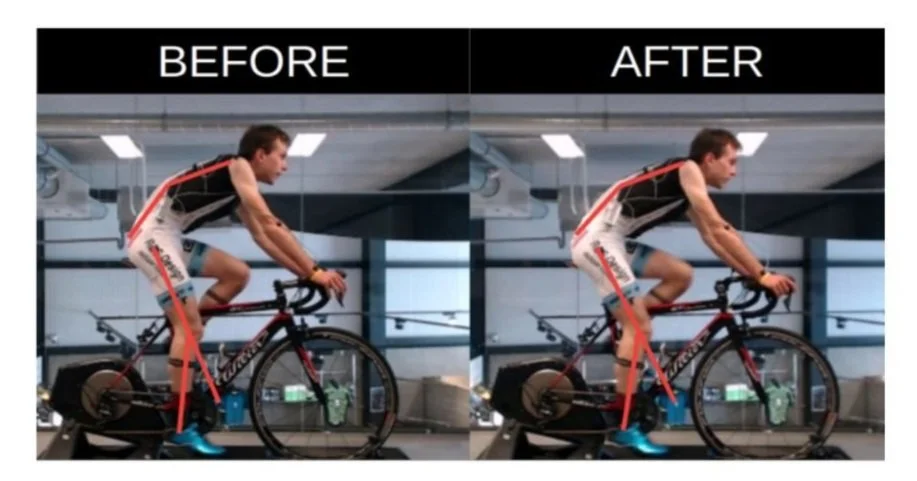
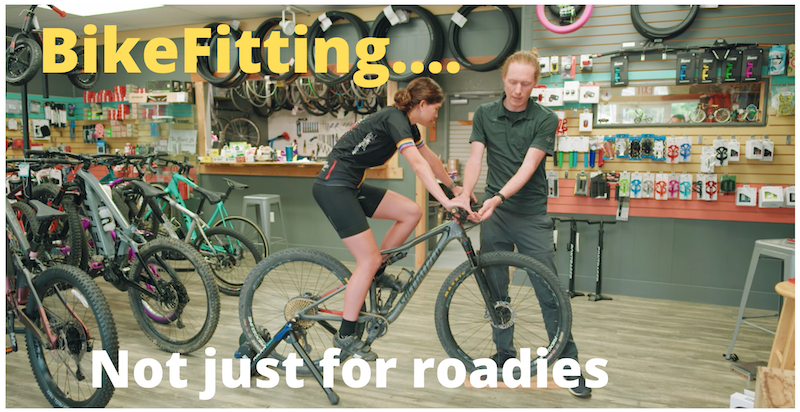
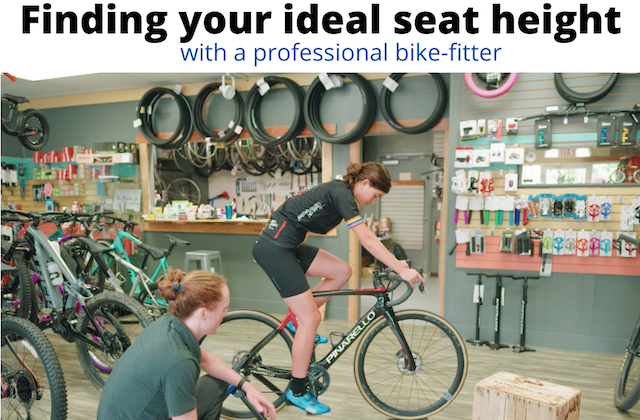
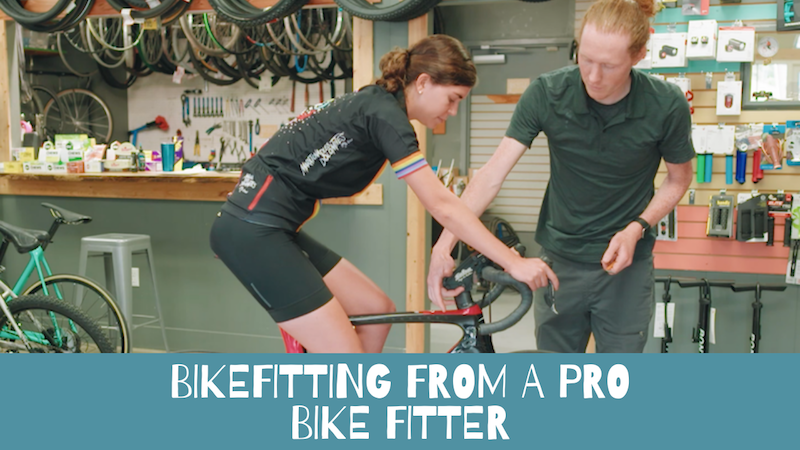
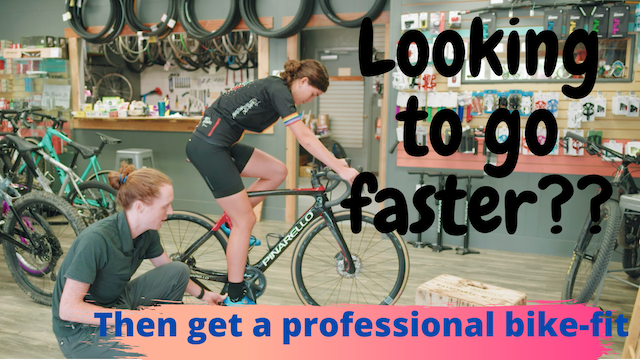
Want to get a professional BikeFitting but don't want to spend $300?


Final Thought

The research looks exclusively at cycling and seat height, and usually conducted in laboratory settings. Extrapolating that data to both cyclists and mountain bikers can be contentious, which is why seat height settings remain the most controversial of all bicycle adjustments.

Raising or lowering your saddle by anything more than a smidgen, in either direction, can have profound effects on both your muscle activity patterns and pedaling mechanics.

Changes in terrain have a huge impact on what your ideal saddle height should be. Why???? Because simply changing the positioning of your pelvis (from hills) alters when and how your muscles activate while spinning the pedals. Also, adjusting your cadence changes mechanics and force relationships on the pedals.

Ideally, while pedaling under 9mph (14 kph), your seat should be at it’s highest setting, since you will be able to generate the most force and efficiency. As you go faster, slightly lowering the seat to allow for:

  • Increased control/stability

  • Lower center of gravity

  • Increased flexibility of the hamstrings, permitting a more aero position

lube fast .jpg

about%2Bauthor%2Bjesse.jpg

Jesse is the Director of Pedal Chile and lives in Valdivia, Chile. Jesse has a Master of Science in Health & Human Performance, a Bachelor of Science in Kinesiology, and an Associate of Science in Radio Broadcasting. Hobbies: MTBing, snowboarding, reading, taster of craft beers, researcher, & compression sock wearer.


More articles from Pedal Chile


Sources:

  1. Bini, Rodrigo Rico, et al. “Saddle Height Effects on Pedal Forces, Joint Mechanical Work and Kinematics of Cyclists and Triathletes.” European Journal of Sport Science, vol. 14, no. 1, 17 Sept. 2012, pp. 44–52, 10.1080/17461391.2012.725105.

  2. Burt, Phil. Bike Fit : Optimise Your Bike Position for High Performance and Injury Avoidance. London, Bloomsbury, 2014.

  3. Chang, Wen-Dien, et al. “Relative Variances of the Cadence Frequency of Cycling under Two Differential Saddle Heights.” Journal of Physical Therapy Science, vol. 28, no. 2, 2016, pp. 378–381, 10.1589/jpts.28.378.

  4. Dedieu, L. (2016). Effects of seat height on muscular pattern and interlimb coordination in cycling. Journal of Science and Cycling, 5(2).

  5. Downs, Todd. The Bicycling Guide to Complete Bicycle Maintenance & Repair for Road & Mountain Bikes. Emmaus, Pa., Rodale, 2005.

  6. Garcia-Lopez, Juan & Blanco, Pedro. (2017). KINEMATIC ANALYSIS OF BICYCLE PEDALLING USING 2D AND 3D MOTION CAPTURE SYSTEMS.

  7. Leavitt, Trevor G., and Heather K. Vincent. “Simple Seat Height Adjustment in Bike Fitting Can Reduce Injury Risk.” Current Sports Medicine Reports, vol. 15, no. 3, 2016, p. 130, 10.1249/jsr.0000000000000254.

  8. Moura, Bruno Monteiro de, et al. “EFFECTS OF SADDLE HEIGHT ON PERFORMANCE AND MUSCULAR  ACTIVITY DURING THE WINGATE TEST.” Journal of Physical Education, vol. 28, no. 1, 2017, 10.4025/jphyseduc.v28i1.2838.

  9. Peveler, Will W. “Effects of Saddle Height on Economy in Cycling.” Journal of Strength and Conditioning Research, vol. 22, no. 4, July 2008, pp. 1355–1359, 10.1519/jsc.0b013e318173dac6.

  10. Trek Bikes. “Owners Manual - Fitting Your Bicycle | Trek Bikes.” Trekbikes.Com, 2020, www.trekbikes.com/us/en_US/owners-manual/fitting-your-bicycle/.

  11. Wang, Yong, et al. “Cycling with Low Saddle Height Is Related to Increased Knee Adduction Moments in Healthy Recreational Cyclists.” European Journal of Sport Science, 16 July 2019, pp. 1–7, 10.1080/17461391.2019.1635651.

Are Merino Wool Socks Hot?

merino sheep for wool.jpg
 
Wool is the best fabric choice in the desert environment.
— From the Encyclopedia of Deserts

Wool is a very diverse and dynamic material, that works in all types of weather. From the hottest day of the year to the coldest, and depending on where you live, even both on the same day. This is why wool, specifically Merino, is called a “super-fabric” and is the fabric of choice for premium outdoor clothing and active-wear.


Most synthetic fibers are designed to emulate Merino wool, but like most copycats, you can’t emulate the real thing.


Merino socks don’t trap moisture, which keeps your feet cool, light, airy, and comfortable, making Merino ideal for summertime activities.

  • Merino is also anti-microbial, meaning your feet won’t stink when they sweat, and unlike the traditional wool, ultrafine Merino doesn’t itch because of its soft and ultra-fine fibers.


Merino wool: keeps you cool & warm

In desert conditions, wool is the best fabric choice because of its ability to maintain constant body temperature, even though deserts have large diurnal (daily) temperature fluctuations, with extreme heat during the day and frigid temps at night.

  • This is why nomadic Bedouins of the Sahara and Arabian Deserts, wear robes made from wool.

merino wool is Breathable

Wool can absorb up to 35% of its own weight in water without feeling damp. While the benefits of this are obvious when it’s cold, they are a little more technical when it’s hot.

When you sweat, your clothes absorb water vapors. Wool will absorb these sweat vapors and move moisture away from your skin, then evaporate the moisture, into the air, without creating fluctuations in your skin temperature.

When people talk about clothing being “breathable,” what they are really talking about is the ability of the clothing to evaporate sweat off the skin the same way that you would while being naked…..which is also the same way the wool functions on the Merino sheep.

Merino wool is naturally crimped

Many fibers hold moisture against your skin. When it's hot, this makes the clothes feel sticky and it also prevents your sweat from evaporating, which will make you even hotter. The natural crimp in wool fibers forces each strand to press against each other, as opposed to side-by-side or lying flat-together.

This keeps tiny air pockets, which act as microscopic insulators, and is one of the main reasons why Merino wool keeps you both warm when it’s cold and cool when it’s hot.


merino sheep in field.jpg
 

Cool when it's hot and warm when it's cold --- Merino Wool EXPLAINED

Merino wool is a dynamic insulator, and like all great thermos, it keeps you warm in the cold and cool in the heat.

Through convection, air can transport heat from one place to another, and it’s through convection that your home loses heat/AC (through doors, windows). Merino wool has tiny air pockets that form from the natural crimp in each fiber strand. These microscopic air pockets limit the amount of circulation and temperature losses, thus retaining heat or cold…depending on the weather.

An easier way to think about this is by picturing a Styrofoam cooler. The Styrofoam has tiny pockets of air that act as insulators for heat or cold, depending on what’s inside the cooler…hot coffee or cold brew, perhaps.


Schematic diagram of a Merino wool fibre showing the major structural features of non-medullated wool. - - (Image Source: Theopoline Itenge, 2007)


Merino Wool: Moisture-wicking, Humidity & keeping you cool

Merino wool absorbs water from both your skin and the atmosphere, which creates a dry microclimate against your body while keeping your skin at its ideal temperature (90°F/33°C).


Dopey sheep or complex superfiber? I think we all know the answer

Dopey sheep or complex superfiber? I think we all know the answer


In addition to wool being able to absorb nearly 1/3 of its weight, Merino also repels water. Wool fibers are made up of a filmy outer layer that helps to repel moisture by drawing in vapors from the atmosphere (during high-humidity conditions).


The tiny pores in the epicuticle layer break the hydrogen bond of water, which then allows moisture to evaporate out before it even had a chance to come in contact with your skin. It’s no wonder that synthetic materials are designed to duplicate the natural fibers of Merino sheep.

merino wool socks keep your feet cool, comfy, & blister-free


During strenuous exercise or hot conditions, a Merino wool garment closer to the skin actively transfers moisture vapour away from the body
— Advanced Functional Materials


Of all the pieces of clothing, socks are among the most important, especially when working or exercising in hot conditions. The palms of your hands and the soles of your feet have more sweat glands than any other part of your body.


Wearing Merino socks, especially during balmy weather, is a great choice. Merino will absorb moisture from your sweaty feet, which then gets evaporated into your shoe.

Socks, like cotton, trap heat, and the sweat that is absorbed doesn’t evaporate out, leaving you stewing in a pool of your own sweat. If you happen to be walking in these soggy, perspiration filled, bacteria infested socks, then blisters develop.

socks & frictional blisters


During World War II, blisters accounted for almost 2.5% of all noncombat hospitalizations.
— Military Medicine


Frictional foot blisters are the most common skin injury in sports. Many people blame their boots or shoes for causing blisters, yet the sock is more to blame than the shoe. Blisters are caused by friction between the skin of the foot and the sock, with more friction increasing as the sock gets wetter.

Different fabrics cope with moisture differently. However, one of the main ways to reduce blisters is to wear socks that absorb lots of moisture, as this will reduce friction between the sock and skin.

A 2012 study that was published in The Annals of Occupational Hygiene looked at sock fabric and blister prevention and noted that the best sock was a Merino wool blend (50% Merino wool), which was best at regulating temperature, dampness, friction, and comfort.

merino, “smart” wool & synthetic


Nature is typically better and doing things than we are.
— Joshua A. Austin


Superfine Merino wool has superior water absorbency, is quick-drying, and transfers moisture/sweat away from your body.

Synthetic fibers have the same qualities as Merino, which makes sense since synthetics are refurbished laboratory mimicries of Merino. This is why SmartWool, the apparel company, uses Merino wool and has branded it as “Smart.”


Related article: “Are Merino Socks Itchy?” and why do some fabrics itch while others don’t??


about author jesse.jpg

Jesse is Director of Pedal Chile and lives in Valdivia, Chile. Jesse has a Master of Science in Health & Human Performance and a Bachelor of Science in Kinesiology. Hobbies: Mountain biking, snowboarding, reading, taster of craft beers, user of compression socks, researcher, & Merino sock wearer.


More articles from Pedal Chile
 

Sources & references

As a second skin of the human body, clothing offers protection and aesthetic qualities.
— Advanced Functional Materials
  1. Bogerd, C., Niedermann, R., Brühwiler, P. and Rossi, R. (2012). The Effect of Two Sock Fabrics on Perception and Physiological Parameters Associated with Blister Incidence: A Field Study. The Annals of Occupational Hygiene, 56(4).

  2. Brennan, F.H., Jackson, C.R., Olsen, C. and Wilson, C. (2012). Blisters on the Battlefield: The Prevalence of and Factors Associated With Foot Friction Blisters During Operation Iraqi Freedom I. Military Medicine, 177(2), pp.157–162.

  3. BRYANT, C. (2009). How does wool keep you warm even when it’s wet? [online] HowStuffWorks.

  4. ‌Itenge, Theopoline. (2007). Identification of genetic markers associated with wool quality traits in merino sheep.

  5. Hu, J., Irfan Iqbal, M. and Sun, F. (2020). Wool Can Be Cool: Water‐Actuating Woolen Knitwear for Both Hot and Cold. Advanced Functional Materials, p.2005033.

  6. Mares, M.A. (2017). Encyclopedia of deserts. Norman: University Of Oklahoma Press.

  7. Nawaz, N., Troynikov, O. and Watson, C. (2011). Thermal Comfort Properties of Knitted Fabrics Suitable for Skin Layer of Protective Clothing Worn in Extreme Hot Conditions. Advanced Materials Research, 331, pp.184–189.

Should cyclists shave their arms?

 
cyclist and shave legs and arms.jpg

Aerodynamic drag is the single biggest force acting against cyclists, as the rider experiences 75% of the drag while the bike accounts for 25%. 

The aero drag of a cyclist originates from frictional drag, which is caused by skin friction.

This can be reduced by lowing the roughness of your skin, which is how wearing one of those fancy cycling skinsuit works and can be more easily and cheaply duplicated by shaving the hairs off your body, like your arms and legs.

Specialized & The "Win" Tunnel

Specialized, the bicycle manufacturing company, which also designs components and apparel, has its own wind tunnel, which they dubbed the “Win Tunnel.” In July of 2014, the “Win Tunnel” research team tested the difference between shaved and hairy legs and found that shaved legs was 50 to 82 seconds faster over 25 miles (40km).

  • Shaved legs = 70 seconds faster on average

So, does shaving arms affect speed and getting “aero” just like the shaved legs?

Cycling: a hairless arm makes you faster

razor .png

Using the same wind tunnel and research team, 6 months after the shaved leg trial, Specialized assessed the difference between shaved VS hairy arms. Chris Yu and Camron Piper (Specialized researchers) found that shaved arms were 19 seconds faster over 25 miles (40km).

This trial only had one test-cyclist. However, it should be mentioned that he had below-average arm hair. Riders that have a resemblance to Chewbacca will get even more time savings, approaching 22 seconds over the same distance.

On average, shaving your arms saves you an additional 25% of whatever savings you get from shaved legs. Say, for example, if you save 80 seconds with shaved legs, you will save 20 more seconds with shaved arms, totaling 100 seconds over 25 miles (40km).

Shave Pattern & Speed

There is evidence that shaving strategic lines down both your arms and/or legs will lead to even further improvements in aerodynamics. However, unless you have your own wind tunnel or understand Computational Fluid Dynamics, It’s probably best not to worry too much about it.

(Image Source: Godo, Corson, & Legensky 2009)

(Image Source: Godo, Corson, & Legensky 2009)

a hairless arm is a cool arm

Our cooling system is so superior that in a marathon on a hot day, a human could outcompete a horse.
— (Jablonski, 2010)

A hairless arm is a cool arm, just like a shaved leg is a cool leg. Shaving body hair makes your body more efficient at cooling. Hair holds onto water and sweat, by shaving your arms, legs, or both, sweat evaporates directly off your skin, which helps in lowering your core temperature on those hot days of cycling.

(Image Source: Jablonski, 2010)

For humans, the primary way we rid the body of excess heat is through sweating. Sweating cools the body through the production of liquid on the skin’s surface that then evaporates, which draws heat energy away from you.

Vigorous cycling generates huge amounts of body heat and in hot and humid climates, it becomes a limiting factor. Mouth breathing is also effective at reducing body heat, as it allows for higher airflow in and out of your mouth.

Sweating & Speed

The faster you go, the faster the air is moving around, which causes you to sweat less, due to quicker evaporation. Just going from .5 mph to 7 mph will double your rate of evaporation and subsequent body cooling at 95°F (35°C). While going faster actually requires more work, simply shaving your arms and legs will lower your body temp.


shaving & style

Some cyclist shaves their legs since it’s part of the “look” of cycling. Shaving arms isn’t as popular among roadies as shaved legs, but it does offer the same benefits…….or a quarter of the same benefits to be more precise.

Final thought

Just shaving your legs and arms, depending on your level of hairiness, can save you about 63 to 102 seconds over 25 miles (40km). To put this in perspective, a few dollars spent on a razor and some cream will make you just as fast as spending $15k on a new high-performance bike.

However, shaving or wearing a skinsuit only reduces one type of aero drag. Form drag or pressure drag, which is mostly related to your position or posture while riding, has an even larger effect on your speed than frictional drag. Even very minor changes in your riding posture have huge impacts on how fast, or how slow you go.

Many recreational cyclists don’t think about how their cycle clothing fits, helmet design, how unzipped their jacket is, or what their arm hair is doing to their time. But just keep in mind that at 9mph (14kph), air resistance becomes your number one obstacle, and every little thing compounds……resulting in 5+ minutes in less than 25 miles.


about author jesse.jpg

Jesse is Director of Pedal Chile and lives in Valdivia, Chile. Jesse has a Master of Science in Health & Human Performance and a Bachelor of Science in Kinesiology. Hobbies: MTBing, snowboarding, reading, taster of craft beers, researcher, & compression sock wearer.


Sources:

  1. Adams, W.C., Mack, G.W., Langhans, G.W. and Nadel, E.R. (1992). Effects of varied air velocity on sweating and evaporative rates during exercise. Journal of Applied Physiology, 73(6), pp.2668–2674.

  2. Defraeye, T., Blocken, B., Koninckx, E., Hespel, P. and Carmeliet, J. (2010). Aerodynamic study of different cyclist positions: CFD analysis and full-scale wind-tunnel tests. Journal of Biomechanics, [online] 43(7), pp.1262–1268.

  3. Godo, Matthew & Corson, David & Legensky, Steve. (2009). An Aerodynamic Study of Bicycle Wheel Performance Using CFD. 47th AIAA Aerospace Sciences Meeting including the New Horizons Forum and Aerospace Exposition. 10.2514/6.2009-322.

  4. Jablonski, N.G. (2010). The Naked Truth. Scientific American, 302(2), pp.42–49.

  5. Specialized Bicycles (2014). The Win Tunnel: Shaved and Dangerous? YouTube. Available at: https://www.youtube.com/watch?v=DZnrE17Jg3

  6. Specialized Bicycles (2015). The Win Tunnel: Are Shaved Arms Faster? YouTube. Available at: https://www.youtube.com/watch?v=h_C8K9x47q0


Should I Wear a Mouthguard Mountain Biking

mtb dowhilling .jpg

A mouthguard, also known as a gumshield, mouth protector or sports guard is an appliance that covers the teeth and surrounding mucosa with the aim of preventing or reducing trauma to the teeth, gingival tissue, lips and jaws.
—  Primary Dental Journal

Studies show that 13 to 39% of all dental injuries are sports-related, with mountain biking causing the 10th most dental injuries out all contact and non-contact sports.

In 1890, British dentist, Woolf Krause created the first Gum Shield to protect boxers against lip lacerations. Since, this “Gum Shield,” has seen significant changes and improvements, and today it’s commonly known as an athletic mouthguard.

Mountain biking & dental protection


Mouthguards function by absorbing impact stresses, which results in a reduction of force transmitted to the teeth, bone structure, cranium and surrounding soft tissue
— Medicine & Science in Sports & Exercise

Mouth and teeth protection while mountain biking comes from 3 pieces of protective equipment or gear.

  • Helmets

  • Face mask

  • Mouthguards

A full-face downhill helmet offers more dental protection compared to a cross-country style open-face helmet, which lacks any face protection.

However, even if you are wearing a full-face helmet, you can still get more protective by using a mouthguard, as it will dissipate the energy during impact from crashing.

Do mouthguards help prevent concussions?

While research clearly shows that mouth-guards significantly reduce dental injuries, there is much confusion as to whether mouthguards reduce concussions. However, the main reason for wearing a mouthguard is to protect your teeth, if you do happen to get even a tiny amount of added protection against concussions, that is just a bonus.

Custom Mouthguard (Image source: ‌Schulze, et al., 2019)

Custom Mouthguard (Image source: ‌Schulze, et al., 2019)

Dental injuries: Mountain biking & mouthguards


The Fédération Dentaire International subdivides organized sports into two categories based on the risk of traumatic dental injuries: high-risk sports (such as American football, hockey, ice hockey, lacrosse, martial arts, rugby, inline skating, skateboarding and mountain biking)
— The International Dental Federation

Both the American Dental Association (ADA) and the International Dental Federation (FDI) recommend the use of mouthguards while mountain biking. These organizations list 29 sports where mouthguards should be worn, such as hockey, rugby, and American football. It should also be noted that mountain biking not only was included but is categorized as “high risk.”


Of all questioned participants, 25.4% had witnessed mountain bike accidents resulting in dental trauma before.
— Dental Traumatology

The International Academy of Sports Dentistry recommends that mouthguards should be used in 29 sports and exercise activities

Image Source: (Green, 2017)

Mountain biking has a dental-injury rate between ~6 to 15% and is the 10th leading cause of visits to the dentist among all sports.

Every mountain biker knows a fellow rider or two, who has experienced traumatic injuries to their teeth…..I certainly know more than a handful.

As you can see from the bar graph (below), outside of the obvious contact sports and skiing, mountain biking has the most mouth-related accidents. There is a good reason that both the ADA and FDI recommend mouthguards for mountain bikers.


Should I wear a mouthguard mountain biking?

A group of researchers conducted a study called "A prospective study of downhill mountain biking injuries" and had this to say:

The use of mouthguards should be enforced in all sport types facing a higher risk of orofacial injuries, such as mountain biking - British Journal of Sports Medicine

If bombing down tight singletrack, stunting jumps, or blasting through the bike-park is you, then wearing a mouthguard should be part of your MTB body armor kit.


Necessity of using mouthguards during sporting activities ( in order)

PedalChile.com (adapted from OZSİN OZLER et al., 2020)

Mouth guards & performance


The same motives for choosing not to use a mouthguard have been reported for men and women.
— Journal of Strength and Conditioning Research

In surveys of athletes, the main arguments for not wearing a mouth-guard are 3-fold:

  1. Difficulty in communication

  2. Discomfort

  3. Fear of performing worse

hindered communication ( speech impairment)

Mountain biking, especially downhill or while riding steep & technical singletrack is essentially a solo sport. When riding the lift or gondola up in bike parks or climbing on singletrack, it’s pretty easy to store the mouthguard in a pocket or pack and talk freely.

Discomfort

What is more comfortable, a busted mouth, or wearing an adult pacifier??

Boil-and-bite mouthguard (Image Source: Uzel et al., 2014)

Boil-and-bite mouthguard (Image Source: Uzel et al., 2014)


Fear of reduced performance ( negative breathing effects)


The results indicated mouthguard use did not affect heart rate, rate of perceived exertion, minute ventilation, oxygen consumption, or respiratory exchange ratio at any given power level during exercise.
— Journal of Strength and Conditioning Research

Numerous studies have been conducted in soccer, rugby, boxing, and cycling, that look at athletic variables, such as respiration, heart rate, oxygen consumption, power output, sprint and jumping ability with and without mouthguard use.

The overwhelming consensus is that mouth-guards don’t hinder performance as measures of athletic variables remain stable:

  • Muscular endurance is the same

  • Power output is the same (some studies even show higher)

  • Breathing rate and the ability to utilize oxygen remains unchanged


Did you know that you can go FASTER, just by switching chain lubricants??

Did you know that you can go FASTER, just by switching chain lubricants??


best mouthguard for mountain biking


Mouthguards differ and wearers need to be aware of their various protective capabilities.
— British Journal of Sports Medicine

There are 3 types of mouthguards

  1. Custom-made by your dentist (offers superior protection)

  2. Mouth-formed “boil-and-bite” mouthguard

  3. Ready-made or stock

Custom-made mouthguards are best. However, the price will dictate whether you want to spend $2 at your local sporting store or upwards of $100 on a custom made mouthguard. Considering the cost and subsequent hassles of a busted tooth, I’d say the only option, as far as I’m concerned, is going custom.

Final thought

A custom-made mouthguard is relativity cheap, lightweight, and convenient piece of protective equipment that should be deemed “essential” for any serious downhill mountain biker.

For those that ride XC trails, if you have ever been held back during steep and technical singletrack, carrying a mouthguard in your pack or pocket for those questionable sections might give you that boost of confidence, and protection that you need.


About the Author.jpg

Jesse is Director of Pedal Chile and lives in Valdivia, Chile. Jesse has a Master of Science in Health & Human Performance and a Bachelor of Science in Kinesiology. Hobbies: MTBing, snowboarding, reading, taster of craft beers, researcher, & compression sock wearer.


More articles from Pedal Chile

Sources

  1. Arent, S.M., Pellegrino, J., McKenna, J. and Jaouhari, C.A. (2009). Effects Of A Neuromuscular Dentistry-designed Mouthguard On Muscular Endurance And Anaerobic Power. Medicine & Science in Sports & Exercise, 41, p.127.

  2. Ashwell, Z., McKay, M.P., Brubacher, J.R. and Gareau, A. (2012b). The Epidemiology of Mountain Bike Park Injuries at the Whistler Bike Park, British Columbia (BC), CanadaWilderness & Environmental Medicine, 23(2), pp.140–145.

  3. Becker, J., Runer, A., Neunhäuserer, D., Frick, N., Resch, H. and Moroder, P. (2013). A prospective study of downhill mountain biking injuries. British Journal of Sports Medicine, 47(7), pp.458–462.

  4. Fernandes, L.M., Neto, J.C.L., Lima, T.F.R., Magno, M.B., Santiago, B.M., Cavalcanti, Y.W. and de Almeida, L. de F.D. (2018). The use of mouthguards and prevalence of dento-alveolar trauma among athletes: A systematic review and meta-analysisDental Traumatology, [online] 35(1), pp.54–72.

  5. Green, J. (2017). The role of mouthguards in preventing and reducing sports-related trauma. Primary Dental Journal, 6(2), pp.27–34.

  6. ‌Lloyd, J.D., Nakamura, W.S., Maeda, Y., Takeda, T., Leesungbok, R., Lazarchik, D., Dorney, B., Gonda, T., Nakajima, K., Yasui, T., Iwata, Y., Suzuki, H., Tsukimura, N., Churei, H., Kwon, K.-R., Choy, M.M.H. and Rock, J.B. (2017). Mouthguards and their use in sports: Report of the 1st International Sports Dentistry Workshop, 2016. Dental Traumatology, 33(6), pp.421–426.

  7. Müller, K.E., Persic, R., Pohl, Y., Krastl, G. and Filippi, A. (2008). Dental injuries in mountain biking - a survey in Switzerland, Austria, Germany and Italy. Dental Traumatology, 24(5), pp.522–527.

  8. OZSİN OZLER, C., GÜÇİZ DOĞAN, B., BİLGİN, E., DEMİRHAN, G., ARAS, D., ÇETİN, E., ŞİMŞEK, H. and UZAMIŞ TEKÇİÇEK, M. (2020). What do Turkish sports sciences students know about dental trauma and mouthguards? A descriptive study. Acta Odontologica Turcica, 37(2), pp.29–35.

  9. Patrick, D.G. (2005). Scale of protection and the various types of sports mouthguardBritish Journal of Sports Medicine, 39(5), pp.278–281.

  10. Rapisura, K.P., Coburn, J.W., Brown, L.E. and Kersey, R.D. (2010). Physiological Variables and Mouthguard Use in Women During Exercise. Journal of Strength and Conditioning Research, 24(5), pp.1263–1268.

  11. Rowson, Steven et al. “Biomechanical Perspectives on Concussion in Sport.” Sports medicine and arthroscopy review vol. 24,3 (2016): 100-7. doi:10.1097/JSA.0000000000000121

  12. Schildknecht, S., Krastl, G., Kühl, S. and Filippi, A. (2012). Dental injury and its prevention in Swiss rugby. Dental Traumatology, 28(6), pp.465–469.

  13. ‌Schulze, Antina et al. “Influence of Mouthguards on Physiological Responses in Rugby.Sports medicine international open vol. 3,1 E25-E31. 5 Jun. 2019, doi:10.1055/a-0891-7021

  14. Uzel, I., Aykut-Yetkiner, A., Ersin, N., Ertugrul, F., Oncag, O. and Attin, R. (2014). Dental Trauma and Mouthguard Usage among Soccer Players in Izmir, TurkeyDentistry Journal, 2(3), pp.78–84.