bicycling

Saddle Too Low Symptoms

cyclist with too low seat.jpg

Improper saddle height is the leading cause of overuse injuries in cycling and mountain biking. Simply adjusting the seat up or down changes the joint angles and ranges of motion while also altering the amount of force you can apply to the pedals.

Some cyclists ride with a seat too high, however, it’s significantly more common, by about 100 to 1, that cyclists ride with a seat too low. Every cyclist has an optimal saddle height - the height with the most muscle activation while balancing the muscle activity evenly.

Low Saddle Symptoms

There are 4 main sign or symptoms that your bicycle seat is too low:

  • Your foot is flat on the ground

  • Knee pops or clicks

  • Knee pain

  • Lack of pedal power

Let's analyze each one of these further.

Foot flat on the ground

cycling foot on ground.jpg

While this isn’t a symptom, it is the most obvious indicator that your saddle is way too low. If your foot is completely flat or close to it while stopped, your saddle is not millimeters too low, but inches.

Being able to touch the ground without getting out of your saddle is certainly convenient, but this position is horrible for pedal power and even worse for your knees.


READ: “Should My Feet Touch The Ground - If you would like a more in-depth explanation, I dedicated an entire article to this.


wadsworth bike fit photo.jpg
  • sS = Saddle Setback

  • CL = Crank Length

  • Hd = Handlebar Drop

  • sH = Saddle Height: Measured in millimeters (mm) from the crank axle to the top of the midpoint of the saddle.


knee popping
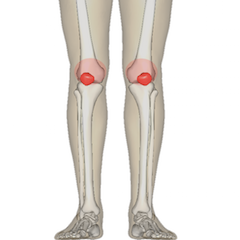
Image Source: Wikimedia Commons

Image Source: Wikimedia Commons


If your knee(s) is clicking or popping consistently at the top of your pedal stroke, even without pain, then it’s time to stop and reevaluate your seat height. 

  • If the clicking is caused by your kneecap (patella) and femur not moving properly, you are setting yourself up for knee pain and possibly “Biker’s Knee” or Patellofemoral Pain Syndrome.

Riding with the seat too low or mashing on big gears for too long are both causes of knee clicking while bicycling.


READ: “Why Does My Knee Pop When Cycling” - I wrote an entire article about this, so check it out if you would like more info.


Pain in The front of your knee
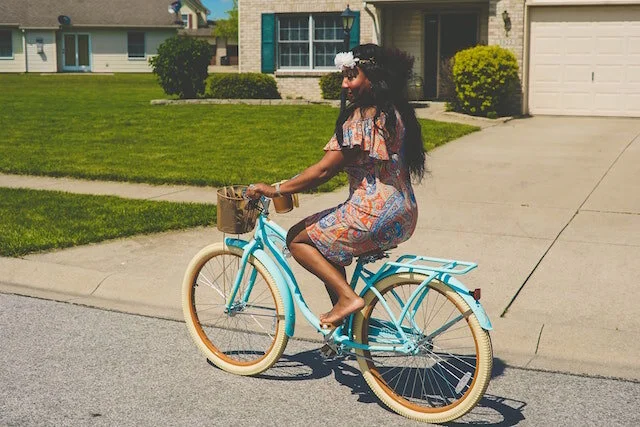
cycling with seat way way too low.jpg

A low saddle causes excessive knee flexion and commonly results in patellar tendinitis. This is characterized by pain in the front of the knee and is caused by the high compressive forces on the kneecap and tendons as you pedal. 

  • Pain in the front of your knee (around the kneecap).

You might hear a clicking or popping noise(s) before you experience knee pain, and those clicking/popping sounds are your body’s way of alerting you that something needs to change. 


*NOTE ABOUT THE PICTURE: Even though the lady in the above picture is riding with her seat way too low, just casually cruising around the neighborhood is okay. However, performance and pain issues arise once you combine a poor bike fit with high millage and competitive pedaling effort.


Lack of power

When riding solo and a bicycle commuter passes you in blue jeans and a 30-lb (14kg) backpack or you're out of shape friends are blowing by you, this should be cause for pause.


While cycling, your legs act as levers. When you’re pedaling from a low seat, you’re effectively turning your long legs into short legs or smaller levers.

  • In laboratory settings, just riding with a seat a few inches below optimal height, reduces power output by 80%

Optimal Saddle Height
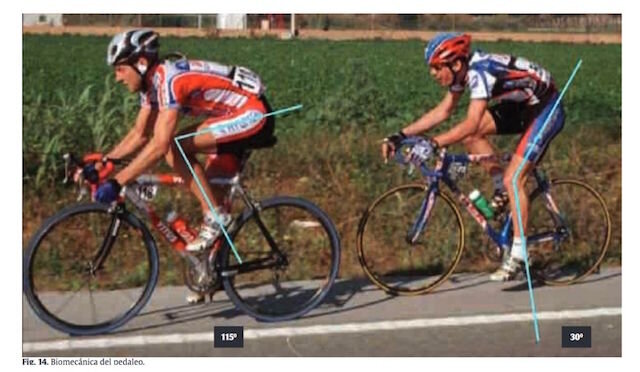
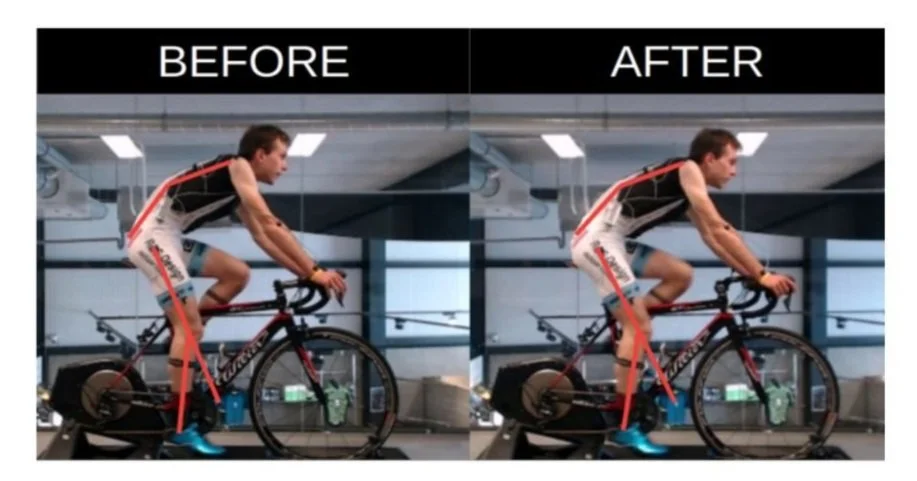
25°-35° flexion at bottom dead center is the optimal range. The cyclist on the right is in the middle of this range at 30 degrees (Image Source: Gómez-Puerto et al. 2008).

25°-35° flexion at bottom dead center is the optimal range. The cyclist on the right is in the middle of this range at 30 degrees (Image Source: Gómez-Puerto et al. 2008).


So what is the optimal saddle height?

  • 25° to 40° flexion at bottom dead center is the optimal saddle height range (see cyclist on the right in the above photo).

How to find optimal saddle height?

There are many different formulas and techniques for finding this important bike-fit setting. The general rule for seat height is that when you’re pedaling while seated, your pushing leg’s knee should be mostly extended at its lowest point. This reduces the compression on the knee and also increases the amount of power you have when pedaling.

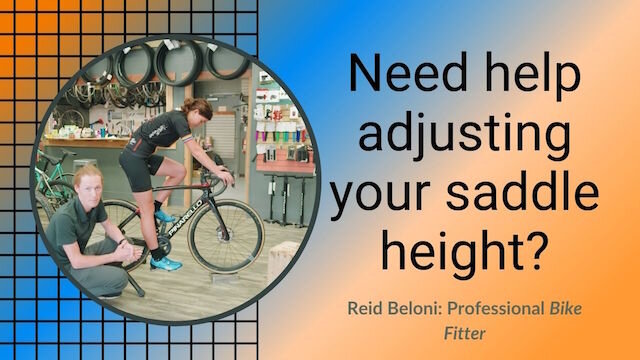
If you would like proper instruction to find your ideal saddle height range, contact a professional Bike Fitter or check out our video.


Final Thought

Many bike fit experts will tell you that riding with a saddle that is a little too low is better than a saddle too high. However, keep in mind “a little” in this case means a smidgen, and anything more than that will cause knee injuries, which is why Patellofemoral Pain Syndrome is known as “Biker’s Knee.”

Also, keep in mind that seat height is just one adjustment. Having your saddle at the correct height but too far forward effectively lowers your seat.


about jesse.png

Jesse is the Director of Pedal Chile and lives in La Patagonia. Jesse has a Master of Science in Health and Human Performance and a Bachelor of Science in Kinesiology. Hobbies: Mountain biking, bicycle commuting, reading, snowboarding, researching, and sampling yummy craft beers.


Sources & References for “Saddle Too Low Symptoms”

  1. Asplund, Chad, and Patrick St Pierre. “Knee Pain and Bicycling.” The Physician and Sportsmedicine, vol. 32, no. 4, Apr. 2004, pp. 23–30, 10.3810/psm.2004.04.201.

  2. Fonda, Borut, and Nejc Sarabon. “Biomechanics of Cycling.” Sport Science Review, vol. 19, no. 1-2, 1 Jan. 2010, 10.2478/v10237-011-0012-0.

  3. Gómez-Puerto, J. R. y Da Silva-Grigoletto, M. Edir y Viana-Montaner, B. Hernán y Vaamonde, D. y Alvero-Cruz, J. R. y (2008), "La importancia de los ajustes de la bicicleta en la prevención de las lesiones en el ciclismo: aplicaciones prácticas." Revista Andaluza de Medicina del Deporte, Vol. 1, núm.2, pp.73-81 [Consultado: 9 de Mayo de 2021]. ISSN: 1888-7546. Disponible en : https://www.redalyc.org/articulo.oa?id=323327655005

  4. Holliday, Wendy, and Jeroen Swart. “Anthropometrics, Flexibility and Training History as Determinants for Bicycle Configuration.” Sports Medicine and Health Science, Mar. 2021, 10.1016/j.smhs.2021.02.007.

  5. Liu, Yung-Sheng, et al. “Muscles Force and Joints Load Simulation of Bicycle Riding Using Multibody Models.” Procedia Engineering, vol. 13, 1 Jan. 2011, pp. 81–87, www.sciencedirect.com/science/article/pii/S1877705811009696, 10.1016/j.proeng.2011.05.055.

  6. Wadsworth, David J.S., and Patrick Weinrauch. “THE ROLE of a BIKE FIT in CYCLISTS with HIP PAIN. A CLINICAL COMMENTARY.” International Journal of Sports Physical Therapy, vol. 14, no. 3, June 2019, pp. 468–486, 10.26603/ijspt20190468.

  7. Wozniak Timmer, Cheryl A. “Cycling Biomechanics: A Literature Review.” Journal of Orthopaedic & Sports Physical Therapy, vol. 14, no. 3, Sept. 1991, pp. 106–113, 10.2519/jospt.1991.14.3.106.

What does single track mean

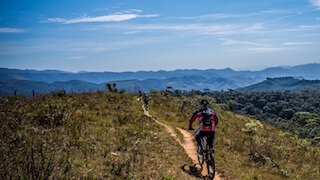
Singletrack = A narrow path for mountain bikes

Singletrack = A narrow path for mountain bikes


A single track (singletrack) is a type of mountain biking trail, usually 12 to 24 inches wide (30 to 60 cm), or approximately the width of the bicycle.

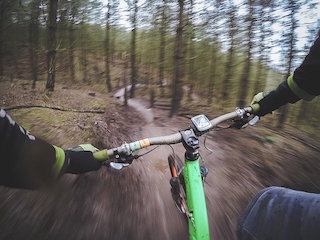
  • Singletracks are narrow MTB trails that are ridden single file and can be as narrow as 6 inches (15 cm)

  • These trails can be smooth, technical, steep, flat, rocky, straight, curvy, uphill, downhill, rooted, or any combination

  • One-way travel or unidirectional singletrack is common

  • The tread of singletrack sections can increase up to 36+ inches (91+ cm) when the trail winds around obstacles, such as trees, large rocks, bushes, etc.


Singletrack design

(Image Source: Stavi and Yizhaq)

(Image Source: Stavi and Yizhaq)


The above pictures are from a 2020 study from southern Israel that researched the hydrological and geomorphic principles on singletrack design:

  • Picture A:

    • ‘Cemented’ singletrack section

  • Picture B:

    • ‘Fortified’ singletrack section. The fortification is a mixture of clay soil and water and using a compacting machine

  • Picture C:

    • Chain-woven woodblocktrail section (this helps to negate shearing and rutting of the trail in unstable hill sections

  • Picture D:

    • Chain-woven woodblock trail section (this helps to prevent tire trenching in streambeds

Extreme Singletrack

(Image Source: Schymik et al.)

(Image Source: Schymik et al.)


While most mountain bikers start on relatively smooth, flowy singletracks, some riders will progress to more advanced singletrails and a few will be skilled enough to ride extreme terrain.

Advanced & extreme singletracks include:

  • Exposed terrain (think narrow trail with exposed cliffs on both sides)

  • Stairs or steps

  • Rocky terrain with counter-climbs

  • Tight loop-like switchbacks

  • Large and unavoidable obstacles (natural or artificial)

  • Moving both the front and back wheel simultaneous is impossible and requires advanced riding techniques

  • Extremely steep

    • Especially in combination with trail obstacles or features

(Image Source: Schymik et al.)

(Image Source: Schymik et al.)


Double Track

A doubletrack is a trail that is typically an overgrown dirt road, with two paths created by ATV or automobile tires.

Examples of double tracks:

  • Fire roads

  • Old mining roads

  • Service roads (such as powerline roads)


about jesse.png

Jesse is Director of Pedal Chile and lives in Valdivia, Chile. Jesse has a Master of Science in Health & Human Performance and a Bachelor of Science in Kinesiology. Hobbies: MTBing singletrack, snowboarding, reading, taster of craft beers, researcher, & bicycle commuting.


Sources & References for “What is a singletrack?”

  1. Felton, Vernon, and International Mountain Bicycling Association. Trail Solutions : IMBA’s Guide to Building Sweet Singletrack. Boulder, Co, International Mountain Bicycling Corp, 2004.

  2. IMBA Canada. “The Importance of Singletrack – IMBA Canada.” IMBA Canada, imbacanada.com/the-importance-of-singletrack/.

  3. Schymik, Carsten, et al. Singletrail-Skala (STS) Version1.4 Einstufung in Technische Schwierigkeitsgrade Www.singletrail-Skala.de. , 2008.

  4. Stavi, Ilan, and Hezi Yizhaq. “Applying Geomorphic Principles in the Design of Mountain Biking Singletracks: Conceptual Analysis and Mathematical Modeling.” Land, vol. 9, no. 11, 11 Nov. 2020, p. 442, 10.3390/land9110442.

How to prevent my penis from going numb when riding a bike

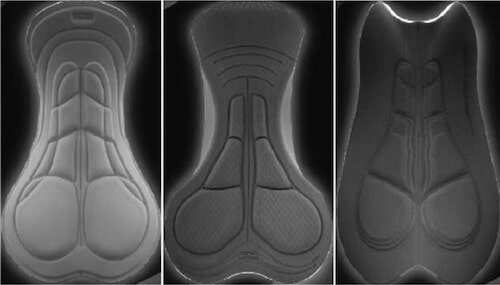
bicycle short pads.jpg

If you're having pain or numbness in your penis or groin region, then its time to change your seat, riding position, or both. 

Generally, bicycle riding has no negative effect on your lower urinary tract, erectile function, or penis health in cyclists. However, a few qualifiers must be noted: 

  1. Type of saddle and design

  2. Riding position 


Cycling & 3 points of contact

Cycling involves 3 points of contact:

  1. Handlebars

  2. Saddle

  3. Pedals

A rider’s comfort and performance is heavily influenced by the positioning of these 3 contact points. When it comes to genital paresthesia (tingling or numbness) the most important points of contact are your saddle and handlebar heights.

Why you’re experiencing penile numbness 

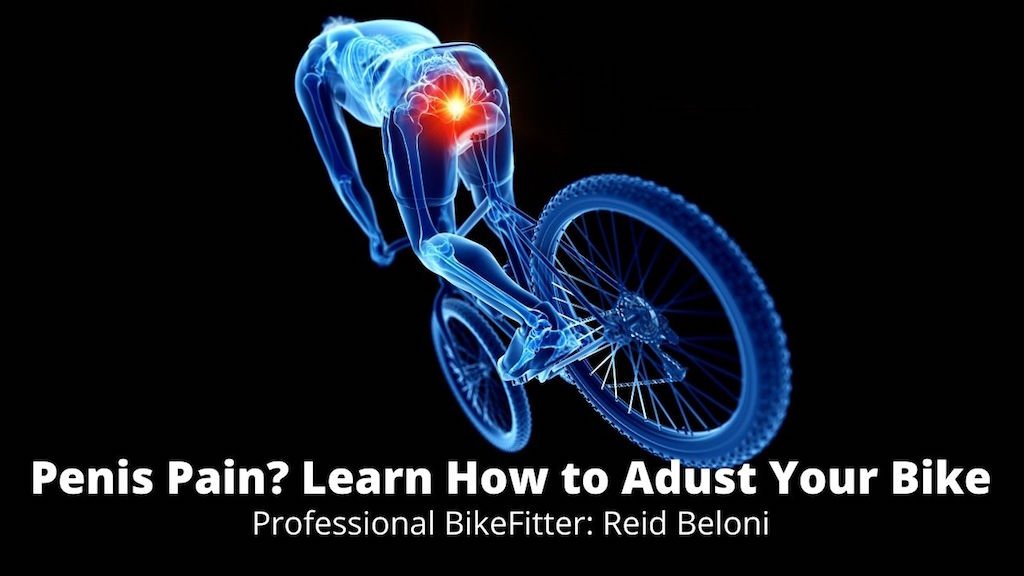
If you’re experiencing genital numbness or tingling, chances are your perineal and penile arteries are compressed against your pubic bone from your saddle. 

Saddle adjustments & genital numbness or tingling


Schwarzer highlighted that certain saddle types are more likely to induce perineal compression and decrease penile blood flow, thereby placing riders at an increased risk of developing ED
— The Journal of Sexual Medicine


Numbness or tingling in your genitals are the two most common warning signals of potential damage to your perineal-genital area. 

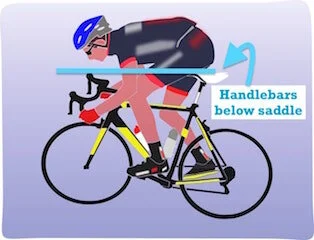
handlebars-below-saddle.jpg

General pain or discomfort, such as numbness/tingling is your body’s way of telling you that something is not right.  If you are experiencing perineum discomfort, there are 5 saddle modifications you can make:


  1. Height Position

    If your saddle is too high relative to your handlebars, you increase the pressure on your perineal with each pedal stroke 

  2. Saddle Inclination

    Level saddle or slightly tilted down is best. Avoid upward tilt of seat nose 

  3. Saddle Shape

    Nose-less saddles (or partially) 

    • Nose-less saddles will reduce the contact area of your genitals, subsequently reducing your perineal pressure and discomfort

    Cutout saddles (hallow section in seat)

    • Reduced numbness and increases comfort on par with the nose-less saddles. 

  4. Grooved saddles/partial cutout

    Improved comfort and reduced numbness reported by men. However, the partial cutout offers no benefit to women with perineal discomfort 

  5. Saddle shape and width are the 2 most important factors

  • The padding of Your Saddle: Medium padding is best. Avoid excess padding on seat nose

  • Saddle Width:  The back of the saddle should be as wide as the distance between your two ischial tuberosities. A saddle that supports these ‘sit bones’  will reduce the compression of your perineum (correct saddle width is the most important factor)

No one saddle shape is best for all as the best saddle shape is determined by individual differences in anatomy 

Too much padding may favour excessive perineal compression on a par with the hard saddles
— Association of Research in Urology

Where are my ‘sit bones’?

Your two ischial tuberosities (‘sit bones’) are the bony protrusions at the top of your legs near the base of your buttock. Your third ‘sit bone’ is the perineum, which is the area between your anus and scrotum or vulva.

Your ideal bicycle saddle should be:

  • Wide enough so both your ischial tuberosities are supported by the saddle

  • The shape, particularity of the nose should not create excess pressure on your perineum while riding in your primary riding position.

Riding position & Erectile dysfunction

Tucked position with hands on extensions

Tucked position with hands on extensions

Most studies focus on the saddle as opposed to the cyclist’s riding position. However, your riding position is just as important as your saddle:  

  • Reduce your time riding in full forward lean (dropped position), especially when using aero bars 

  • Ride in a more upright posture or slightly raise the handlebars 

    • Handlebars 1 to 2 inches lower than the saddle (for men) 

    • For women, handlebars positioned below the saddle can be dangerous to their pelvic floor 

  • Standup from time to time


In China 90% of the male population cycles, and they don’t seem to have a problem maintaining the population
— Dr. William D. Steers (former chair of the Department of Urology at the University of Virginia’s School of Medicine)


Padded bike shorts & Erectile dysfunction

Does wearing padded bicycle shorts protect me from erectile dysfunction?

No. Well-padded and ventilated bicycling shorts provide you with comfort by minimizing ischial tuberosity and buttock skin irritation while also prevent chaffing. However, padded-bicycle shorts do NOT significantly reduce the compression of your perineal arteries and are not a protective measure against erectile dysfunction for cyclists. 


swimmers, runners, cyclists & ED

Cyclists had no worse sexual or urinary functions than swimmers or runners but cyclists were more prone to urethral stricture. Increased time standing while cycling and a higher handlebar height were associated with lower odds of genital sores and numbness.
— From the Journal of Urology


Exercise, including cycling, has numerous health benefits, with improved sexual functioning being one. Which is why male and female swimmers, runners, and cyclists, all have similar rates of ED, which is much lower compared to their non-exercising peers.

  • While cycling and ED have been linked, the data that supports these findings generally research professional and elite cyclists. These elite cyclists spend an insane amount of time in the saddle, oftentimes putting performance over health and are not representative of 99% of cyclists.


Male cyclists experience less erectile dysfunction than the general male population
— From "Bike for Life"

Groin Pain?? BikeFit Issues??


Final Thought

For the hobbyist or more serious cyclist, getting your bike professionally fit ensures optimal ergonomics and helps minimize trauma. Riding a bike that fits well is likely the single most important step riders can take to protect themselves from genital numbness.
— From the Urology Times


If you’re experiencing numbness or tingling in any part of your body during cycling, then its time to make some adjustments. Bicycling is one of the healthiest and most enjoyable activities that you can do when you're comfortable on the saddle and cockpit. 

Making a few simple adjustments to your saddle, handlebar height or riding posture can make all the difference in your cycling world.


Related article: Why does my butt hurt

  • This article also additional advice from Jesse


about jesse.png

Jesse is the Director of Pedal Chile and lives in La Patagonia. Jesse has a Master of Science in Health and Human Performance and a Bachelor of Science in Kinesiology. Hobbies: Mountain biking, reading, snowboarding, researching, and trying new craft beers.


More articles from Pedal Chile

Sources & References

  1. Awad, Mohannad A., et al. “Cycling, and Male Sexual and Urinary Function: Results from a Large, Multinational, Cross-Sectional Study.” Journal of Urology, vol. 199, no. 3, Mar. 2018, pp. 798–804.

  2. Balasubramanian, Adithya, et al. “The Association Between Pelvic Discomfort and Erectile Dysfunction in Adult Male Bicyclists.” The Journal of Sexual Medicine, vol. 17, no. 5, May 2020, pp. 919–929.

  3. Baek, Seok, et al. “Bicycle Riding: Impact on Lower Urinary Tract Symptoms and Erectile Function in Healthy Men.” International Neurourology Journal, vol. 15, no. 2, 2011, p. 97.

  4. Baradaran, Nima, et al. “The Association of Bicycle-Related Genital Numbness and Sexual Health Inventory for Men (SHIM) Score: Results from a Large, Multinational, Cross-Sectional Study.” BJU International, vol. 124, no. 2, 7 June 2018, pp. 336–341.

  5. Baran, Caner, et al. “Cycling‐Related Sexual Dysfunction in Men and Women: A Review.” Sexual Medicine Reviews, vol. 2, no. 3–4, Oct. 2014, pp. 93–101

  6. Colpi GM, Contalbi G, Ciociola E, Mihalca R. “Erectile dysfunction and amatorial cycling.Arch Ital Urol Androl. 2008;80(3):123-126.

  7. Larsen, Anna Sofie, et al. “The Effect of Saddle Nose Width and Cutout on Saddle Pressure Distribution and Perceived Discomfort in Women during Ergometer Cycling.” Applied Ergonomics, vol. 70, July 2018, pp. 175–181.

  8. Lee, Austin, and Benjamin Breyer. “Bicycle Riding: Good or Bad for Men’s Health?” Urology Times, 11 Mar. 2020.

  9. Marceau, L, et al. “Does Bicycling Contribute to the Risk of Erectile Dysfunction? Results from the Massachusetts Male Aging Study (MMAS).” International Journal of Impotence Research, vol. 13, no. 5, Oct. 2001, pp. 298–302

  10. Panara, Kush, et al. “Adverse Effects of Common Sports and Recreational Activities on Male Reproduction.” European Urology Focus, vol. 5, no. 6, Nov. 2019, pp. 1146–1151.

  11. Partin, Sarah N., et al. “The Bar Sinister: Does Handlebar Level Damage the Pelvic Floor in Female Cyclists?” The Journal of Sexual Medicine, vol. 9, no. 5, May 2012, pp. 1367–1373.

  12. Piazza, N., et al. “The Effect of a New Geometric Bicycle Saddle on the Genital-Perineal Vascular Perfusion of Female Cyclists.” Science & Sports, Dec. 2019.

  13. Schrader, Steven M., et al. “ORIGINAL RESEARCH—ERECTILE DYSFUNCTION: Cutting Off the Nose to Save the Penis.” The Journal of Sexual Medicine, vol. 5, no. 8, Aug. 2008, pp. 1932–1940.

  14. Schwarzer, Ulrich, et al. “Cycling and Penile Oxygen Pressure: The Type of Saddle Matters.” European Urology, vol. 41, no. 2, Feb. 2002, pp. 139–143.

  15. Wallack, Roy M, and Bill Katovsky. Bike for Life : How to Ride to 100. Cambridge, Mass., Da Capo Press, 2005.